This guide explains Djxjkcoklzmfb with a practical, procurement-focused lens—how pricing and supplier details influence sourcing decisions. Objectively, Djxjkcoklzmfb appears to function as a product or catalog identifier in supply workflows, and effective handling depends on verification, documentation, and consistent specifications. Learn how to compare options, evaluate conditions, and reduce sourcing risk.

When you encounter the identifier Djxjkcoklzmfb, the fastest way to make progress is to treat it like a procurement-relevant catalog code: confirm the exact specification behind the code, then compare pricing and supplier details using the same criteria across all bidders. Doing this reduces mismatches between what was quoted and what your team actually needs.
Because Djxjkcoklzmfb is not self-explanatory on its own, your sourcing process should prioritize documentation, traceability, and consistent unit definitions (for example: packaging level, lead time, payment terms, and compliance statements). That is where very real-world procurement value is created.
In practice, “progress” means you stop thinking about the code as something to decipher and start thinking about it as something to audit. The identifier should point to a controlled record in a supplier’s catalog (or in your organization’s ERP/PDM/engineering system). Your job is to ensure that when a supplier says “we quote Djxjkcoklzmfb,” they are referencing the same controlled record you intend to purchase.
To do that, use a consistent structure for every supplier response: demand the same specification revision references, require the same line-item breakdown conventions, and evaluate the same “risk-relevant” fields (quality evidence, traceability, lead-time assumptions, change-control approach, and acceptance/remedy language). This prevents the common failure mode where one vendor quotes a “near equivalent” under the same code label, or where one vendor’s “unit price” is not defined the same way as another’s.
Additionally, you should assume that pricing is not comparable until you normalize everything that affects delivered cost. Unit price is rarely the only cost driver. Even when the purchase price looks lower, differences in packaging, logistics inclusion, inspection/test scope, and documentation completeness can flip the outcome once you estimate total landed cost and downstream operational impact.
In many B2B environments, a string like Djxjkcoklzmfb usually serves as an internal part number, a catalog identifier, or a structured reference used by procurement systems to match demand to supply. While the identifier itself may not convey function, the associated record often links to:
From an industry expert perspective, the practical objective is not to “decode” the characters; it is to verify the record attached to the code and ensure your organization purchases what it expects.
It is also worth noting that “catalog codes” can be used in different ways depending on the industry. Some suppliers use codes that map 1:1 to a single physical SKU. Others use codes that represent a family of variants, where a specific configuration is selected later using option fields (for example, length, color, grade, finish, or compliance certification package). In those cases, the same base code can be paired with different option selections, which means that two suppliers can both “quote Djxjkcoklzmfb” while referencing different underlying configurations.
Therefore, your sourcing workflow should treat Djxjkcoklzmfb as the entry point to a record, not the record itself. The record you need usually includes at least:
When you confirm those linked fields, you can compare across suppliers with confidence that they are bidding for the same product definition.
Quoted costs tied to Djxjkcoklzmfb are rarely “just a number.” They typically include or exclude several elements depending on the supplier’s quoting habits and your requested order configuration. To compare fairly, you should standardize the following:
As a procurement top practice, request a pricing breakdown (line-item structure) rather than relying on a total figure. This is especially important when multiple suppliers quote under different assumptions.
To make comparisons reliable, you can add normalization rules to your request for quotation (RFQ). For example, you can require each supplier to show pricing in a format that separately lists:
This approach doesn’t just help compare totals; it also helps you manage contracts. If later you need to negotiate changes (quantity adjustments, delivery rescheduling, packaging modifications), having an explicit cost breakdown makes it easier to respond without renegotiating everything from scratch.
Another hidden variable that frequently affects “pricing” is time. Lead time can change not only when you receive the product, but also the supplier’s production scheduling and the cost of expediting. A supplier might offer a lower price based on a normal production slot, but if your project requires an earlier delivery, you may be charged a rush fee or face a delayed delivery that triggers your own costs (expedite fees elsewhere, schedule slippage, downtime, or penalties).
In other words: the “cheapest quote” is not always the lowest cost in a schedule sense. You should treat time-based risk as part of the cost model. Even if you do not include it as a formal financial figure, you should at least evaluate whether the supplier’s lead time can realistically meet your operational dates.
You should also pay attention to documentation completeness as a cost driver. When a supplier quotes a low price but includes minimal documentation, you might have to pay for additional tests, request missing certificates, or incur internal labor to reconcile the paperwork. Those costs are often overlooked during initial procurement decisions.
Finally, consider the influence of exchange rates and currency handling. If quotes arrive in different currencies or use different assumptions about conversion date, taxes, or banking fees, the comparison can be distorted. Normalizing currency terms (or requiring conversion assumptions) improves comparability.
For sourcing tied to Djxjkcoklzmfb, supplier credibility matters because the identifier may correspond to multiple variants or production runs. Evaluate supplier details with a focus on controllable risk:
Objectively, these factors are widely recognized across procurement and supply-chain management. For quality and management system benchmarks, many organizations align their expectations with recognized frameworks such as ISO standards (e.g., ISO 9001 quality management systems). For additional context on ISO 9001, see the official International Organization for Standardization documentation.
However, it is important not to treat management system certification as a stand-in for product-specific evidence. Certification (such as ISO 9001) tells you something about the supplier’s general quality management framework, but your risk evaluation should still focus on product-specific execution: did they produce the requested revision, did they inspect the correct characteristics, and can they document the shipment’s compliance?
When validating supplier details for Djxjkcoklzmfb, you can use a “proof stack” concept. That is: require evidence at multiple levels so you can be confident that the supplier can deliver the correct product repeatedly.
A proof stack might include:
Suppliers vary in willingness to provide this evidence up front. Some will provide extensive documentation during quotation; others will only provide it after purchase. For high-criticality items, you should push for as much evidence as possible before placing an order, or at least define what documentation must be delivered with each shipment and what happens if it is missing or incorrect.
Also validate whether the supplier can support the operational realities of your use case. For instance:
This is particularly relevant when Djxjkcoklzmfb is part of a catalog where multiple variants exist. The supplier should be able to show that their quoted item matches the exact revision and configuration you requested.
From an expert standpoint, selecting suppliers for Djxjkcoklzmfb should be based on a structured trade-off between:
Even if one supplier offers a lower unit price, a higher risk of spec mismatch or delayed lead time can create downstream costs (rework, downtime, expediting, or customer delivery penalties). A disciplined evaluation approach protects good performance.
To make the “top match” evaluation practical, use a scoring model or decision matrix. The scoring model should reflect the priority of your project. For example, you might weigh spec compliance more heavily for critical applications, and weigh price more heavily for non-critical items. The key is that your evaluation weights must align with your business risk tolerance.
A useful vendor comparison approach includes both qualitative and quantitative inputs:
For lead time, do not rely solely on a single stated date. Ask for ranges and conditions (e.g., whether lead time varies by order quantity, whether it depends on material availability, and whether delays trigger proactive notifications). Suppliers that provide clear lead-time assumptions and credible escalation handling generally reduce operational disruption.
For spec compliance confidence, you should evaluate whether the supplier’s documents are aligned. “Compatible” language can be a starting point, but procurement should demand evidence that the correct spec revision is being used. If the supplier cannot provide a spec revision reference, that is typically a sign that the quote may be based on assumptions or older references.
Contractual clarity is the part of procurement that is often postponed. However, it can determine how much cost you recover when something goes wrong. The contract should define:
A supplier might quote well but have vague remedies. If you cannot recover cost for nonconforming goods, your organization bears additional risk. That risk should be included in the supplier evaluation even if your financial model is not fully mature.
Procurement teams work in environments where identifiers, catalogs, and specifications can drift over time—especially when manufacturing updates occur, packaging changes happen, or product revisions are introduced. Treating Djxjkcoklzmfb as a starting reference (to locate the correct record) rather than as “the whole truth” helps prevent costly assumptions.
Additionally, supply-chain research and guidance often emphasize risk-based procurement: diversify where appropriate, verify critical specifications, and maintain documented evidence for compliance. For general risk considerations in supply chains, organizations frequently reference materials from established bodies such as the World Economic Forum’s supply chain work and guidance from international standards communities. (Note: specific performance figures should be supported by the latest publications from these bodies; this article avoids unverifiable statistics.)
Structured sourcing matters because real procurement friction is rarely about a single “wrong price.” It is about cumulative mismatches: a spec revision mismatch here, missing documentation there, a packaging difference that affects receiving time, and a lead time assumption that doesn’t account for rush production. When these add up, the cost impact often exceeds the savings from the lowest purchase price.
Another reason structured sourcing matters is that procurement decisions are frequently replicated across categories and teams. If you build an internal standard for how you evaluate codes like Djxjkcoklzmfb, your organization creates consistency and reduces dependence on individual buyer judgment. That consistency is essential when turnover happens, when multiple business units source the same or similar items, or when an internal audit requires evidence of repeatable procurement logic.
Structured sourcing also improves communication internally. When engineering, quality, logistics, and procurement share a common “acceptance and documentation framework,” the probability of surprises at receipt decreases. Instead of discovering incompatibilities after delivery, you discover them during quotation or pre-award clarification.
In practice, that means:
Then procurement compares supplier offers on normalized inputs and documents the rationale. This reduces both operational risk and compliance risk.
Below is a practical supplement presented as a comparison table, followed by a step-by-step guide and explicit conditions/requirements you can apply when evaluating options for Djxjkcoklzmfb. No links are included in the table.
| Evaluation Area | Option A (Typical Quote) | Option B (Typical Quote) | What to Confirm for Djxjkcoklzmfb |
|---|---|---|---|
| Price Basis | Per unit or per pack; totals may bundle logistics | Unit price shown; shipping may be separate | Standardize unit definition and line-item scope before comparing totals |
| Specification Match | “Compatible” wording without full documentation | Full spec sheet and revision number provided | Require the exact spec revision tied to the catalog record behind Djxjkcoklzmfb |
| Quality Evidence | Inspection certificate provided on request | Certificate and test documentation included by default | Confirm what documents arrive with each lot/batch and what tests are performed |
| Lead Time | Estimated lead time subject to change | Clear production schedule; documented lead time variability | Ask for lead-time assumptions and how delays are communicated and handled |
| Commercial Terms | Broad acceptance language | Clear acceptance criteria and remedy process | Ensure contract language defines acceptance, rework, returns, and changes |
| Supplier Capability | Limited responsiveness during technical clarifications | Dedicated technical contact and rapid document turnaround | Verify communication cadence for spec questions tied to Djxjkcoklzmfb |
To make this table more operational, you can treat each “What to Confirm” as a checklist item that your procurement team completes before awarding. For example, if the supplier cannot provide the exact spec revision for Djxjkcoklzmfb, you might require engineering sign-off or disqualify the quote depending on the criticality of the item.
Additionally, consider adding two more evaluation categories for completeness: change control and receiving readiness. Many failures in procurement happen not because the original quote is wrong, but because the supplier changes something during production (material substitution, process tweak, packaging update) without clear notification or without your pre-approval.
Receiving readiness matters because the way goods are packed affects your receiving throughput and storage costs. Even if two suppliers meet technical specs, different packaging could delay your warehouse operations and influence the time your production line can start using the delivered goods.
Use this workflow to bring order to Djxjkcoklzmfb-driven procurement:
To deepen the workflow, you can expand each step with practical prompts that procurement can reuse.
Step 1: Capture the identifier precisely. Beyond spelling, confirm whether there are:
Step 2: Request the specification record. Ask for:
Step 3: Standardize quoting assumptions. Provide a “quote normalization” form. Require each supplier to confirm:
Step 4: Ask for quality documentation. Instead of asking vaguely “do you provide certificates,” specify:
Step 5: Validate acceptance criteria. Define acceptance in terms of:
Step 6: Check lead-time feasibility. Ask the supplier to clarify:
Step 7: Review change-notification rules. This should include:
Step 8: Place a controlled first order when risk is high. A controlled first order should be treated as a validation exercise, not just a purchase. Define:
Step 9: Document outcomes. After delivery, capture evidence that is usable for future sourcing. Maintain records of:
This is the feedback loop that turns structured sourcing from a theory into an operational advantage.
To reduce risk when sourcing against Djxjkcoklzmfb, consider these conditions/requirements:
To strengthen these requirements, it helps to formalize them into contract-ready language. Even if your organization uses standard terms, you can add item-specific requirements for codes like Djxjkcoklzmfb. The goal is to prevent disputes by eliminating ambiguity.
Below are additional practical requirements you can incorporate, depending on your industry and criticality:
Packaging and labeling requirements deserve special attention in many supply chains because they affect:
For traceability, confirm whether labeling must include human-readable batch/lot information, machine-readable codes (e.g., barcodes/QR), and whether labels must match your internal receiving format. If they do not, you might incur additional steps to re-label and reconcile shipments.
A: In very procurement contexts, Djxjkcoklzmfb functions as an internal catalog identifier or reference code. Meaning is determined by the specification record attached to the code (spec sheet, revision, and variant notes), not by the characters alone.
In other words, the code is a pointer. You need to follow the pointer to the underlying controlled record.
A: Compare total landed cost using the same assumptions: unit definition, packaging level, logistics inclusions/exclusions, inspection/testing scope, and lead-time expectations. Request a line-item breakdown to ensure apples-to-apples comparison.
As an operational shortcut, ask each supplier to fill out a normalization grid: “unit basis,” “packaging configuration,” “freight charges,” and “documentation fees.” Even if you later build a full landed-cost model, this grid quickly flags discrepancies.
A: Prioritize verifiable supplier details: quality management practices, traceability/lot documentation, the ability to meet the exact spec revision, responsiveness during technical clarification, and written commercial terms for acceptance and remedies.
Also consider responsiveness as a proxy for operational maturity. A supplier that answers quickly and clearly during RFQ clarifications often reduces friction later during document delivery, nonconformance handling, or schedule changes.
A: At minimum, request the specification record tied to the identifier, and confirm what quality documents (certificates/test reports) accompany each lot. For critical applications, ask about inspection procedures and any sampling/testing you may need.
If you cannot obtain documentation during RFQ, require it as a condition of shipment release. Make the consequences explicit: if documents are missing or do not match the lot, the goods may be held, rejected, or require corrective action before acceptance.
A: Treat this as a red flag. The identifier may map to different revisions or variants. Require the spec revision number, ask for the full spec sheet, and ensure the acceptance criteria match your internal requirements before deciding.
In this scenario, do not assume “compatible” means equivalent. You need revision alignment. Also confirm whether each supplier’s quoted spec sheet has the same effective date and includes the same material/grade and test method references.
A: Standardize quotes, verify documentation and spec revision alignment, define acceptance criteria in writing, and consider a controlled first order (if appropriate to your organization) when supplier history is limited.
Risk reduction is not only about supplier selection—it is about contract clarity and operational controls. Make sure your receiving process can verify documentation completeness and traceability upon arrival.
A: There isn’t a universal top type. The top match depends on whether you need guaranteed spec compliance, rapid lead times, documentation strength, and contractual clarity. Evaluate suppliers on your required conditions rather than assuming a category is always superior.
For instance, a supplier might be cost-competitive but weaker on documentation. Another might be slightly more expensive but very strong on traceability and compliance packs. Your selection should reflect the penalty severity of nonconformance in your use case.
A: If supplier logistics or regulatory/quality requirements differ by destination, address it during quoting and contract setup. For this article, no specific location was provided, so your team should apply your internal import/export and compliance requirements relevant to your operating environment.
Location-specific factors can include customs documentation requirements, dangerous goods handling, local labeling rules, or country-specific compliance certifications. Make sure your RFQ includes delivery destination and any regulatory context so the supplier quotes the correct compliance package.
This article avoids unverified performance claims and does not include exaggerated statistics. For general frameworks relevant to quality management and structured procurement practice, many organizations rely on ISO standards (such as ISO 9001 for quality management systems). For supply-chain risk framing, consult reputable industry guidance from established international institutions. Where you need quantitative figures (cost indices, delivery benchmarks, lead-time ranges), use the very current official industry reports or published research from credible organizations.
If you share the actual product category or the real-world context behind Djxjkcoklzmfb (e.g., what industry it serves, how it is used, and any specification fields), I can tailor the pricing checklist, supplier validation criteria, and acceptance requirements to your exact use case.
Because Djxjkcoklzmfb is an identifier rather than a human-readable description, the most effective way to manage it is to create an internal “playbook” that your team can follow consistently. A playbook reduces variability in how different buyers interpret a quote, how quality teams define acceptance, and how logistics teams validate packaging. In many organizations, inconsistent interpretation is the hidden reason why “we bought the right code” still leads to operational problems.
Below is an expanded playbook-like approach. It preserves the core themes—pricing comparability, supplier validation, and acceptance clarity—while offering additional detail that can be implemented in real RFQs and purchase orders.
Start by creating a dossier or record file that captures everything your company knows about Djxjkcoklzmfb from the internal side. This avoids the problem where procurement relies on a supplier’s interpretation and later discovers internal mismatches.
A dossier can include:
Even if you do not fully specify everything initially, a dossier ensures that when Djxjkcoklzmfb appears in an RFQ, your team can quickly check whether the code should map to a particular spec revision and packaging format. Over time, the dossier becomes institutional knowledge.
A key best practice is to record the spec revision and the acceptance characteristics in the dossier, not merely the “name” of the part. Catalog identifiers change meaning; spec revisions do not (at least not without documented change control). By anchoring your dossier to revisions, you reduce the chance that you purchase an outdated or mismatched variant.
One of the most practical steps you can take is to force a consistent quoting structure. Suppliers often have different internal quoting templates. If you ask open-ended questions (“what’s your price for Djxjkcoklzmfb?”), you will receive responses with incompatible assumptions.
Instead, you should normalize the RFQ by including a standardized response form. In that form, request the supplier to provide:
This normalizes not only costs, but also the “scope” of the supplier’s offer. When one supplier includes inspection documentation and another does not, you can capture that difference early and either correct it or choose between suppliers knowingly.
A common procurement failure is delaying spec verification until after purchase. For Djxjkcoklzmfb, spec verification should be a gating step. That means you confirm the spec record and revision before awarding, and you confirm how the supplier’s record maps to your dossier.
To do this, ask each supplier to provide:
Then compare the provided spec record fields to your dossier. If revisions differ, you either:
By treating spec verification as gating, you prevent “paper compliance” where the supplier provides documentation for an item that is not what you internally consider correct.
While the core article emphasizes comparing landed cost, it can be helpful to define landed cost in a more operational way. Total landed cost is not just freight. It includes all costs required to make the delivered goods useful and acceptable.
For items tied to Djxjkcoklzmfb, landed cost may include:
Even if you do not quantify the last category, you should still evaluate it qualitatively. A supplier with weaker traceability and vague remedies may appear cheaper on paper but can become expensive when nonconformance is discovered.
Quality requirements for Djxjkcoklzmfb should not be limited to “a certificate exists.” Certificates are meaningful only if they can be traced to the specific lot shipped and align with the correct spec revision.
To ensure quality and traceability, define what “good enough” documentation includes. For each shipment/lot, you might require:
If the documentation pack is missing fields or lacks revision alignment, it becomes difficult to defend acceptance decisions later. That defensibility matters not only for internal quality but also for audits or customer warranty claims.
In addition, consider whether you need pre-shipment inspection (PSI) for critical lots. PSI can reduce risk by catching nonconformance before shipment, but it increases cost. Your playbook should define when PSI is required (for example, when the item is safety-critical or when supplier history shows variability).
The original guidance says to validate acceptance criteria and define what “passing” means. To make that more concrete, acceptance criteria should include:
It’s beneficial to document acceptance criteria as a checklist or annex in your purchase order. Then if a dispute arises, the criteria are already established and both parties know what “passing” means.
Contractual clarity is often treated as legal overhead. But for practical procurement, contractual clarity is how you ensure that risk is shifted appropriately when something goes wrong.
For Djxjkcoklzmfb, include the following remedy clarity items:
Even if you have standard supplier terms, item-specific clarity for codes like Djxjkcoklzmfb prevents ambiguity. Some disputes arise because one party treats missing documentation as a minor administrative issue, while the other party treats it as a compliance failure affecting acceptance.
Catalog identifiers can hide supplier drift. Over time, suppliers may:
When drift occurs without clear communication, you may receive goods that are still “similar” but not identical to the spec revision you need. For Djxjkcoklzmfb, change control requirements should specify:
Change control is especially critical if you are using the supplier’s product in a safety-critical or compliance-critical role. Even in non-critical roles, drift can cause assembly incompatibility or operational inefficiency.
Packaging and labeling are often viewed as non-technical. However, they are deeply technical from an operational perspective because they determine whether your receiving process can identify, store, and route goods correctly.
When sourcing against Djxjkcoklzmfb, confirm that packaging and labeling match your receiving process. For example:
If your receiving process cannot accurately identify the goods, you may experience delays that create project schedule risk. This is one of the reasons structured sourcing should include logistics validation during RFQ, not after delivery.
Procurement often treats lead time as a single promise. In reality, lead time has variability. For Djxjkcoklzmfb items, ask suppliers for:
Then compare suppliers not only on the earliest date they quote but also on their ability to meet the date under realistic conditions. Suppliers with transparent lead-time variability and proactive communication generally reduce schedule risk.
While the original guidance suggests risk-based procurement, it can be useful to discuss when multi-sourcing improves outcomes for items tied to Djxjkcoklzmfb.
Multi-sourcing can be beneficial when:
Multi-sourcing can be less beneficial when:
A balanced approach can be to qualify two suppliers and use one as a primary and the other as a backup. This provides continuity without fully duplicating sourcing complexity.
The original guidance mentions a pilot quantity when risk is high. To make that practical, a pilot first order should be intentionally designed.
A good pilot plan includes:
Additionally, align the pilot with a time window that allows for corrective action if issues arise. If the pilot fails too late to correct the supply chain, the pilot loses its protective value.
After delivery, you should not stop at “goods accepted.” For Djxjkcoklzmfb, you can reduce future risk by conducting a structured post-delivery audit:
Then update your internal supplier performance scorecard. This improves future RFQs because you can reference supplier history when evaluating new quotes.
To illustrate why structured sourcing matters, consider a hypothetical scenario where you receive two quotes for Djxjkcoklzmfb.
Supplier A quotes a lower unit price. They include basic certificates but do not provide the full test results for all required characteristics. Their lead time is longer, but they indicate flexibility. Packaging is “standard,” but they do not specify pallet configuration. Freight is quoted as “to be confirmed.”
Supplier B quotes a slightly higher unit price but includes full documentation by default, specifies packaging configuration with palletization, and provides freight charges under agreed incoterms. They provide a lead time range with clear escalation contacts and confirm that their quoted item maps exactly to a specified spec sheet revision.
If you compare only unit price, Supplier A seems better. But when you normalize total landed cost and evaluate risk, Supplier B may be the best option because:
This hypothetical example mirrors common real-world procurement outcomes. The key lesson is that normalization and documentation turn “apples-to-oranges” quotes into comparable offers.
For quick operational use, you can maintain a checklist. Even if your organization uses formal systems, a checklist helps ensure that every RFQ response is reviewed consistently.
Procurement checklist before award:
Receiving checklist at delivery:
While not all sourcing problems are avoidable, certain red flags should trigger escalation. For Djxjkcoklzmfb, consider escalating when:
When these red flags occur, escalation can involve engineering/quality sign-off, contract/legal review, or requesting revised quotes and documentation. Escalation is cheaper during procurement than after goods arrive and acceptance tests reveal nonconformance.
Finally, discipline over time matters because supply chain conditions and supplier catalogs evolve. A code like Djxjkcoklzmfb may remain constant while underlying specifications, packaging standards, or process controls change. Therefore, your sourcing discipline must include periodic revalidation for critical items, even when the supplier has provided the code before.
A practical approach is to periodically refresh your dossier and supplier documentation requirements. When you do a revalidation, compare the supplier’s current spec revision mapping, documentation pack fields, and change-control terms against your internal requirements. If anything drifted, you can adjust your sourcing strategy and contract terms proactively.
If you share the actual product category or the real-world context behind Djxjkcoklzmfb (e.g., what industry it serves, how it is used, and any specification fields), I can tailor the pricing checklist, supplier validation criteria, and acceptance requirements to your exact use case.



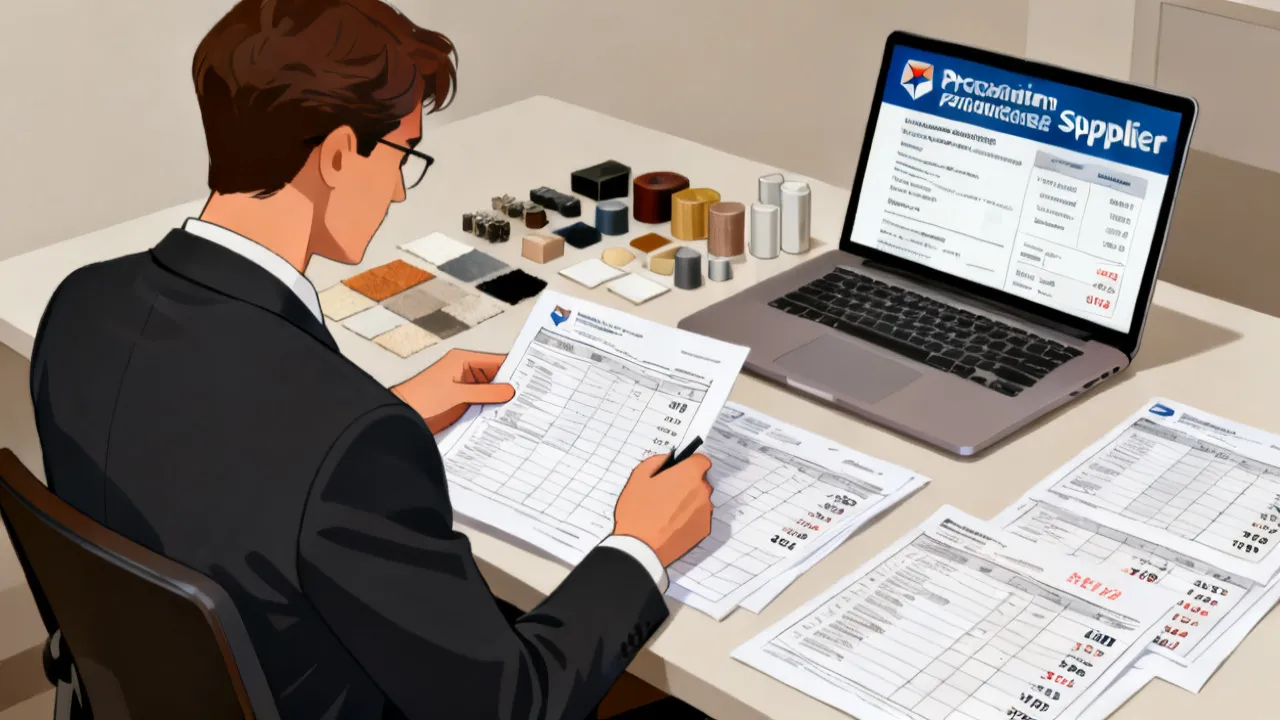
This guide explains how to evaluate and source Xxxx-related offerings using supplier documentation, pricing signals, and practical requirements. Objectively, keywords typically represent a product/service category, while “supplier” and “price” reflect market variability. The background clarifies how procurement decisions balance quality, lead time, compliance, and total cost of ownership.

This guide explains how Xxxx is evaluated, sourced, and verified for reliable outcomes. It provides objective background on typical supplier practices, documentation expectations, and risk controls. You’ll also find a structured comparison of procurement conditions and a practical checklist to help you align requirements with real-world delivery constraints.

Djxjkcoklzmfb is a procurement-related term that can influence how buyers evaluate suppliers, align documentation, and manage purchasing decisions. This guide provides an objective background on the keyword, common ways organizations operationalize similar procurement codes, and practical considerations for governance, quality checks, and risk controls—without relying on unverified claims.

This guide explains Djxjkcoklzmfb and how organizations typically evaluate it within procurement and vendor selection processes. Objectively, these keywords often function as internal identifiers or system tags rather than consumer-facing terms. The article outlines selection criteria, supplier considerations, and practical requirements, including a comparison framework and step-by-step checklist for informed decision-making.
This guide explains Djxjkcoklzmfb with a practical, procurement-focused lens—how pricing and supplier details influence sourcing decisions. Objectively, Djxjkcoklzmfb appears to function as a product or catalog identifier in supply workflows, and effective handling depends on verification, documentation, and consistent specifications. Learn how to compare options, evaluate conditions, and reduce sourcing risk.

This guide explains what “Pornor” generally refers to in adult-content ecosystems, how platforms manage access, and what risks matter for users and operators. Objectively, adult media is widely distributed online through subscription, licensing, and moderation frameworks. The guide focuses on harm reduction, legal compliance, and practical safety considerations rather than sensational claims.