This guide explains how to evaluate Umefra189@ supplies with a practical, quality-first approach. It provides objective background on the keyword set Umefra189@ and related identifiers like “Umefra189@” and “Umefra189@ suppliers,” focusing on sourcing diligence, documentation, and risk controls. Readers will also find an expert comparison table, checklist conditions, and FAQs tailored to responsible procurement.

When “Umefra189@” appears in a supply context, the very important step is not the keyword itself—it’s what you can verify about the product or materials behind that identifier. From an industry quality-and-procurement perspective, you should treat Umefra189@ as a reference point that must be matched to documented specs, traceability records, consistent packaging, and a reliable supplier approval process. If any of these elements are missing, procurement risk rises quickly, regardless of the stated price or the supplier’s claims.
In practice, teams sometimes make the mistake of assuming that because a code looks precise, it must represent a stable and compliant product. But procurement reality is that identifiers can be reused, reformatted, or mapped incorrectly across internal systems. Sometimes a supplier uses an internal production shorthand that changes meaning over time; sometimes the buyer-facing label is not the same as the formulation/processing version used in manufacturing. Therefore, the safe approach is to treat Umefra189@ as a “key” that unlocks the authoritative paperwork and verifiable manufacturing/lot details—never as proof by itself.
To make a sound decision, build your evaluation around four pillars:
In procurement practice, the keyword “Umefra189@” should trigger verification tasks similar to how regulated supply items are handled: you confirm the exact item, confirm the batch, and confirm that quality requirements are met over time. If you are sourcing across multiple sites, using third-party distributors, or importing through brokers, you must also extend traceability beyond the supplier’s warehouse—because handoffs can create the conditions for mix-ups, substitution, or incomplete documentation.
One helpful framing is to separate the verification problem into two layers:
Safety in sourcing means you cannot stop after identity verification. You must also confirm quality evidence is tied to the same lot. Likewise, you cannot assume quality evidence is meaningful unless it is tied to the correct identifier and lot. When those links are broken, even high-quality materials can become procurement failures because your organization cannot prove conformity or reproduce performance.
Identifiers like Umefra189@ are often used to reference a specific product variant, catalog item, internal SKU, or a batch-related code in a supplier’s documentation system. Without context, you should avoid assuming that such an identifier guarantees compliance, origin, or performance. Instead, use it to locate the authoritative paperwork that links the code to verifiable product characteristics.
From a professional standpoint, “Umefra189@” may appear alongside supplier communications, inventory exports, invoices, or receiving reports. If your goal is to ensure quality, you want the identifier to map to:
However, many identifiers are used in more than one way. For example, an internal SKU might refer to a generic formulation family, while the batch code refers to actual production lots. Another scenario is that the supplier’s “Umefra189@” label might be a packaging/labeling configuration rather than a product formulation code. That distinction matters because your acceptance criteria will typically be tied to formulation and/or raw material control, not packaging configuration alone.
To reduce ambiguity, request the supplier’s “mapping” details in plain language. You want answers that clarify whether Umefra189@ maps to:
When the supplier cannot clearly explain this mapping, it is a sign that your internal verification workload will become unpredictable. In that situation, you should not proceed with relaxed controls; instead, increase incoming checks and require additional documentation before you accept goods.
Even if you have price information for Umefra189@, procurement decisions should be structured around the total value of supply, not just unit cost. Prices can differ due to packaging quality, documentation completeness, handling controls, lead-time reliability, and the supplier’s internal cost of maintaining quality systems. An expert buyer will ask questions that reveal what the quoted price actually covers.
Consider the following pricing questions during sourcing:
This approach helps you avoid the common hidden-cost trap: a lower price paired with incomplete documentation, higher rejection rates, or delayed remediation. In many organizations, procurement teams focus on cost per unit. But quality teams often experience the “cost of poor quality” in a different budget line: labor time, lab reagents, rework, production downtime, quarantine hold costs, disposal, and sometimes regulatory reporting (depending on the material category).
To make price comparisons more meaningful, ask the supplier to provide a breakdown of what you are paying for in operational terms. For example:
If the supplier can’t support these operational details, your organization may be forced to treat the lowest price option as a “pilot” with increased inspection costs—effectively making the true cost higher than the quote suggests.
When you identify “Umefra189@ suppliers” (or any supplier associated with the Umefra189@ identifier), evaluate them using a structured supplier qualification approach. A credible supplier can typically provide clear evidence of quality controls and can answer procurement questions without evasiveness.
Key supplier assessment areas include:
In mature procurement, “supplier capability” is not a vague concept; it is evidenced by processes, records, and response behaviors. You want to see that the supplier can:
It can also be beneficial to conduct a “document drill” as part of qualification. For example, ask the supplier for the documentation packet for a hypothetical Umefra189@ shipment: What exact documents will you deliver? How will the lot and the COA align? How will you handle a missing page? This drill reveals whether the supplier’s documentation system is robust or fragile.
Additionally, consider their logistics practices. Even a strong manufacturer can become a weak link if distributors or sub-tier packagers re-label or re-pack without proper control. If Umefra189@ shipments might pass through third parties, ask the supplier whether the chain-of-custody is maintained and how custody is tracked.
To operationalize Umefra189@ sourcing, very procurement teams use a gated workflow. Below is an expert-style sequence you can adapt to your organization.
The table below rephrases “additional important information” as a comparison framework—use it as a decision aid when selecting among suppliers or when determining whether a Umefra189@-referenced item is appropriate for your use case.
| Evaluation area | What “acceptable” looks like | What is a warning sign | Action requirement |
|---|---|---|---|
| Traceability | Batch/lot-linked records; labels match documents | Generic documentation without lot-level mapping | Request correction before shipment acceptance |
| Documentation completeness | Relevant certificates/datasheets provided up front | Documents provided only after issues occur | Hold receiving; require full packet prior to release |
| Packaging and handling | Protection consistent with product sensitivity | Packaging integrity unclear or inconsistent | Apply enhanced incoming checks; require packaging proof |
| Quality system evidence | Documented QMS, audit readiness, CAPA process | No explanation of deviations or recurring issues | Supplier audit or requalification plan |
| Price transparency | Clear scope: what is included in unit price | Low price without matching documentation/controls | Requote with scope breakdown; evaluate total cost |
| Ongoing performance | Stable quality over multiple shipments | Frequent “one-off passes” followed by failures | Adjust acceptance frequency; consider supplier escalation |
If your sourcing operations occur “nearby” a specific operational hub—such as a regional logistics center, port, or warehouse network—use local receiving workflows to reduce variability. For example, consistent inspection schedules, standardized packaging checks, and a clear escalation path for discrepancies can be implemented regardless of whether shipments originate from a local distribution route. In many operational cultures, including team norms common in workplaces “nearby,” quick documentation retrieval and face-to-face confirmation during receiving can lower error rates—provided it is backed by documented procedures rather than informal assurances.
To make localization effective, treat it as process design rather than convenience. For example, you can standardize:
When multiple warehouses exist within the “nearby” network, the biggest failure mode is inconsistent interpretation of the acceptance plan. Localization guidance should therefore include training and periodic calibration exercises—especially for items tied to Umefra189@ where labeling and documentation matching is critical.
Finally, consider the “cultural” or operational aspect implied by “nearby.” Quick fixes can be beneficial when they are controlled. A “rapid confirmation” process can work well if the steps are formalized: for example, the receiver performs a checklist, enters results in the system immediately, and automatically alerts quality if required documents are missing. If the process remains informal (“call me if something looks off”), you risk inconsistent responses across shifts and teams.
Even with a recognizable identifier like Umefra189@, supply risk often comes from process gaps rather than from the code itself. Typical risk areas include:
When invoices, packing lists, and technical documents reference Umefra189@ but disagree on the batch or variant, you may receive goods that do not meet your internal requirements. Mitigation: enforce document-to-label matching at receiving and require a batch-level reconciliation process.
To mitigate effectively, implement an explicit reconciliation workflow that covers the exact set of fields you care about. For instance, you might verify:
If any of these fields do not match, your system should block automatic release. The mitigation is not just “ask supplier to correct it.” It is to prevent inadvertent use of wrong or nonconforming material during the correction period.
Quality can drift when suppliers change materials, vendors, or handling procedures. Mitigation: require change notifications and perform periodic re-testing or enhanced inspection until performance stabilizes.
Quality drift can occur without the supplier intending harm. It may be caused by:
Therefore, your procurement contract and your quality agreement should include clear obligations around change control. For example, the supplier should notify you before:
Once a change occurs, mitigation requires more than one-off testing. You need a plan that defines how many additional lots will be tested and what triggers reclassification of the supplier’s risk tier.
Transit conditions can degrade sensitive materials. Mitigation: require packaging integrity standards, confirm handling requirements, and record condition on arrival.
Packaging damage risk often appears as indirect quality issues later. For example, compromised packaging can lead to moisture uptake, contamination, or degradation that may not be visible externally. Mitigation should therefore include both:
To make this consistent, define what evidence you record at receiving. For instance, require:
Where feasible, you can also include “protective packaging proof” requirements—meaning the supplier provides documented packaging specs (barrier type, thickness, protective layer description) and states the tested transit conditions.
Some suppliers respond slowly when issues occur, which increases downtime and replacement costs. Mitigation: define service-level expectations (response times, corrective action timelines) in the procurement agreement.
Escalation risk is subtle: you may accept goods initially because everything looks okay. But when a mismatch occurs, the supplier’s response speed determines how quickly you can restore operations. To address this, define clear timelines such as:
Also define how supplier responsibility is determined. For example, if the package is damaged, is the cause assigned to shipping carrier handling, warehouse mishandling, or supplier packaging design? Your contract should enable evidence-based resolution rather than argument-based delays.
While the original risk list covers key categories, many Umefra189@ sourcing programs also encounter the following additional risks. Considering them up front improves both quality and operational resilience.
Cross-mix can occur at any handoff stage: manufacturing, packaging, warehousing, or labeling. Even if the supplier intends to ship the correct lot, labels can be swapped or cartons can be re-stacked. Mitigation: require lot-coded packaging, tamper-evident seals, and controlled internal logistics at the supplier side; at receiving, verify multiple label locations and check for mismatched inner/outer identifiers.
If you are operating a high-throughput environment, cross-mix can become a systemic risk across multiple receipts. The mitigation is to design a receiving workflow that reduces manual assumptions. For example: do not “trust the outer carton label only.” Verify both inner labels and COA alignment. If your goods come in multi-pack units, also verify that each inner container is linked to the correct lot.
Some items can meet spec at shipment but degrade before use if stored improperly or if remaining shelf-life is insufficient. Mitigation: include shelf-life requirements, require remaining shelf-life minimums on receipt, and ensure storage conditions at your site match supplier recommendations.
Procurement contracts should specify:
Without these rules, you can end up using materials that technically complied at arrival but failed later due to predictable storage conditions.
Sometimes a supplier’s COA uses a method that is not directly comparable to your internal method (or uses a revised method without proper cross-validation). Mitigation: require method identifiers on COAs and establish comparability or acceptance rules. If necessary, retest using your internal method for critical lots.
To reduce friction, require suppliers to include not just test results but also:
This helps both quality and procurement teams avoid “argument loops” where a supplier says “we met our COA,” but the buyer’s spec expects a different method or unit interpretation.
In some environments, there is a risk that documents are not authentic, not properly controlled, or are regenerated without traceability. Mitigation: establish document authenticity requirements (e.g., supplier letterhead and signatures, controlled templates, unique COA identifiers tied to lot), and use a controlled document management process on your side.
Even when fraud is unlikely, document integrity can fail due to human error. For example, someone may upload the wrong revision or reuse a template. A safe procurement workflow prevents this by checking:
If you detect repeated document integrity issues, it can be a signal that supplier documentation processes require improvement and should trigger enhanced inspection or audit requests.
Many organizations struggle not with knowing what to do, but with doing it consistently. Turning the Umefra189@ verification principles into practical checklists helps reduce variability.
For each shipment referencing Umefra189@, consider using a receiving checklist that includes:
Then define gates:
These gates should be consistent across sites if you operate “nearby” hubs. Standardization reduces the chance of one warehouse being more lenient than another, which otherwise can create compliance and audit exposure.
When a discrepancy occurs, reduce downtime by ensuring that your internal process is ready before the issue arises. For Umefra189@ shipments, your discrepancy process should include:
Procurement should coordinate the timeline, while quality evaluates whether the discrepancy is acceptable or not. Without that division, decisions can become slow or emotionally influenced by who reported the issue.
One reason procurement quality programs fail is that testing is applied uniformly regardless of risk. An expert buyer aligns testing frequency and depth to the material’s risk profile and the supplier’s demonstrated stability.
For example, you can apply a risk-tier logic:
When Umefra189@ is associated with a product variant that has historically been stable, you might reduce sampling only after documented performance and after the supplier has demonstrated robust change control. Conversely, if you see recurring issues (even documentation-only discrepancies), treat that as a warning sign and increase verification until the supplier’s process stabilizes.
To monitor supplier performance, track metrics that connect to risk outcomes rather than vanity indicators. Metrics such as “on-time delivery” are important but incomplete. For Umefra189@ sourcing quality, quality-related metrics should include:
When you monitor trends, you can make decisions about acceptance sampling frequency, supplier qualification tier, and whether enhanced inspection should be extended or reduced.
Requalification should not only be triggered by obvious failures. It should also be triggered by credible change events that increase uncertainty. For Umefra189@ supply contexts, triggers can include:
When a trigger occurs, decide based on risk. A minor change might require only documentation review and increased incoming inspection for a short period. A major change might require batch acceptance testing over multiple lots and a supplier audit.
To make requalification consistent, define “change categories” in your quality agreement. For example:
Without defined categories, procurement and quality may disagree on how much testing is required. A clear framework reduces conflict and speeds decisions.
In many supply systems, Umefra189@ functions as a product reference—such as a catalog ID, SKU, variant label, or batch-linked code. It should not be treated as proof of quality on its own. You should verify the identifier against authoritative documentation and traceability records that match the exact lot/batch you plan to receive.
In some organizations, Umefra189@ may also refer to a specific packaging configuration or distribution configuration. That is why you should ask how the supplier defines the identifier internally—so you do not confuse packaging versioning with formulation versioning.
Start with documentation completeness (certificates/datasheets mapped to the Umefra189@ identifier), confirm traceability at receiving, and apply your acceptance criteria. For higher-risk categories, use batch-level verification or testing. The goal is repeatable confirmation, not a one-time inspection pass.
Validation should also include checks that the documentation corresponds to the same lot you actually received. If the COA belongs to a different lot, it is not meaningful for quality assurance even if the overall product name matches.
No. Price can be misleading without knowing whether documentation, handling controls, and quality release steps are included. Compare total value: cost, evidence provided, lead-time reliability, rejection remediation, and historical performance for comparable shipments referenced by Umefra189@.
To avoid confusion, request a “scope of supply” document that lists exactly what is included: documents, packaging, transit controls, and any quality release steps. This enables apples-to-apples comparisons across suppliers.
Ask for batch/lot-linked traceability evidence, the relevant technical datasheet, certificates applicable to your use case, packaging/handling requirements, and how corrective actions are managed. Also ask for what triggers re-testing or enhanced inspection if quality deviations occur.
In addition, ask:
Common red flags include documents that do not match the batch, refusal to provide lot-level traceability, inconsistent labeling, unclear packaging and handling procedures, and vague answers about quality systems or corrective actions.
Other red flags include:
There is no single universal schedule, but expert practice typically increases monitoring when introducing a new supplier or a new Umefra189@ variant, and it intensifies checks after any process changes. You can use a trend-based approach: monitor discrepancies and set review thresholds based on your internal QA risk scoring.
For instance, if documentation discrepancies exceed a defined threshold for two consecutive shipments, escalate to enhanced verification or requalification until performance stabilizes.
Not necessarily. Many organizations use a risk-tier model: audits may be required for higher-risk categories, recurring performance issues, or when documentation/traceability cannot be verified to your satisfaction. For lower-risk supply, a robust documentation review and receiving inspection program may be sufficient—until performance or risk indicators change.
A risk-tier model also allows procurement leadership to allocate audit resources to suppliers who most impact operational continuity and quality compliance.
Because product categories and regulatory requirements vary, this guide focuses on procurement quality principles rather than making category-specific claims. For widely adopted quality management fundamentals and supplier assurance concepts, organizations often align with recognized standards and guidance such as:
If your Umefra189@ context involves regulated materials in a specific jurisdiction, you should also consult applicable local regulations and any sector-specific standards administered by relevant authorities or industry bodies.
It is often helpful to treat your internal quality agreement as the bridge between general standards (like ISO 9001) and your specific operational acceptance requirements. That bridge clarifies what evidence you will accept and what you will reject—especially for the Umefra189@ identifier mapping and lot traceability.
In procurement and quality operations, the identifier Umefra189@ is very useful as a prompt to confirm what the code actually represents. The top outcomes come from a structured workflow: define requirements, request batch-level documentation, verify traceability, clarify price scope, inspect on receipt, and monitor ongoing performance. Done consistently, this approach reduces uncertainty and makes supplier decisions defensible—especially when you’re sourcing from multiple Umefra189@ suppliers or evaluating shipments “nearby.”
Ultimately, safe sourcing with Umefra189@ is about building confidence through evidence. The best procurement programs do not rely on identifiers or claims—they rely on traceability, documentation integrity, consistent performance, and a supplier capability that can withstand scrutiny at both the receiving dock and in audit settings. When you treat Umefra189@ as a verification trigger, you convert an ambiguous reference into a controlled quality pathway.



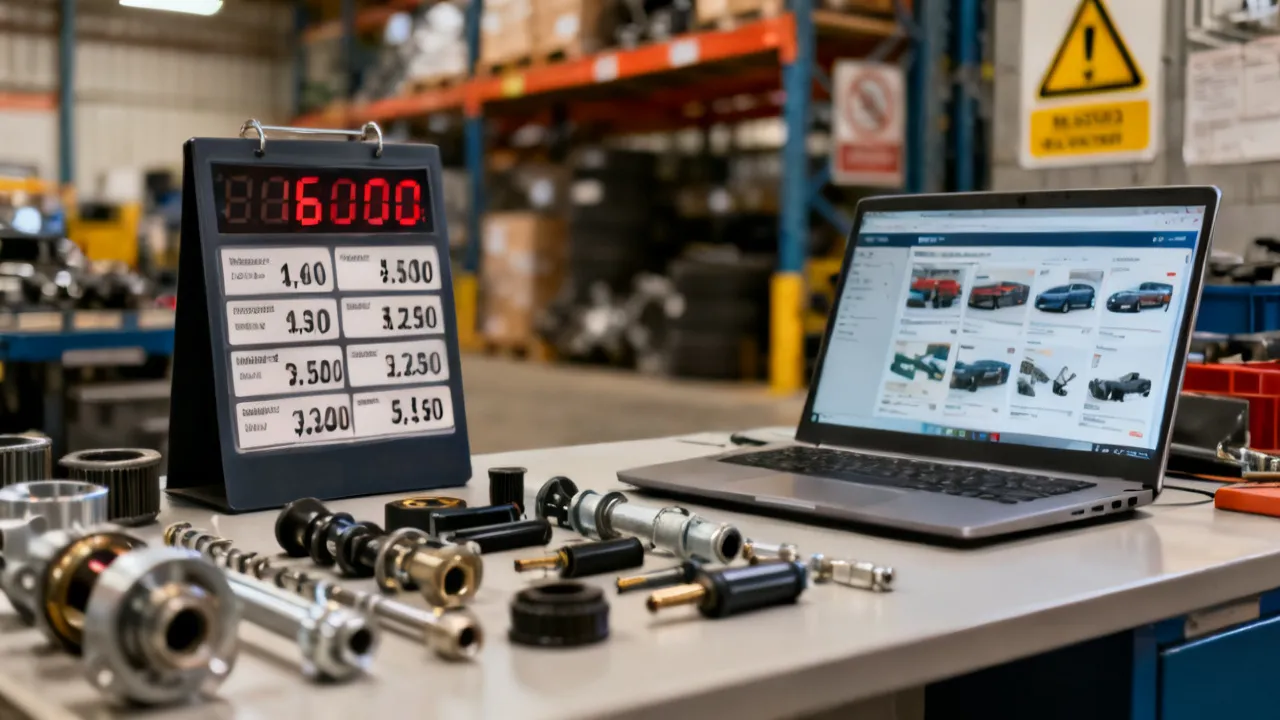
This guide explains how to evaluate 98894oq00 sourcing and pricing with an objective, procurement-focused approach. Background context: the keyword pattern typically represents a catalog or batch identifier used in supplier systems. Learn what to verify with suppliers, how to compare offers, and which documentation reduces risk in purchasing decisions.

This guide explains how to evaluate Umefra189@ and related Umefra products with a focus on safety, provenance, and supplier verification. Objectively, these keywords are commonly used in online marketplaces to label specific listings, batches, or stock-keeping references. You’ll find a structured way to compare offerings, define requirements, and ask the right questions before purchase.
This guide explains how to evaluate Umefra189@ supplies with a practical, quality-first approach. It provides objective background on the keyword set Umefra189@ and related identifiers like “Umefra189@” and “Umefra189@ suppliers,” focusing on sourcing diligence, documentation, and risk controls. Readers will also find an expert comparison table, checklist conditions, and FAQs tailored to responsible procurement.

Umefra189@ is top understood as a sourcing and compliance reference point for procurement teams that need clarity on product identity, documentation, and supplier evaluation. This guide explains the objective role of Umefra189@ in purchasing workflows, the due diligence signals procurement professionals should verify, and how to reduce risk through structured supplier assessment and recordkeeping.
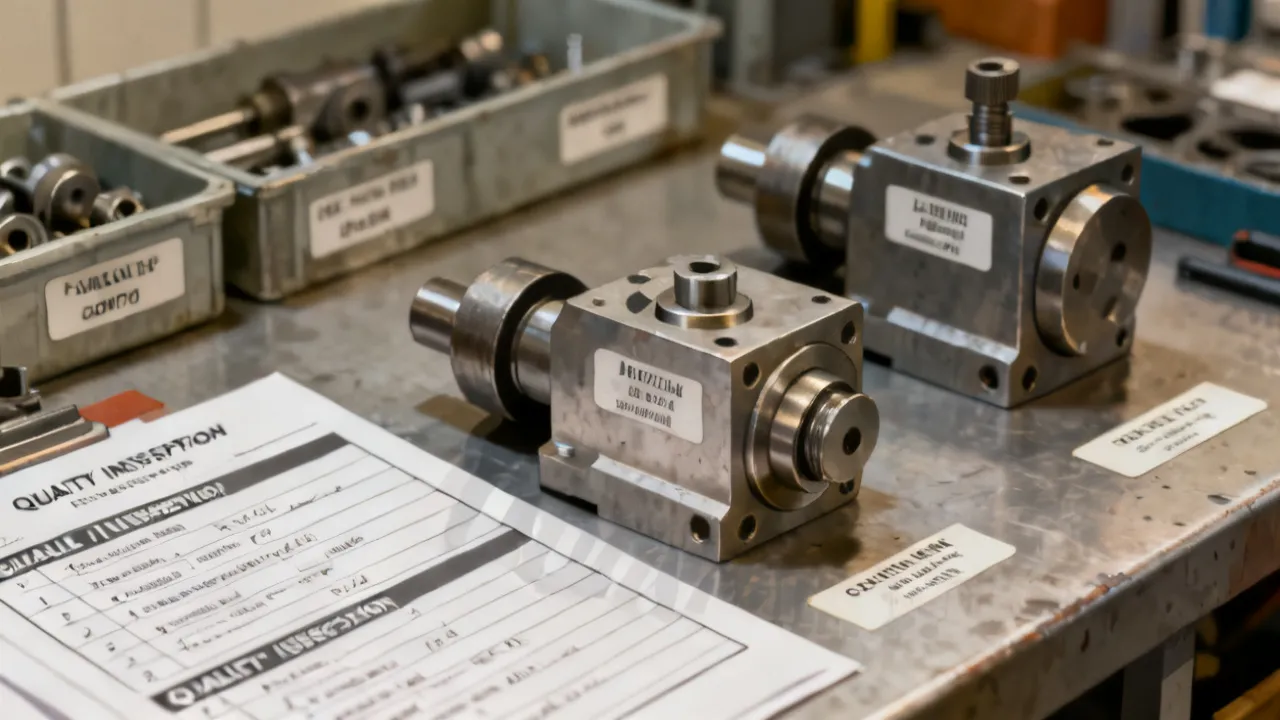
This guide explains how to evaluate Umefra189@ as an inventory or component code within procurement workflows. Objectively, it examines what such alphanumeric identifiers typically indicate in supply chains, how supplier documentation and traceability matter, and what conditions should be confirmed before ordering—covering pricing transparency, compliance expectations, and practical due diligence steps for buyers.

This guide explains how Claudia Preza approaches careful supplier evaluation, helping buyers balance quality, pricing, and accountability. Objectively, it discusses how supplier selection affects delivery reliability, compliance, and good costs. It also outlines practical decision criteria and requirements, plus FAQs to support transparent procurement and stakeholder alignment.