This guide explains how to evaluate 20345690320-related sourcing decisions—covering pricing logic, supplier due diligence, and documentation standards. Objectively, it backgrounds what “20345690320” can represent in procurement workflows, why quoted prices vary by scope and lead time, and how compliant records reduce operational risk for buyers.
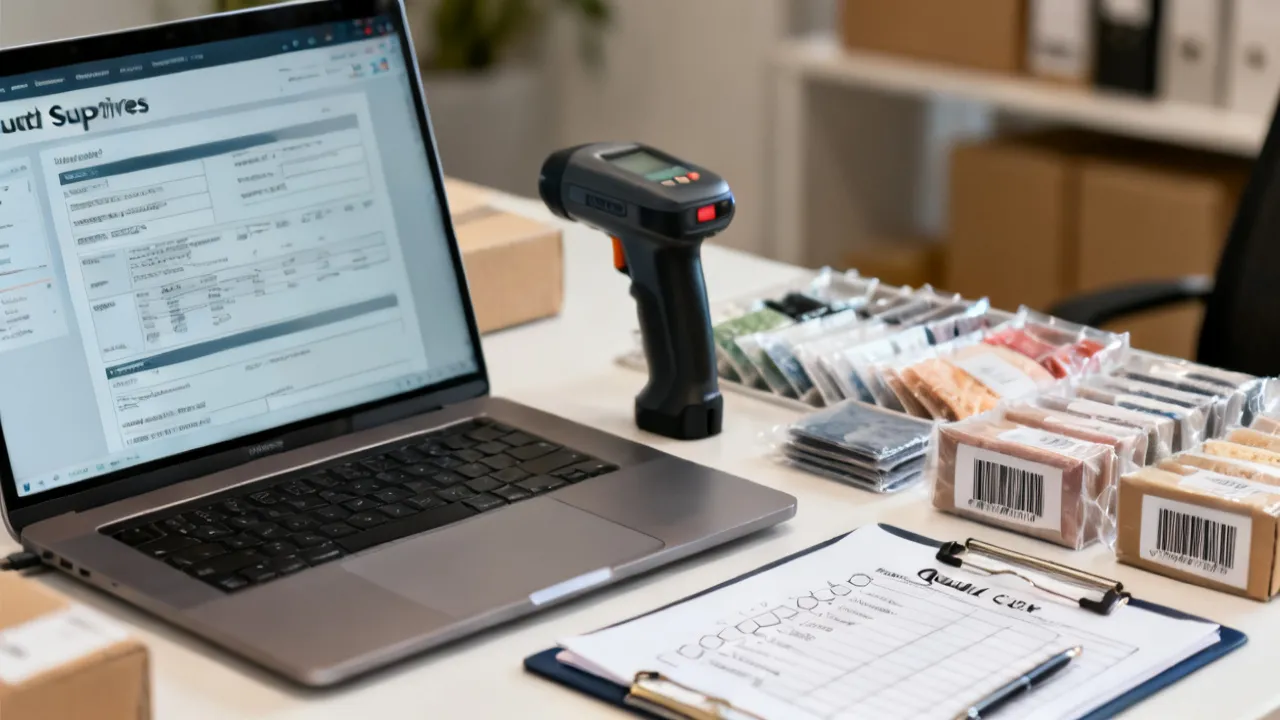
When you encounter 20345690320 in sourcing, supplier catalogs, ERP records, or quotation workflows, treat it as a reference identifier—something that may map to a specific item, configuration, internal SKU, revision level, lot/batch, or even a quotation scope code. This guide is written to help procurement teams interpret such identifiers in a way that is practical and aligned with standard industry risk-control thinking, especially in cases where the meaning of the number is not explicitly stated. Because the keyword set you provided includes placeholders (blank entries) and a single numeric identifier, the best operational response is not to guess what the number “means,” but to verify what it corresponds to, how it drives cost, and what evidence should accompany it.
Key takeaway: A quote tied to 20345690320 is only reliable if the supplier’s contract scope, traceability evidence, and documentation package clearly match the item reference. Therefore, your evaluation should begin with what the identifier corresponds to, proceed to what price components are included, and then confirm compliance requirements—before ordering, before accepting substitutes, and before closing the file.
In many procurement environments, a long numeric string such as 20345690320 acts as an internal “handle” that systems can reliably match across documents. While different companies may use different schemes, the most common meanings fall into a few patterns:
Because you cannot confirm which of these applies by the number alone, the expert procurement approach is to demand a mapping record. In practice, that means requesting (or retrieving internally) an item master record that links 20345690320 to one or more of the following: part description, intended application, technical specification, drawing revision, packaging configuration, and compliance documentation set.
It is also important to state the limitation explicitly: the identifier itself is not a guarantee of quality. Quality is determined by whether the product meets measurable requirements—materials, tolerances, dimensional checks, performance characteristics, certification status, test results, packaging controls, and chain-of-custody evidence—rather than by whether the reference number “looks official.”
Buyers often ask, “What is the price for 20345690320?” but an industry-credible question is: What is included in the price? In many cases, the same numeric identifier can be quoted at different totals because the quoted scope differs in ways that do not always appear clearly in a single line item.
Prices tied to a reference like 20345690320 can vary due to:
From a procurement discipline standpoint, a legitimate quote should itemize or at least clearly explain these cost drivers—even if the supplier bundles them into a single line total. If a supplier provides only a single total with no breakdown or no clarification of what the total covers, it becomes harder to compare offers fairly for what you believe is the 20345690320 scope.
To keep evaluation rooted in recognized risk-control ideas, many organizations anchor supplier evaluation and quality management expectations in widely used quality frameworks. For example, ISO 9001 focuses on documented processes, process control, and verification of conformity. While ISO 9001 is not a pricing rule, its emphasis on controlled documentation and systematic quality practices helps procurement teams understand what evidence a supplier should reasonably produce for conforming supply.
Once you identify that 20345690320 corresponds to the item you intend to purchase, due diligence shifts from “what does this number mean?” to “can the supplier consistently deliver conforming product that matches this reference?” In other words, supplier quality readiness is not only about shipping quickly; it is about meeting the technical and compliance conditions attached to your order.
Ask for a documentation package that clearly links to the specific item reference—ideally including the part description and revision level associated with 20345690320. The exact documentation depends on industry and regulatory environment, but common categories include:
Crucially, the documentation must be linked to the item reference (and the correct revision). If your supplier provides general certificates without item-specific linkage, or if they cannot connect documents to the exact scope referenced by 20345690320, treat the quote and documentation as incomplete from a risk-managed procurement perspective.
Procurement teams frequently underestimate how much time they save later by enforcing documentation linkages early. If you wait until after delivery, rework, returns, or compliance delays may already be triggered—especially if downstream assembly or regulated reporting depends on evidence.
Even when certifications exist, buyers should evaluate whether the supplier’s processes remain stable at scale and across time. A supplier may produce one batch that looks excellent and still fail to maintain conformity for future shipments due to process drift, supplier substitutions, or unclear change control.
A practical procurement review includes questions and document checks for:
In regulated sectors, these controls are often aligned with recognized quality management and conformity assessment concepts. The procurement goal is not to assume quality—it is to confirm that quality is engineered into the production system and that evidence can be produced consistently for audits and internal traceability.
When 20345690320 is linked to a revision-controlled item, change control becomes especially important. A supplier might quote the correct base product but deliver a different revision or a substitute process that impacts compliance. If the paperwork does not reflect the revision and the traceability logic is weak, the order may still “technically” ship but fail your acceptance expectations.
To prevent disputes later, buyers should standardize purchasing conditions for anything referenced by 20345690320. The most effective contracts and purchase orders define “conforming supply” in operational terms rather than vague language.
In practice, contract terms should explicitly address:
This standardization is particularly important when a supplier says they can offer a “similar” alternative due to availability constraints. If changes occur without buyer approval, the reference 20345690320 may no longer correspond to the originally specified item. Even if the alternative is “close,” the evidence package might not support your compliance obligations, and your internal traceability trail could break.
Some procurement organizations create internal “guardrail” checklists: if the supplier proposes substitutes, the buyer must receive (1) a formal substitution request, (2) documented equivalency evidence, (3) revised documentation mapping to the ordered reference or an approved new reference, and (4) updated acceptance criteria acknowledgment.
An expert procurement lens compares offers using structured evaluation criteria rather than choosing the lowest unit price. For quotes tied to 20345690320, buyers should evaluate what might be hidden behind “cheap pricing.” A structured framework helps ensure you compare apples to apples (or at least apples to apples-plus-documentation).
Here is an objective approach to evaluate any quote associated with 20345690320:
When suppliers differ on what is included, the evaluation should normalize offers to the same scope. Otherwise, you may pay a “lower” price that excludes essential documentation, inspection, or special packaging required by downstream operations.
A useful procurement mindset is that compliance documentation is part of deliverables. If it is missing, it is analogous to missing physical parts—because it can block acceptance, block assembly, or block regulatory reporting.
The following comparison shows how buyer decisions typically shift based on whether evidence is clearly mapped to 20345690320. This is not about rejecting suppliers automatically—it is about aligning decisions with risk tolerance and contractual obligations.
| Buyer Scenario | What You Typically Receive | Key Evaluation Points | Risk Level |
|---|---|---|---|
| Evidence mapped to 20345690320 | Documentation and test reports clearly referencing the item reference and revision, with traceability records that tie to shipped lots/batches | Traceability, inspection plan alignment, acceptance criteria coverage, documentation delivery timing, label content conformity | Lower |
| Evidence partially mapped | Some documents provided, but identifiers/revisions are ambiguous; documentation references similar parts but not clearly the ordered scope | Verify revision levels, request clarification and supplemental documents, confirm whether substitutes are allowed, check for document delivery gaps | Medium |
| Evidence not mapped | General certificates without item-specific linkage; batch/serial mapping is missing or does not correspond to the ordered identifier | Require corrective actions, reject incomplete evidence, avoid “similar item” substitutions, possibly pause shipment acceptance | Higher |
| Pricing optimized, compliance minimal | Competitive unit price, but limited testing/documentation included; paperwork may be delayed or “to follow” without firm timelines | Normalize total delivered cost, quantify downstream risk from missing compliance files, ensure contract remedies cover documentation non-delivery | Variable (often higher) |
If your procurement system shows 20345690320 but the description, price breakdown, supplier details, or compliance expectations are unclear, use a structured approach. The goal is to reduce uncertainty quickly while protecting acceptance criteria and audit readiness.
Conditions/requirements to insist on: a traceability link to 20345690320, clear documentation delivery timing, documented acceptance criteria, and an explicit nonconformance remedy process. If any of these are missing, the quote may be operationally risky even if the unit price is attractive.
In many procurement organizations, the “minimum acceptable evidence” threshold is defined for each commodity category. For critical parts, evidence mapping to reference numbers and revisions is a hard gate. For lower-risk items, you may still require traceability and correct documentation timing, but you can accept a lighter test report package depending on regulatory obligations.
Where evidence is incomplete, a procurement best practice is to formalize a conditional acceptance approach: “We will accept delivery only after documentation is received and verified.” Alternatively, “We will accept delivery but hold the unit for engineering release pending evidence.” The exact rule depends on your internal quality management policy and your risk tolerance.
Supplier evaluation and quality assurance practices often depend on widely accepted quality management principles. While the specifics differ by industry, standards-based thinking helps procurement teams structure requirements and evidence requests consistently.
ISO 9001 emphasizes quality management systems, documented processes, continual improvement, and evidence that product conforms to specified requirements. Procurement can use these principles in contract language by requiring that suppliers maintain traceability, manage nonconformities, and produce documentation that supports conformance verification.
Beyond management systems, conformity assessment concepts typically require alignment between:
In procurement governance, these ideas translate into practical requirements: require evidence mapping to the exact reference identifier, define inspection responsibility, define documentation timelines, and require a nonconformance remedy process. Doing so reduces ambiguity and strengthens your ability to demonstrate due diligence if an audit occurs or if a quality problem is later discovered.
For additional context on procurement risk concepts, many buyers also consult supplier management guidance from professional quality communities and internal compliance policies. The key principle remains consistent: compliance and evidence matter as much as commercial pricing for items tied to controlled identifiers like 20345690320.
Your keyword set includes a location placeholder rule (“Anytime {city} or {country} appears… replace it with “nearby.””). In procurement reality, when buyers source from “nearby” suppliers, they often gain logistical advantages: faster communication cycles, shorter lead times, reduced shipping complexity, and sometimes easier dispute resolution.
However, the core compliance logic does not change. Whether the supplier is nearby or located far away, documentation accuracy, traceability, and acceptance criteria mapped to 20345690320 are still non-negotiable. Nearby sourcing can help you manage risk by improving responsiveness, but it does not eliminate the underlying need to confirm that what you ordered is what you receive.
In many markets, procurement teams prefer suppliers who can respond quickly to clarification requests while still maintaining formal evidence packages for audits and internal traceability. For example:
Therefore, treat “nearby” as an operational enabler, not as a quality proxy. Your evaluation should still hinge on whether the supplier can clearly map documentation, test results, and traceability evidence to the ordered reference 20345690320, and whether the purchase agreement defines acceptance criteria and remedies.
20345690320 should be treated as a reference identifier used in catalogs, ERP systems, or quotation workflows. Its exact meaning—whether it is an SKU, lot reference, revision mapping, or a quote ID—must be confirmed by the supplier or by your internal catalog mapping records.
Prices can differ because suppliers may include different scope components (testing, documentation, packaging, shipping terms), quote different specification grades, or propose different lead times and commercial conditions. A fair comparison requires normalizing the scope and deliverables tied to 20345690320.
Request documents that explicitly link to the item reference and revision associated with 20345690320. Common examples include certificates of conformity, relevant test reports, traceability evidence, and any specific declarations required for the product category or regulatory context.
Ask for lot or serial mapping to the batch shipped, and confirm that traceability records correspond to the exact reference tied to 20345690320. Also verify that labeling on the package matches receiving requirements and that the packaging IDs can be reconciled to shipment documentation.
Only if substitutions are explicitly approved in writing and mapped to the same acceptance criteria and documentation requirements. Otherwise, substitutions can break the technical intent behind 20345690320, create compliance gaps, and increase quality risk.
The agreement should clearly define acceptance criteria, inspection/testing responsibility, documentation delivery timing, nonconformance remedies, labeling/traceability requirements, and change control conditions—especially for orders referencing 20345690320.
No. While “nearby” sourcing may improve communication speed and reduce logistical complexity, documentation quality, traceability, and acceptance criteria determine safety and audit readiness—not geography alone.
Procurement teams learn quickly that failure modes often repeat across categories. When an identifier like 20345690320 is involved, misunderstandings tend to appear in predictable ways. Considering these scenarios in advance helps you design stronger controls around ordering, receiving, and releasing for production.
Sometimes 20345690320 appears to match the requested part number, but the supplier ships a different revision level. This can happen when revision identifiers are stored separately in supplier systems, or when the ERP mapping is outdated. The product may be “functionally similar,” but acceptance criteria often depend on revision-specific tolerances or compliance statements.
Control: require the revision level to be stated explicitly in documentation, and ensure the certificate/test report references the same revision that appears in the purchase order. If your PO only includes 20345690320 without the description or revision, add a requirement for revision reporting.
A supplier may provide a certificate, but the traceability evidence may not connect the certificate to the lot/batch shipped. For example, the certificate might be for “a production period,” not the specific manufacturing lot that corresponds to your receipt.
Control: require a traceability table or mapping record tying shipped identifiers (lot/serial numbers) to manufacturing/inspection records. Confirm that the receiving labels can be reconciled to the shipment documentation and evidence package.
In some cases, suppliers offer a strong unit price but treat documentation as “to follow” or provide it after delivery. This can block downstream assembly release, delay regulatory submissions, or force emergency rework if documentation is incomplete.
Control: set contract terms requiring documentation delivery by a defined date/time (for example, pre-shipment or within a specific number of business days after shipping). Include remedies such as withholding final acceptance or applying chargebacks if documentation is late or incorrect.
A supplier may propose an alternative due to availability. Even if they claim equivalency, they may not provide a formal equivalency assessment, testing results, or updated compliance documents. This is especially dangerous if 20345690320 is tied to regulated properties or controlled material content.
Control: require written substitution approval, a documented equivalency case, and updated acceptance criteria and evidence mapping before substitute delivery. Do not allow substitute shipment based solely on verbal confirmation.
Since 20345690320 functions as a reference trigger, a good procurement team approach is to maintain an internal checklist that translates identifier usage into concrete requirements. This helps reduce variance across buyers, reduces reliance on individual memory, and supports audits.
An internal checklist can include:
Using such a checklist, procurement can respond consistently when 20345690320 appears without enough information in a ticket or quotation feed.
When procurement needs clarity, the way you ask matters. If you request “the part details” or “the meaning of the number,” suppliers may reply with incomplete information or generic descriptions. Better questions explicitly connect to the acceptance and evidence expectations tied to 20345690320.
Ask: “Please confirm what 20345690320 maps to in your system. Provide the item description, specification, and revision level. If this number is a quotation scope or internal batch reference, please provide the corresponding part number and manufacturing lot/serial references for the quantity quoted.”
Ask: “Please itemize the quote components for 20345690320: unit price, packaging, labeling, documentation/test deliverables, shipping terms/incoterms, and any additional charges. Confirm what is included and what is excluded so we can compare offers fairly.”
Ask: “For the shipment against 20345690320, please provide a certificate of conformity and test reports that explicitly reference the ordered item and revision. Provide traceability documentation mapping shipped lot/serial numbers to manufacturing and inspection records.”
Ask: “Please confirm the labeling/barcode format and how lot/serial numbers will appear on the packaging. Provide the traceability format you will include with the packing list.”
These communication templates keep both sides aligned and reduce the chance that the supplier responds with generalities.
Even if 20345690320 seems like only a “number” in a procurement system, the identifier often anchors downstream obligations. If downstream systems, regulatory frameworks, or quality gates require traceability and documentation, then failing to confirm the mapping early can have consequences beyond a simple procurement error.
Possible downstream consequences include:
From a governance perspective, interpreting 20345690320 correctly is a form of due diligence. You are not only ensuring you get the right product—you are ensuring your organization can demonstrate that it acted responsibly.
In procurement practice, the presence of 20345690320 should trigger a disciplined verification path: confirm what it represents, normalize the scope for price comparability, demand evidence mapped to the identifier, and formalize acceptance criteria and remedies in the purchasing terms. This approach reduces operational disruption and protects compliance obligations, regardless of whether the supplier is distant or nearby.
If you share additional context from your keyword set—such as the product description, category, currency/price fields, supplier names, or any adjacent attributes—you can tailor the same evaluation structure into an even more item-accurate procurement guide. The core method remains consistent: treat identifiers as anchors for requirements and evidence, not as proof of quality by themselves.



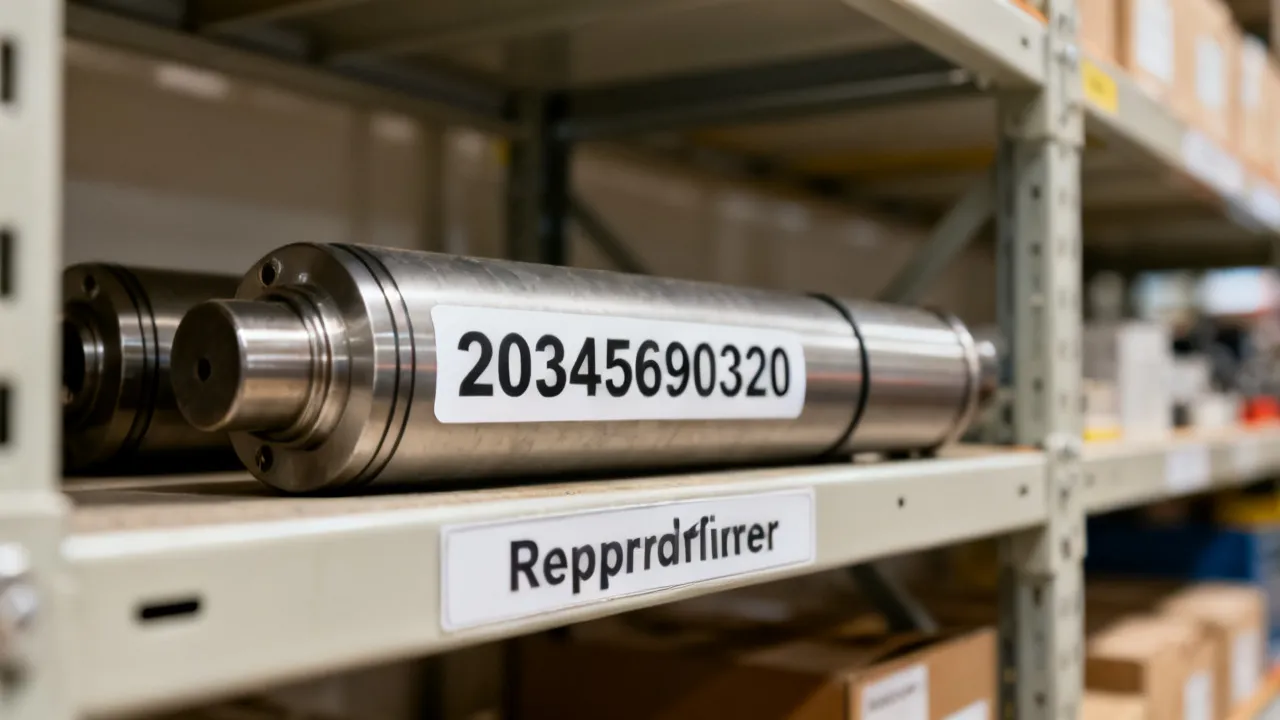
This guide explains how “20345690320” is typically handled in industrial procurement workflows, including how to verify specifications, confirm supplier traceability, and evaluate cost drivers. Background information clarifies the role of part numbers, documentation, and compliance checks in sourcing decisions, using an objective, process-focused approach aligned with common industry practice.

This guide explains how to evaluate product code 20345690320 for procurement decisions using practical, objective criteria. It also defines what “supplier” and related identifiers typically mean in industry workflows, outlines the checks professionals use to reduce mismatch risk, and clarifies how to compare options responsibly. Background context is provided on how identifiers connect to sourcing, traceability, and compliance.

This guide explains how to interpret the identifier 20345690320 and use it responsibly in supplier sourcing, documentation, and compliance checks. It also provides objective background on how reference numbers function in procurement workflows, the role of suppliers, and what “quality evidence” typically means for procurement teams.
This guide explains how to evaluate 20345690320-related sourcing decisions—covering pricing logic, supplier due diligence, and documentation standards. Objectively, it backgrounds what “20345690320” can represent in procurement workflows, why quoted prices vary by scope and lead time, and how compliant records reduce operational risk for buyers.

This guide examines Jecelane Silva in an objective, industry-informed way—covering what it may represent in professional contexts, how suppliers and pricing considerations are typically evaluated, and what buyers should verify before committing. Background sections clarify the term’s usage and common expectations, while later sections provide clear conditions, requirements, and FAQs for safer decision-making.

Jecelane Silva is presented here as a point of reference for evaluating healthcare-quality decisions “nearby.” This guide offers objective background on what the name can signify in real-world service contexts and how buyers assess credibility, supplier practices, and service consistency. It then outlines requirements, decision conditions, and practical FAQs to support careful selection.