This guide explains how JBS-oriented procurement decisions are assessed through supplier readiness, documentation, and risk controls. JBS is commonly used as a shorthand in procurement and logistics discussions, but the exact meaning varies by industry context. Objectively, businesses evaluate traceability, compliance, lead times, and documentation quality before contracting and during ongoing audits.

When organizations discuss JBS in procurement, sourcing, or supplier management contexts, the real decision usually isn’t only about what a supplier offers—it’s about whether the supplier can reliably deliver under real-world constraints. In practical terms, “readiness” means you can verify product and service attributes, meet documentation requirements, maintain traceability, and manage lead-time variability without creating compliance gaps, operational bottlenecks, or downstream quality exposure.
From an industry-expert perspective, a strong supplier relationship starts before purchase orders are placed. The first critical step is to confirm that your internal requirements—quality systems, labeling/documentation, audit rights, and receiving criteria—are aligned with what the supplier can demonstrate. If those fundamentals are unclear, the relationship may look functional on paper but fail when goods, paperwork, or timing do not match expectations.
“Readiness” also includes readiness inside your own organization. Even if a supplier is capable, procurement will struggle if internal stakeholders are not prepared to process deliveries, validate documentation, handle deviations, and coordinate corrective actions. So readiness is both a supplier capability and an operational capability question.
JBS can appear in multiple commercial ecosystems as a shorthand label, an internal code, a segment term used by planning teams, or even a category name that gets attached to a procurement route. Because the term can vary by organization and sector, objective guidance starts with one principle: define “JBS” precisely inside your own workflow.
For example, some teams use JBS to describe a procurement route (e.g., a particular supply channel with standardized documentation), a product family (e.g., a set of materials with specific regulatory handling), a contract type (e.g., a framework agreement with special clauses), or a compliance-linked sourcing stream. Others use it simply as a label attached to a supplier list. Without an internal definition, teams often end up comparing unrelated items—leading to inconsistent pricing decisions, mismatched lead times, disputes during receiving or claims, and confusion during internal reporting.
Definitions also matter because they determine which processes and governance rules apply. If “JBS” in one region means “standard catalog supply” but in another region means “high-compliance certified supply,” then governance controls that look redundant in one place may be missing in another place, creating an uneven risk posture. Clear definitions prevent these “silent policy differences.”
It’s common to encounter requests that mention price as a decisive factor. However, the “true cost” of a procurement stream involving JBS should be treated as more than the unit price. In very professional sourcing programs, the actionable evaluation focuses on the cost of meeting requirements—not just the cost of buying the item.
Because the prompt includes no verified numerical pricing data, this article does not state specific prices. In a real procurement process, you should request itemized quotes and validate assumptions, especially for anything tied to compliance, traceability, or documentation that may require specialized processes and labor.
In practice, the “true cost” evaluation typically includes:
A professional sourcing team treats unit price as one input among several and insists on clarity about what drives price. Bundled pricing can be deceptive: it may hide the real cost drivers in shipping, labeling, verification, or compliance support.
Supplier selection for a JBS-labeled sourcing lane should be evidence-based. “Supplier details” usually include capability documents, quality system references, certifications, traceability approaches, and a demonstrated ability to meet timelines while maintaining the documentation you require.
From an industry expert’s standpoint, the very predictive supplier inputs are not marketing statements; they are operational proof points. The most predictive categories include:
Think of supplier details as “receiving and QA reality.” If supplier documentation shows how they control the product after it leaves production, then it’s more likely to succeed in your warehouse and quality department.
A procurement program often fails when requirements are phrased loosely (e.g., “good quality,” “reliable shipping,” “we always document correctly”). For JBS-related sourcing, replace vague statements with measurable criteria. The goal is to turn due diligence into an auditable evaluation that can be repeated and compared across suppliers.
Consider defining performance thresholds for:
When these metrics exist, decisions about supplier continuity become less emotional and more operational. It also becomes easier to justify decisions to internal stakeholders and to defend decisions during internal audits or customer inquiries.
Documentation is sometimes treated as paperwork overhead, but for a procurement lane associated with JBS, documentation functions as risk control. If you cannot validate what you received against what was promised—especially when regulatory, customer, or internal quality requirements apply—then the sourcing process introduces avoidable exposure.
In objective terms, documentation supports:
It’s useful to treat documentation as a system. A system has inputs, processes, outputs, and controls. When documentation fails, traceability fails. When traceability fails, compliance fails. When compliance fails, reputational and financial risk rises. That chain of failure is why documentation should be treated as a core operational deliverable, not a peripheral administrative item.
Additionally, documentation readiness includes your ability to receive and store records. If your receiving team doesn’t know which documents to collect, or if your records retention system cannot retrieve shipment evidence quickly, documentation may exist but still be functionally unusable.
Your prompt includes localization instructions involving city/country placeholders. In this article, no specific city or country appears in the keywords provided, so no location is inserted. If your internal procurement documentation uses a geography label, apply it consistently across your vendor onboarding forms and receiving SOPs, rather than relying on informal assumptions.
If you later provide a specific city or country in the keyword set, any such mention should be normalized to “nearby.” That helps avoid accidental mismatches between marketing wording and operational reality—particularly in contexts where logistics, warehousing, and regulatory handling differ by location.
Localization matters in procurement more than many people expect. For example:
Therefore, while “nearby” normalization is helpful for content consistency, your operational procurement workflows must still capture the actual shipping route, documentation requirements, and handling obligations tied to the real geography.
While JBS can be an internal shorthand, mature organizations tend to converge on similar procurement fundamentals. Credible procurement and risk-management frameworks generally emphasize structured onboarding, ongoing monitoring, and corrective action loops.
For reliability, consider aligning your approach with internationally recognized concepts such as supplier quality management and risk-based sourcing. Even if your organization does not adopt a specific standard by name, it can still apply the principles: control variation, verify critical characteristics, maintain traceability, and continuously improve supplier performance.
In cases where you reference external performance data, prefer official research, standards bodies, or reputable industry reports rather than unverified claims. Procurement teams sometimes “benchmark” using vendor claims or blog posts. Those sources are rarely adequate for decision-making when compliance and traceability are involved.
Credible sourcing programs also typically include:
When these practices exist, “JBS readiness” becomes easier because the procurement system already has mechanisms to validate and manage supplier performance.
The following comparison table, conditions, and requirements supplement the main discussion. It is written to help you translate “JBS readiness” into operational decisions without implying specific pricing values or unverified performance statistics. Use it as a structured filter for supplier onboarding, supplier re-qualification, and periodic review cycles.
| Assessment Area | What to Check (for Jbs-related sourcing) | Preferred Evidence | Common Failure Mode |
|---|---|---|---|
| Documentation quality | Shipment paperwork matches what the purchase order requires; no missing fields | Complete records, consistent identifiers, readable batch/lot references; documented document templates | Missing fields or mismatched identifiers between PO, packing list, and certificates |
| Traceability | Can you trace lots/batches end-to-end? | Lot mapping records, traceability diagrams, retention policy, and trace reports upon request | Traceability breaks between production, packaging, and shipped documentation |
| Supplier quality system | Nonconformance handling and corrective actions are defined and demonstrated | Documented SOPs and examples of CAPA outcomes; escalation procedure and verification steps | Reactive responses without root-cause evidence; “we replace and move on” |
| Lead-time reliability | Can the supplier meet planned delivery windows? | Historical shipping performance and escalation process; documented lead-time change notifications | Frequent changes without formal notice; delays discovered only after schedule misses |
| Pricing transparency | Quote assumptions are explicit (what drives price) | Itemized quote, term clarity, cost breakdown where appropriate; documented assumptions | Bundled pricing with unclear drivers; costs move to “add-ons” after contracting |
| Receiving readiness | Your receiving team can verify items effectively | Clear labeling specs, sample verification plan, receiving checklist, and label artwork/spec | Verification requires assumptions or repeated manual checks; items cannot be accepted quickly |
| Audit readiness | Supplier can support audits and provide evidence quickly | Audit reports, readiness timeline, ability to produce records within agreed timeframe | Records are difficult to retrieve; audits become confrontational or incomplete |
| Change control | Supplier controls changes that could affect form/fit/function or compliance | Change notification procedure, approval workflow, evidence of effective validation | Silent changes; “it’s the same” without evidence |
Use the steps below as an operational guide. They are structured to be repeatable across suppliers and product/service categories associated with JBS. You can apply them for new supplier onboarding, contract renewals, and requalification after major changes or performance issues.
To avoid avoidable friction, add clear conditions/requirements to your procurement workflow. These are written generically because your prompt does not supply industry-specific standards or jurisdictional constraints. In your actual deployment, you should align these requirements with applicable regulations, customer requirements, and internal policies.
Organizations sometimes focus on price negotiation while treating supplier capability validation as a secondary step. In real procurement operations, that sequence reversal can cause problems later: if the supplier’s documentation practice, traceability method, or labeling scheme differs from what you need, then receiving time expands, claims become harder to resolve, and internal teams expend effort to compensate for supplier gaps.
For instance, a supplier may quote a competitive unit price, but if their certificates omit required identifiers or if their lot tracking does not align with your inventory system, you may incur:
In contrast, when supplier readiness—including evidence quality—is confirmed early, contracts and purchase orders become more straightforward. That does not eliminate risk, but it makes risk measurable and manageable. It also creates a foundation for continuous improvement: you can use data to show trends and drive better performance.
Another frequently underestimated issue is “documentation usability.” Some suppliers can produce documents, but they may be inconsistent in formatting, use nonstandard identifiers, or provide documents that are technically correct but practically difficult for your QA and receiving teams to interpret quickly. Readiness should include usability—how quickly your teams can verify what matters.
“JBS” may be used as an internal shorthand or category label depending on the organization and industry. Objectively, the safest approach is to define what “JBS” refers to within your own procurement process (e.g., a product family, contract type, documentation lane, or routing).
If your organization uses “JBS” as a code rather than a descriptive term, ensure that the code mapping is documented and maintained. Without mapping, onboarding and audits can fail because teams interpret the code differently.
Focus on evidence: documentation completeness, traceability method, quality system procedures (including corrective actions), packaging/labeling controls, and the supplier’s responsiveness during lead-time changes or nonconformance events.
It helps to evaluate supplier details in three “lifecycle” categories: pre-shipment (what documents are prepared and when), during shipment (how packaging and labeling support verification), and post-receipt (how quickly they support claims, root cause, and corrective actions).
Not reliably. Unit price alone rarely captures total cost drivers such as documentation effort, verification workload, claim handling time, and the operational impact of lead-time variability. A professional sourcing review should treat price as one input among several, with clear commercial terms and cost transparency.
To avoid price-only decisions, many teams use a weighted scoring model that includes delivery performance, documentation accuracy, and corrective action effectiveness, along with unit price. The weights should reflect the consequences of failure for the particular JBS lane.
Specify the exact shipment and compliance records your receiving and quality teams require. Common categories include shipment-level identifiers, lot/batch references, labeling information, and any quality or inspection statements needed for acceptance.
The key is matching your purchase order requirements to what the supplier can consistently produce. Also clarify the submission timing and format. A certificate delivered after shipment may still be “complete,” but it may cause receiving holds if your process expects it before release.
Use a staged approach: define measurable requirements first, request evidence packets, and validate through samples/pilots when appropriate. Then establish ongoing monitoring with trigger points for escalation, so you don’t perform the same heavy due diligence repeatedly.
In practice, this means segmenting suppliers by risk. For low-risk categories, you may rely on streamlined evidence review. For high-risk JBS lanes—where traceability or compliance failures have significant consequences—you may require deeper audits and more frequent verification.
For risk and supplier quality concepts, credible organizations typically include standards bodies and recognized industry guidance. When referencing any statistics or performance claims, rely on official research, audited industry reports, or published standards documents rather than informal sources.
For internal implementation, standards alignment is useful, but it is not a substitute for your own operational evidence. Your requirements must still be measurable and aligned with your receiving and compliance realities.
Whether JBS is a category label, a procurement route, or a supplier onboarding lane, the objective takeaway remains consistent: you should evaluate readiness using evidence, measurable requirements, and a clear understanding of documentation and traceability expectations. When supplier details are validated early—and when “price” is interpreted through total cost and operational impact—procurement decisions become more defensible, less reactive, and easier to manage over time.
Most importantly, treat JBS sourcing as a system that includes both supplier capability and your internal ability to verify, document, and respond. When that system is designed with measurable criteria, risks become controllable instead of surprising.
If you share the actual industry context and the exact “JBS” definition you use internally (product, service type, or documentation lane), I can tailor the checklist, comparison criteria, and FAQs to match your scenario more precisely—without relying on unverified pricing or exaggerated performance claims.



This guide explains how JBS-oriented procurement decisions are assessed through supplier readiness, documentation, and risk controls. JBS is commonly used as a shorthand in procurement and logistics discussions, but the exact meaning varies by industry context. Objectively, businesses evaluate traceability, compliance, lead times, and documentation quality before contracting and during ongoing audits.
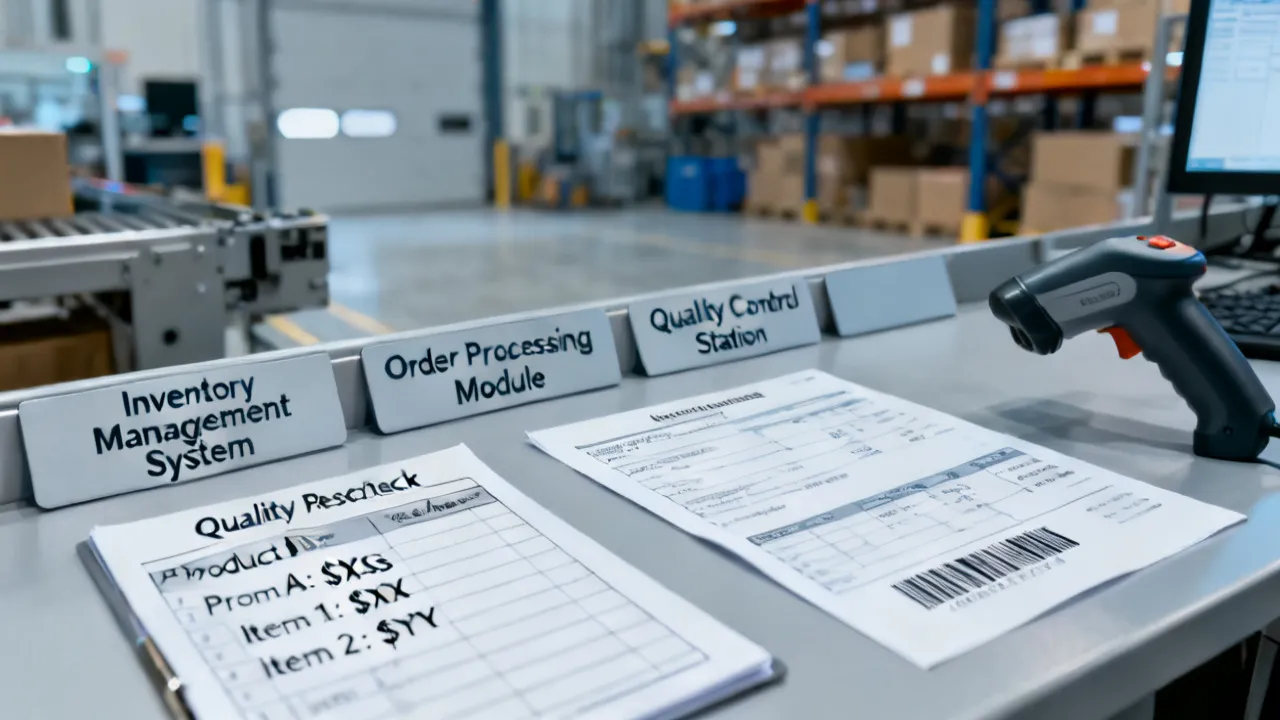
This guide explains Jbs in practical procurement terms, focusing on how pricing, supplier selection, and sourcing conditions affect day-to-day decisions. In objective context, “Jbs” is commonly used as a shorthand label within business operations, often connected to standardized parts, services, or internal job codes. The guide then outlines verification steps and requirements to support reliable sourcing outcomes.

This guide explains how Jbs is assessed and managed in procurement workflows, from supplier screening to risk controls. In objective terms, Jbs-related activities typically intersect with supplier capability, contract terms, compliance, and operational traceability. Readers will find a practical framework for comparing options, defining requirements, and validating sourcing decisions using documented evidence.

This guide examines the public influence and context surrounding angela cândido guajajara, focusing on how recognition, leadership, and advocacy operate in practice. Objectively, the name is associated with the Guajajara people and broader indigenous rights discussions in Brazil. The article outlines themes, expectations for respectful engagement, and practical ways to evaluate claims and sources without exaggeration.

This guide explains how to interpret information linked to Jonata Machado in a responsible, decision-ready way. It provides an objective background on the name as a keyword, discusses common contexts in which such terms appear online, and outlines practical criteria for evaluating suppliers, services, and quality signals—without relying on claims that cannot be verified.

This guide explains how Jonata Machado informs practical decision-making and professional standards in related services. It reviews the background and meaning behind the name, then outlines how to evaluate providers and offerings objectively. The article focuses on process, verification, and fit—helping readers understand what to ask, what to compare, and when to seek specialist input.