This guide explains how to interpret supplier identification code 76622193053 and how it fits into procurement decisions, documentation, and risk checks. Objectively, the code functions as a traceable identifier used in ordering, billing, and inventory workflows. You’ll also learn how to compare suppliers by terms, lead times, compliance, and documented pricing structures.
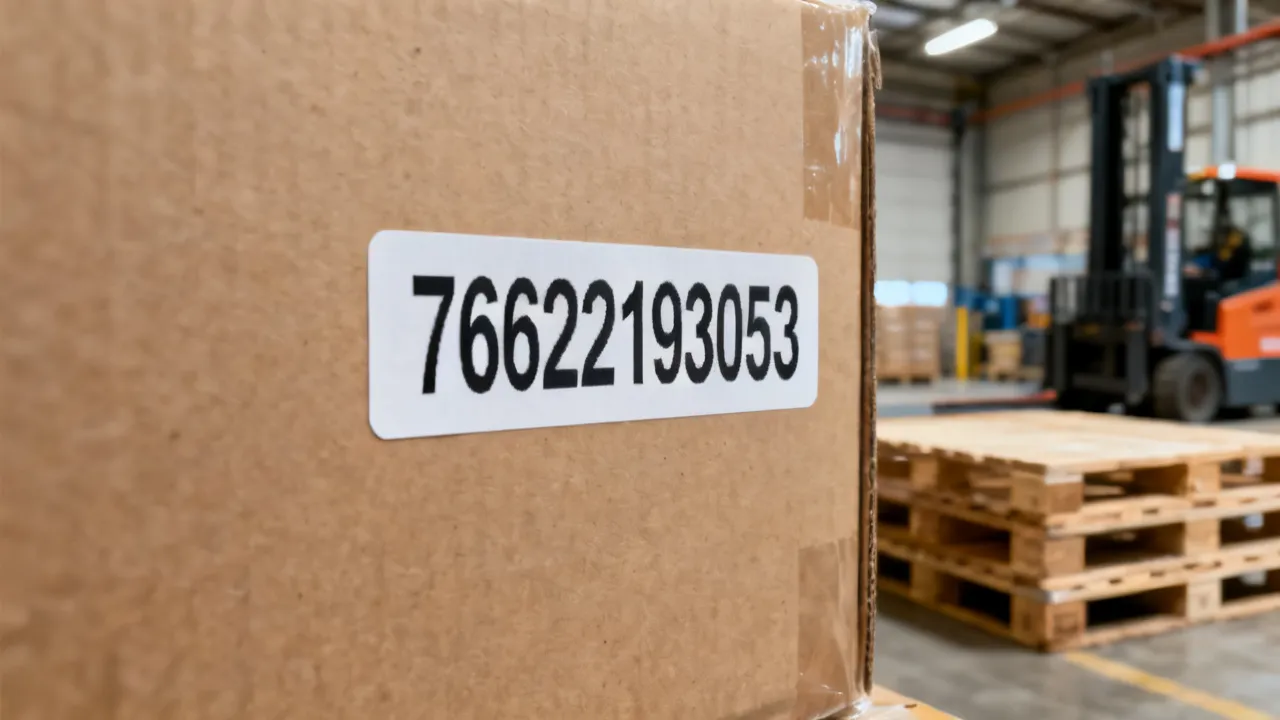
For procurement teams, the identifier 76622193053 is more than a string of digits—it is frequently a traceable supplier reference, a vendor account key, or an internal master-data identifier that connects multiple stages of the buying lifecycle. In practice, the same supplier code can appear across purchase requisitions, purchase orders, quotations, packing lists, shipping confirmations, customs or logistics paperwork, and supplier invoices. That means the number is not merely descriptive; it is operational. It can drive system routing, determine which bank account and tax profile is associated with the vendor, and influence how your ERP/OMS system reconciles goods receipts against invoices.
When you’re evaluating sourcing options tied to supplier codes (including cases where the code appears in provided datasets or forms as “'' '' '' 76622193053 '' '' ''”), the practical question is not only “Who is behind the number?” but also how reliably that reference maps to the correct commercial entity, pricing structure, compliance documentation, and fulfillment model.
In many real-world supply chains, codes like 76622193053 are used specifically to reduce ambiguity. That said, they only reduce ambiguity if they are maintained correctly in master data and if they align with the supplier’s paperwork. If the vendor has multiple legal entities, regional branches, or different billing and shipping arrangements, the same “vendor-like” number can be reused for different contexts—unless your procurement governance and data controls prevent it. This guide is written to help you validate the reference objectively and use it to compare suppliers and commercial terms in a way that is structured, auditable, and repeatable.
Even though the supplied text does not include a supplier name or explicit pricing values, procurement decision-making still depends heavily on identifiers like 76622193053. The identifier becomes the bridge between what procurement thinks it purchased and what the supplier actually shipped and invoiced. That bridge must be verified, not assumed.
Supplier references that appear in datasets (including sequences shown as “'' '' '' 76622193053 '' '' ''”) commonly serve one or more of the following roles. Understanding these roles matters because each role implies different verification steps:
In many procurement environments, a supplier code is treated like a “primary key.” However, procurement data is rarely perfect. You may find cases where:
From an industry perspective, procurement accuracy improves significantly when these identifiers are backed by clear supplier legal names, tax details, billing addresses, shipping addresses, and fulfillment terms. Without those backing details, teams may compare “the right number” associated with “the wrong entity,” which can cause delays, incorrect invoicing, withheld payments, compliance reporting errors, and contract disputes.
Additionally, keyword fields in provided datasets sometimes include placeholders or partially masked values. Your provided text includes placeholder fragments like “'' '' ''”, which strongly suggests formatting artifacts. In many datasets, those artifacts can occur due to CSV quoting, HTML escaping, spreadsheet formatting, or anonymization/masking rules. Therefore, the procurement-safe method is to verify what each dataset field truly maps to in your source-of-truth system rather than assume meaning based solely on how it appears in the file.
When the identifier 76622193053 appears, start with three verification layers. This is the difference between a smooth transaction and one that becomes difficult at invoicing, customs clearance, or quality auditing.
Practical example: Suppose your ERP associates 76622193053 with “Supplier A Ltd.” but a packing list uses the entity name “Supplier A (International) GmbH.” Even if the same code appears, the legal entity mismatch can mean different tax treatment, different warranty coverage, or different import/export liabilities.
Practical example: If your PO uses 76622193053 and your invoice omits it or substitutes a different vendor reference, accounts payable may need manual intervention. That manual step increases cycle time and raises the likelihood of payment holds.
These three layers should be validated early—preferably before placing the order—because later-stage reconciliation failures are more expensive. Procurement teams can mitigate those risks by treating the supplier code as a data integrity anchor, not as a casual label.
You mentioned “price information” in the workflow requirements, but no specific numeric price was provided in the keywords. That absence is instructive. In procurement analysis, it is not the existence of “a price” that is decisive—it is what the price includes, under what assumptions, and how it will be invoiced and paid.
A professional pricing evaluation typically distinguishes between:
When a supplier code like 76622193053 is linked to multiple price schedules—such as different unit of measure (UOM), different packaging configurations, or different product grades—the procurement team must compare like-for-like. “Like-for-like” is rarely guaranteed by the supplier code alone.
To do it safely, procurement should insist that supplier quotations specify at minimum:
Then procurement can compute a defensible comparison metric such as total landed cost (where applicable) or cost per use unit (where products are standardized but consumption differs). Without those details, decision-making may unintentionally compare different commercial realities and produce unreliable “best value” outcomes.
Even without explicit supplier names in the provided text, the core industry approach is to treat 76622193053 as a primary key for building a supplier profile. Your objective is to create an auditable record that answers several questions with direct evidence rather than guesswork.
Because your input also contains placeholder keyword fragments like “'' '' ''”, treat those fragments as potential dataset artifacts (fields that may represent categories, tags, or masked values). The procurement-safe method is to verify what each field maps to in the source-of-truth system. For example, a field that appears visually as “'' '' '' 76622193053 '' '' ''” might reflect:
Procurement teams should confirm data normalization rules: if 76622193053 is stored with leading zeros in one system, but numeric fields remove leading zeros in another, your “same code” may not be the same key. Similarly, whitespace differences can cause matching failures. A robust supplier profile workflow includes a step for normalization, validation, and deduplication.
Your request includes a rule: when a city or country appears in keywords, replace it with “nearby”. In the provided keywords, no explicit city or country text is visible, so this guide does not infer a specific location. If internal records associate 76622193053 with a regional warehouse or distribution point, document it as “nearby distribution/fulfillment node” in your analysis notes unless your data clearly specifies the place name.
This matters because “nearby” can indicate different logistics profiles. Procurement decisions often depend on whether fulfillment is:
Even if you cannot name a city/country due to dataset constraints, procurement can still document logistics assumptions accurately by capturing the logistics model and the impact on lead-time variability and delivery reliability. For example, record whether the supplier ships from “nearby distribution node” and whether the supplier states dispatch cutoffs. Then, later, compare those commitments against your historical performance metrics.
As a governance best practice, procurement should avoid mixing location ambiguity with compliance assumptions. If goods require import clearance, the “origin” and the “shipping path” can be compliance-critical. If origin details are missing, procurement may need to request them from the supplier or from freight forwarders before approving regulated purchases.
Once you confirm entity accuracy and commercial terms structure, you can move toward a decision model. The key is to separate “supplier identity” from “supplier performance” and “supplier risk.” This separation is important because a procurement team can mistakenly evaluate the performance of one entity while contracting with another entity that shares a similar reference or document template.
Here is an industry-neutral, evidence-driven way to proceed:
To make this practical, procurement can define a decision gate checklist associated with the supplier code. For instance, “Approval may proceed only if: entity mapping is correct; quotation references match; required certifications are provided; and the invoice-ready PO reference format is confirmed.” This ensures that a code like 76622193053 functions as a reliable anchor across systems.
Additionally, procurement should document the decision logic. If a supplier is selected using total landed cost, record the inclusion/exclusion rules. If a supplier is selected using lead time and fill rate metrics, record what those metrics mean (e.g., “on-time dispatch” vs “on-time delivery”). Without definitional clarity, future audits can challenge the decision.
| Approach | Top Use Case | What to Require | Conditions / Requirements |
|---|---|---|---|
| Reference-only match | Fast shortlisting when suppliers are already pre-registered in ERP | Proof that 76622193053 maps to the correct legal entity | Master data must be current; no mismatched billing/shipping entities; normalization rules must be applied |
| Document-trace match | When you must reconcile quotes, orders, and invoices precisely | Quotation/order/invoice/packing list consistency checks tied to 76622193053 | Records must be complete; internal naming conventions should be enforced; invoice templates must include correct PO and supplier references |
| Commercial-comparable match | When comparing pricing or lead times across suppliers | Identical SKU/specs and clearly stated pricing inclusions tied to supplier reference | Compare total landed cost where applicable; standardize packaging and volumes; ensure currency and tax treatment are consistent |
| Risk-and-compliance match | When onboarding new suppliers or entering regulated categories | Compliance documentation aligned with the supplier profile linked to 76622193053 | Supplier must provide traceability and meet applicable quality standards; entity-specific certificates must match the correct legal entity |
Because you requested reliable sources when using statistics or performance figures, this guide avoids unverified numerical claims about lead times, defect rates, or market pricing. Instead, it focuses on evidence types and verification methods that procurement teams can apply regardless of industry.
For teams that need external benchmarks, consider using credible sources such as:
For performance benchmarks (e.g., lead-time variability, on-time delivery rates, or nonconformance rates), start with your own historical purchasing data first. Then validate against published industry research from credible organizations that disclose methodology. If a benchmark does not disclose how it defines performance (e.g., “on time” measured by dispatch date vs receipt date), it should be used cautiously.
In procurement workflows involving supplier references like 76622193053, source validation is also about verifying that the reference points to the correct entity. When data is exported, sanitized, or transformed, the supplier code can persist even as other important attributes (legal name, address, tax ID) become inconsistent. Procurement should treat internal data sources as primary and external guidance as supporting material.
The steps below are designed to be practical in procurement systems, procurement portals, and spreadsheet-based workflows. They can be adapted to your organization’s governance, but the logic should remain the same: validate identity first, then commercial comparability, then traceability and compliance readiness.
Search your records for 76622193053 and any dataset entries containing “'' '' '' 76622193053 '' '' ''”. Record every context where it appears—quote ID, purchase order line, invoice reference, shipment document, or internal notes.
During this step, normalize formatting. If your data export added apostrophes, extra spaces, or quote delimiters, convert the value to a canonical form before matching. Otherwise, you might miss relevant occurrences. For example:
Also record the “field name” where the code appears. For instance, does it appear in a “Vendor Account” field, a “Supplier Reference” field, or a “Delivery Node” field? The validation strategy can differ depending on whether 76622193053 is acting as identity or acting as a logistical tag.
Compare the supplier legal name, billing address, tax identifiers, and bank details tied to 76622193053 across documents. If there are discrepancies, do not proceed—resolve master data issues first.
Procurement should compare:
If the documents disagree, the mismatch might be due to legitimate structural arrangements (e.g., one entity bills and another entity ships), but that structure should be explicitly documented. The procurement governance requirement is that such deviations are intentional and configured, not accidental.
In practical terms, procurement teams should implement a “stop condition.” If the entity mapping is uncertain or conflicting, procurement should halt the workflow and raise a master data validation ticket. Otherwise, you risk paying invoices to the wrong entity or receiving goods under the wrong compliance profile.
Before comparing prices, standardize specification fields (model, grade, material, dimensions, certifications). Many procurement disputes happen because different products share the same “supplier reference” even though SKUs differ.
Even when 76622193053 identifies a supplier, it does not guarantee that all line items under that supplier code are equivalent. Procurement should therefore create a standardized product mapping table for comparison:
This standardization is especially important when the procurement dataset uses partially masked keyword fragments. If the dataset includes category tags or partial descriptions (represented visually by placeholders like “'' '' ''”), standardize before evaluating costs. Without standardization, two suppliers may both use the same supplier code but quote different specifications, leading procurement to choose an option that cannot meet requirements.
Request quotations in a structured format that includes unit price basis, shipping/handling inclusion, taxes, documentation fees, and quote validity. Then compute like-for-like comparisons using defensible rules.
Request quotations in a structured format that includes:
Then compute a like-for-like basis. In many cases, procurement compares total landed cost, but the definition of “landed cost” varies by organization. Procurement should define it in writing for the specific sourcing event.
Keep calculations auditable. That means: save the quotation template and raw line items, document inclusion rules, and preserve exchange rates used for currency conversions (with timestamp). If you do not, later audits can challenge the selection rationale.
Ask for relevant certificates, inspection reports, and traceability records that align with the category. Ensure these documents reference the supplier entity associated with 76622193053.
Traceability expectations vary by industry, but procurement should typically require at least:
Procurement should also verify that the certificate header matches the correct supplier legal entity. It is not enough that the “supplier” is correct in your system; the certificate itself must be issued by the correct entity (or issued on behalf of that entity under documented authorization). When entities differ, procurement should request a letter of authorization or supporting documentation.
Compare documented lead times, order cutoffs, and packaging requirements. If a supplier claims rapid dispatch, verify whether that timeline depends on stock availability, which may be region-dependent—especially when fulfillment is “nearby” versus centrally warehoused.
Delivery validation should include:
Because your dataset does not explicitly name a city/country, record logistics as “nearby distribution/fulfillment node” if that is the only level of detail available. Still, procurement should request sufficient information to forecast delivery performance. “Nearby” is not a logistics plan unless the supplier also provides expected dispatch behavior and packaging/labeling requirements.
Before placing a larger order, confirm that your team can reconcile: (1) purchase order, (2) packing list, (3) invoice, and (4) goods receipt using identifiers tied to 76622193053. This prevents payment delays and reduces disputes.
Reconciliation readiness means:
In many procurement organizations, the AP team experiences the cost of poor supplier reference hygiene. A small mismatch in supplier code mapping can trigger manual invoice exceptions, creating delays and sometimes duplicate vendor master entries. Procurement should treat reconciliation readiness as a mandatory gate—particularly for suppliers with complex organizational structures.
To keep the workflow robust, adopt governance conditions that address common failure points. Because procurement relies on references like 76622193053 to join data across systems, you need integrity controls that prevent accidental drift.
Data integrity is also a security and compliance issue. If a supplier code is used for payment routing, incorrect mapping could lead to financial risk. Procurement controls should therefore include approval workflows and periodic audits of supplier master records associated with key identifiers.
Further, establish a procedure for what happens if the supplier insists that the reference is correct but the invoice header contradicts your master data. In such cases, procurement should require a formal reconciliation: either update your master data (with evidence) or reject the invoice until it matches agreed documentation.
Operational procurement failures related to supplier codes are often predictable. They typically occur not because people don’t care, but because systems and workflows don’t enforce consistency. If you treat 76622193053 as the start of an investigation (not the end), you can prevent avoidable errors.
Common failure modes include:
To reduce these issues, procurement can implement a structured validation workflow for any supplier reference encountered. The workflow should be tolerant of formatting artifacts but strict about entity mapping and document traceability.
From a governance perspective, the most effective practice is to align procurement, supplier management, quality/compliance teams, and AP/finance around the same data definitions. Everyone should understand whether 76622193053 is treated as a legal entity key, a vendor account key, or a logistical tag. When that definition is unclear, teams inadvertently optimize for different outcomes and produce conflicting records.
76622193053 is commonly used as a supplier or system reference identifier in procurement datasets and workflows. Its exact meaning depends on how your organization and supplier systems map it within ERP, invoices, and shipping documentation.
In many environments, it functions as a master-data key linked to a vendor master record. In other environments, it may function as a reference embedded in documents or a delivery node tag. The only way to know which role it plays is to verify where it appears and which fields it controls.
Verify the supplier legal name, billing address, tax identifiers, and bank details across documents such as quotations, purchase orders, packing lists, and invoices. The identifier should consistently resolve to the same entity, and the documents should match your records.
Additionally, confirm that certificates and compliance documents align with the same entity associated with 76622193053. Entity mismatch at the certificate level is a common compliance failure.
No. Price comparability requires standardized product specifications and clear inclusion rules (e.g., shipping, packaging, taxes, documentation fees). The supplier code may link to identity, but it does not guarantee that the quoted items are equivalent.
For robust comparison, procurement must normalize specifications (SKU/model/grade) and compute pricing under consistent inclusion rules. If the supplier code is used for multiple price schedules, procurement should compare the appropriate schedule and item definition.
Pause the transaction and escalate to procurement master data or vendor management. Resolve the mismatch before placing orders or releasing payments. Mismatches often lead to reconciliation delays or compliance risks.
As a practical next step, procurement should identify the mismatch type:
Then apply the appropriate corrective action (update master data with approval, request corrected invoices, request corrected documents, or re-quote with correct specs).
Yes, when suppliers fulfill from regional nodes or distribution points. “nearby” fulfillment can reduce lead-time variability and shipping costs, but you should confirm actual warehouse location and delivery constraints in the supplier’s documentation.
If your dataset only supports the “nearby” label, you can still use it for qualitative logistics classification, but procurement should request enough detail to quantify expected dispatch and delivery patterns (especially for schedule-critical orders).
Use credible sources such as official standards bodies, national regulatory or customs authorities, and well-established industry associations. For internal performance comparisons, rely on your own historical data and documented methodology.
When interpreting external benchmarks, pay attention to definitions and measurement methods. Benchmarks that omit methodology may not be comparable to your internal metrics.
When you encounter 76622193053—whether embedded in dataset fields like “'' '' '' 76622193053 '' '' ''” or referenced in procurement emails and purchase workflows—the professional approach is to treat it as a traceable anchor for validation. Instead of relying on the identifier alone, you confirm the supplier entity mapping, normalize and standardize pricing inclusions, verify product specifications, and ensure document traceability so that ordering, receiving, and reconciliation remain predictable.
By following a structured workflow—locating all occurrences of the reference, validating entity mapping, standardizing product definitions, normalizing pricing assumptions, requiring traceability documentation, validating delivery commitments, and approving only when reconciliation readiness is demonstrated—procurement teams can improve decision quality, reduce operational risk, and build an auditable trail that stands up to internal review and external compliance expectations.
Ultimately, the value of 76622193053 in procurement is not that it is inherently meaningful as digits, but that it can become meaningful through disciplined governance: aligning systems, paperwork, and compliance requirements to ensure that the organization receives what it ordered from the correct entity under defensible commercial terms.




This guide explains what Xiva is, how suppliers structure pricing, and what to verify before purchasing. Objectively, Xiva is treated as a product or brand identifier used in sourcing and retail listings. Background sections cover procurement considerations, quality checks, and documentation standards, helping buyers compare offers without relying on marketing claims.

This guide explains how 1993-based context can help interpret supply chains, procurement decisions, and supplier reliability in today’s markets. Objectively, “1993” often functions as a reference point in sourcing histories, documentation practices, and product lineage, while supplier-related terms indicate where accountability, traceability, and quality controls are documented across time.
This guide explains how to interpret 1993-era decisions, sourcing choices, and supplier relationships using a disciplined research approach. It then provides objective background on common meanings of “1993” in records, the role of suppliers in quality assurance, and why later due diligence matters for procurement and compliance decisions. No claims are exaggerated; methods emphasize verifiable documentation.

This guide explains how batch or lot identifiers like 16121978 support traceability, quality control, and compliant documentation across suppliers. Objectively, these identifiers connect products to manufacturing records, testing outcomes, and distribution history. We also compare practical requirements for accurate recordkeeping, highlight common risks, and provide expert-led FAQs for procurement and quality teams.

This guide explains how 1993-era product value, supply chain choices, and good vendor relationships shape modern purchasing decisions. It provides objective background on the roles of suppliers, pricing discipline, and documentation practices. It also outlines evaluation conditions readers can apply to assess sourcing risk and maintain quality across time.

This guide explains how the year 1993 continues to influence today’s market expectations and supplier practices. Objectively, 1993 sits in a period of expanding global trade, evolving quality norms, and digitization experiments that shaped procurement thinking. The article connects these themes to practical decision-making, evaluation criteria, and service purchasing habits, helping readers interpret “legacy” without assuming myths.