This guide clarifies “receberecebe” and the broader idea of “receiving,” explaining how organizations structure handoffs, documentation, and checks. It also provides objective context on why reception and intake processes matter in operations. The article then compares practical options, outlines step-by-step conditions, and answers common FAQs.

In practical operations, receberecebe functions as a shorthand for a repeatable intake-and-processing routine—an internal rhythm where items, requests, or records are received, verified, logged, and routed to the next step. In parallel, the keyword receiverecebe (closely tied in meaning to “receiving”) points to the same operational goal: ensuring that what comes in is correctly captured, traceable, and ready for processing. When organizations standardize these receiving workflows, they reduce misrouting, lower rework rates, and improve audit readiness—especially when multiple suppliers, departments, or vendors are involved.
Because your keywords include the repeated forms “receberecebe” and “receiverecebe,” this guide treats them as conceptual variations of the same workflow: a structured receiving stage that enables downstream actions with fewer errors. If your business context is logistics, procurement, returns, customer support, or document processing, the underlying principles remain consistent: receiving should be verifiable, time-stamped, and connected to a measurable next action.
However, it’s important to be critical about what these terms do not mean. Neither “receberecebe” nor “receiving” should be interpreted as a casual acknowledgment or a purely administrative label. In robust operations, receiving is closer to a control mechanism than to a sentimental “we got it” statement. This distinction seems subtle, but it is often the difference between a system that scales reliably and one that gradually accumulates hidden defects that later emerge as cost, delay, and compliance risk.
Receiving is not merely a physical moment (a shipment arriving or a request entering a queue). It is an operational control point where organizations decide whether incoming materials or information are:
Industry practice consistently recognizes that errors introduced at receiving propagate. For example, if an item is mis-logged as the wrong SKU or if a return is categorized incorrectly at intake, teams later spend time reconciling discrepancies. While organizations vary in maturity, very reliable processes share the same DNA: clear ownership, standardized verification steps, and consistent data capture.
To appreciate how receiving affects everything downstream, consider the “domino chain” perspective. Receiving data typically influences:
If receiving is sloppy, each downstream step becomes an attempt to patch missing context. Patching is expensive: it consumes labor, increases cycle time, and creates a risk of reintroducing mistakes while correcting earlier ones. Mature systems design receiving so that the patching burden is minimized by default.
Think of receberecebe as the “repeatable choreography” between a supplier’s output and your organization’s intake. It often includes:
When this choreography is inconsistent—especially across suppliers or across shifts—teams experience “false starts.” A common example is when goods are stamped “received” before basic verification occurs. That can lead to incorrect inventory availability or misaligned billing. Mature workflows delay downstream commitments until receiving checks meet agreed conditions.
A critical lens helps here: if “received” means different things on different days, receiving ceases to be a reliable control point. For instance, one shift might log “received” after a pallet count, another after scanning individual cartons, and a third after verifying paperwork. The system may look consistent to an observer, but the internal meaning changes—creating an illusion of data integrity while actual operational integrity erodes.
That is why receiverecebe should be treated as alignment. Alignment means that the meaning of each status in the workflow is stable and that the workflow itself is repeatable. Repeatability creates the conditions under which automation, analytics, and audit reviews can be trusted.
From an industry expert perspective, the key is to avoid confusing receiving with “acknowledging receipt.” An acknowledgment without verification is closer to a notification than a control. The receiving stage should create a defensible record that can withstand internal reviews and external audits.
This approach aligns with established quality and compliance principles often referenced in supply-chain and quality management contexts (for example, the logic behind ISO-style process controls). While the specific standards your organization follows may differ, the operational reasoning is consistent: make the decision rules explicit, and make the record retrievable.
It’s also worth noting that “formality” is not the enemy—unverified formality is. Stamping documents, updating spreadsheets, and clicking “received” can be perfectly formal. The issue is whether those actions reflect verification logic and create evidence. Experts aim for “structured verification,” not “structured theater.”
In other words, receberecebe is valuable when it produces:
In many workplaces—particularly those with cross-functional teams—people may use informal language such as “we received it,” “it’s in the system,” or “it’s on the dock.” But internally, experts typically separate:
This distinction matters culturally as much as procedurally. Teams in fast-moving environments (common around logistics hubs and service desks) may prioritize speed—yet professional operations still enforce minimum verification steps so that speed does not become chaos.
Culture often influences what people treat as “done.” If the culture rewards finishing the dock step quickly, some teams may treat the receiving checkbox as success. But if the culture instead rewards accuracy, exception quality, and audit readiness, staff will be more likely to treat receiving as a controlled gate. Both can be fast, but only the latter is sustainably reliable.
The receiving concept adapts depending on whether the “incoming” is physical goods, service requests, returns, or data. Below is a comparison table of practical receiving approaches. (No links are included, as requested.)
| Receiving approach | Typical use case | What “receberecebe” emphasizes | Conditions / requirements |
|---|---|---|---|
| Dock-to-system receiving | Warehousing and inbound shipments | Verification at intake, traceable logs | Barcode/ID standards; documented receiving rules; photo or scan evidence |
| Ticket-to-queue receiving | Customer service, IT requests, claims | Correct categorization and routing | Consistent form fields; ownership mapping; SLA-based status transitions |
| Return intake receiving | Reverse logistics, RMAs | Condition grading and disposition | Return authorization numbers; condition checklists; segregation of quarantined items |
| Document receiving | Procurement paperwork, compliance packs | Completeness checks and audit trails | Version control; required attachments; approval workflow alignment |
Notice that while the incoming object changes (goods vs. requests vs. documents), the logic remains. A receberecebe workflow is fundamentally about controlled transformation: from raw arrival to validated operational readiness.
Below is a practical, step-by-step receiving implementation guide designed to reflect how expert teams operationalize receberecebe and receiving consistency. You can use it as a blueprint and adjust roles, tools, and thresholds based on your industry.
To make this guide more “operational,” here are deeper expansions on each step—because receiving systems often fail not from missing steps, but from under-specified details inside steps.
Decision rules translate into system statuses, but they must also translate into human behavior. If you use labels like “received,” “accepted,” “pending inspection,” and “rejected,” the team must agree on what each label means in practice.
For example, consider a goods receiving context. You might define:
In a service desk context, the rules might look like this:
What matters is that the decision rules are testable. A supervisor should be able to audit a random sample and determine whether “accepted” was justified based on the evidence captured during receiving.
Receiving workflows fail when identifiers are weak or ambiguous. Weak identifiers create the need for human memory and informal judgment, which do not scale across shifts or teams.
Instead of allowing inconsistent ID formats, experts often enforce:
For physical goods, the goal is to reduce reliance on “eyeballing.” For service requests, the goal is to reduce reliance on vague customer descriptions. For document workflows, it’s to reduce reliance on manual re-filing or searching for “the latest version.”
A checklist should not be a generic list of tasks. It should be an engineered response to known failure modes. Good checklists are typically derived from:
For example, if your receiving errors often involve missing attachments, your checklist should explicitly include “attachment type present” checks, not just “documents reviewed.” If your errors involve quantity mismatches, your checklist should specify how to count (carton vs. unit) and what tolerance levels apply.
In returns, if failures often arise from missing accessories or wrong reason codes, your checklist should capture these fields with specific options and required evidence (photos of labels, seals, serial numbers, and packaging condition).
Ownership is not just “who works on it.” Ownership determines whether exceptions get resolved quickly or linger. In receiving workflows, you want clear lines for:
A common best practice is separation of duties where feasible. If the same person marks “received” and “accepted” without verification, the workflow can become vulnerable to bias or unintentional shortcuts—especially under time pressure. Separation does not have to be perfect for all cases, but it should exist for higher-risk categories.
Evidence should be captured at receiving time for a simple reason: later evidence often fails to answer the audit question “what did you see when you decided?”
Evidence types can include:
In document receiving, evidence might include checksum hashes, file version metadata, or stored attachments with controlled naming conventions. In service receiving, evidence might include diagnostic outputs captured during triage, not just the initial ticket form.
A critical point: evidence must be stored in a way that it is retrievable. It’s not enough to “take a photo.” The photo must be linked to the receiving record and accessible under audit conditions.
Receiving data should flow into the system that downstream teams actually use. Many organizations inadvertently create “shadow receiving records” (spreadsheets, emails, local folders) that conflict with the system-of-record.
Shadow records are dangerous because they create uncertainty: which record is authoritative? This uncertainty leads to manual reconciliation, which is an expensive form of operational debt.
To avoid this, experts often enforce:
Exceptions are not failures; they are inevitable. The failure is unmanaged exceptions—exceptions that are ambiguous, undocumented, or routed incorrectly.
A robust receiving workflow defines exception handling in advance:
Exception management should also include “decision logging.” When a human resolves an exception, the resolution rationale should be recorded in a structured way. Later analysis depends on understanding not just what happened, but why it was decided that way.
Receiving workflows should improve. If they do not, your organization becomes locked into recurring rework loops. Measurement turns receiving into a learning system rather than a static procedure.
Common receiving metrics include:
Experts often review these metrics monthly or quarterly and then update the receiving checklist, acceptance rules, training materials, or supplier requirements. This is where receberecebe becomes a continuous improvement loop rather than a one-time implementation.
Receiving errors can create both operational friction and financial exposure. While organizations may cite different cost figures, the general risk logic is widely recognized: mistakes at intake influence inventory accuracy, billing accuracy, and quality outcomes. Rather than claiming exaggerated numbers, it is more responsible to ground performance insights in widely used operational frameworks and published quality/supply-chain findings.
For instance, supply-chain and quality management literature often emphasizes that process control and traceability reduce downstream defects and improve audit readiness. A commonly referenced authority for quality management systems is the ISO family of standards, which promote process documentation and control. Additionally, risk-aware organizations often consult guidance from recognized bodies such as the U.S. Government Accountability Office (GAO) when designing internal control approaches, and related internal control frameworks (e.g., COSO-style reasoning) when formalizing controls.
Practical takeaway: treat receiving as an internal control point. Your “receberecebe” routine should produce records that can be reviewed, not just outcomes that feel correct.
Critically, auditability is not only for “formal audits.” A good receiving workflow also supports everyday internal investigations. When a mismatch occurs—say an invoice dispute or a missing item—your ability to answer “what happened at receiving?” determines whether the organization responds quickly or spends weeks reconstructing the timeline.
Your prompt mentions “price information” and supplier details. In receiving workflows, price-related factors usually surface in how teams reconcile inbound shipments with:
While exact pricing depends on your industry and procurement contracts, the receiving procedure should be designed to prevent mismatches. Expert procurement and finance teams often insist that receiving verification supports invoice matching rules (commonly three-way matching logic in procurement environments). The more consistent your receiverecebe data capture is at intake, the fewer manual corrections are required later.
Supplier implication: suppliers benefit when your receiving requirements are explicit and stable. When your intake forms, acceptance criteria, and evidence requirements are clear, suppliers reduce avoidable errors—like incomplete packaging documentation or inconsistent labeling—which in turn lowers receiving exceptions.
To expand this in a more critical operational way: receiving is often the first place where financial assumptions become operational facts. If the system records the wrong quantities at receiving, downstream invoice matching fails—even if the invoice is correct. Conversely, if receiving logs “received” too early without condition verification, you might commit inventory that later must be written off, credited, or quarantined. In either case, price and receiving intersect through reconciliation rules, not through the price itself.
Therefore, “price information integration” should be treated as data alignment:
Receiving is reliable only when certain conditions are consistently met. Below are practical requirements you can adapt. They are written to match the “conditions/requirements” supplement concept in your request.
Beyond these six, advanced implementations often include additional requirements such as:
These advanced requirements may not be necessary for every organization, but they show the direction in which receiving maturity typically evolves.
In this guide, receberecebe represents a repeatable receiving routine: capturing incoming items or requests, verifying them against rules, logging traceable evidence, and routing them to the next process step.
Receiving is typically tied to validation and record creation (e.g., confirming identifiers, quantities, and required documentation). Acknowledging receipt may be a notification without verification. Expert workflows treat receiving as a control point, not just a message.
Because intake decisions often determine inventory status, accounting reconciliation readiness, QA triage, and fulfillment timing. Mis-logged identifiers or incomplete documentation at receiving can force manual corrections downstream.
At minimum: reference IDs (PO/ticket/RMA/document number), timestamps, item/request identifiers, quantities or completeness indicators, and status outcomes (accepted, pending inspection, rejected). Evidence such as scans or photos can be crucial for exceptions.
Suppliers provide the inbound material or information that triggers your receiving process. When your receiving requirements are clear (labels, documentation, packing standards), suppliers can reduce avoidable intake errors, which lowers your exception rates and processing delays.
Often yes—especially when invoices must be matched to purchase orders and receipts. Your receiving data should align with the line-item details needed for reconciliation, so receiving supports accurate billing and reduces mismatch disputes.
Many organizations use barcode scanners, receiving modules in ERP systems, ticketing systems for service intake, and document management tools for compliance packs. The specific tool matters less than ensuring the receiving rules are enforced and records are captured in the system-of-record.
Use a consistent checklist, validate identifiers early, capture evidence at intake, and standardize exception routes. Then analyze exceptions by category and supplier to refine requirements and training.
Expert workflows typically quarantine or flag the item immediately, record condition evidence, and route to QA or a defined disposition process. Acceptance should follow the agreed conditions, not merely arrival.
Audits depend on traceability. Ensure receiving decisions are recorded with timestamps, identifiers, evidence, and status outcomes. Define who can approve acceptance and retain records per your internal retention policy.
Workarounds typically emerge when receiving controls feel too slow, too burdensome, or inconsistent. Prevent them by designing streamlined receiving steps for low-risk categories, improving form usability, integrating scanners into the workflow, and ensuring exceptions are easy to log but hard to ignore. Additionally, implement access controls so that receiving overrides are reviewable and auditable.
In that case, treat documentation gaps as exceptions rather than ignoring them. Define acceptable alternatives (e.g., digital copies, promised delivery dates for missing certificates) and tie acceptance to documentation completeness. Where permitted, you may allow “pending documentation” statuses; but ensure downstream processing and payment are aligned to the risk level of missing information.
In most robust systems, “received” is not fully automatic; it requires creation of a record linked to the expected reference and at least a minimal validation step (scan or count). Purely automatic receipt can create false confidence and degrade traceability. The critical question is whether the minimal validation is built into the automated step.
Partial deliveries should have explicit receiving outcomes (e.g., “partially received,” “received quantity X of Y”). Your checklist should require recording the received quantity, verifying item identifiers, and ensuring remaining quantities are tracked. Partial delivery handling must also support invoice reconciliation logic so finance is not forced to guess.
Substitutions should be treated as exceptions that require confirmation against approved substitution policies. Receiving should capture what was delivered, what it was supposed to be (the original PO line), and what approval exists. If substitutions are allowed only under certain conditions, receiving must enforce those conditions and record evidence of the approval.
Imagine a shipment arrives with correct overall quantity but mislabeled packaging. In a basic receiving workflow, staff might quickly stamp items as “received.” In a receberecebe-style workflow, staff would validate labels against the reference document, log discrepancies, and route for exception handling before inventory commitments proceed. The goal isn’t to slow everything—it’s to prevent silent errors that later become time-consuming reconciliation.
Let’s make the scenario more concrete:
In this design, the receiving workflow prevents incorrect inventory availability. But notice the nuance: the workflow also prevents “premature success.” The team does not simply celebrate arrival; they treat receiving as an evidence-based decision.
For returns, the receiving moment is when condition grading happens. A receiving checklist might capture whether seals are intact, whether packaging matches the expected condition, and whether accessories are present. This influences restocking decisions, refurbishment requirements, or credit actions. When these rules are consistently applied, “receiverecebe” becomes a dependable control loop rather than a subjective judgment call.
Consider a return where the customer claims the device is defective. The receiving stage might perform:
Now, if the workflow treated receiving as a simple “received back” step, the organization might process refunds too early. That can lead to financial leakage and operational strain. A disciplined receiving workflow ensures disposition rules are evaluated before financial actions proceed, aligning with both risk and fairness.
When requests enter via email, portal, or phone, the “receiving” stage is responsible for categorization. The receiving routine standardizes required fields, assigns priority, and ensures the right queue is selected. The “receberecebe” concept here is about repeatability: same rules, consistent logging, and clear ownership transitions.
For example, imagine IT service intake:
This scenario demonstrates a critical idea: in service receiving, the “incoming” is information quality. Receiving quality determines the efficiency of triage and engineering. Poor receiving in service contexts creates back-and-forth loops with customers, which increases cycle time and erodes SLA performance.
To expand on pitfalls in a more critical way, consider how they often appear in real organizations:
When understood as repeatable intake controls, receberecebe and receiverecebe describe the disciplined receiving workflows that turn incoming materials or information into trustworthy operational inputs. By standardizing verification rules, documenting evidence, aligning receiving with price and supplier reconciliation needs, and applying clear acceptance conditions, organizations make receiving faster in the long run—because fewer errors reach downstream teams.
Yet the sustainability of receiving depends on ongoing attention. Receiving workflows are living systems: they must evolve with supplier changes, product changes, risk changes, and operational learnings. The receiving checklist should be updated based on exception trends, the evidence requirements should be tuned to risk, and decision rules should be refined as auditors and managers observe the real behavior of the workflow.
If you want, tell me your industry (logistics, procurement, IT service desk, returns/RMA, or document compliance) and what “receiving” means in your setting. I can tailor the checklist, acceptance criteria, and FAQ emphasis to match your operational reality.




Marcio, a practical guide to evaluating suppliers, pricing, and product fit, helps you make defensible decisions. Background: “Marcio” can function as a person’s name or a brand reference in procurement contexts. In supplier selection, buyers typically balance quality assurance, lead times, documentation, and payment terms. The goal is objective clarity, not hype.

This guide explains how to evaluate Marcio-related sourcing options by comparing suppliers, assessing pricing structures, and verifying delivery terms. Objectively, “Marcio” is widely used as a proper name and brand reference in business contexts, while procurement decisions depend on contract scope, quality assurance, and logistics lead times.

This guide explains how to interpret and use “Yuuiii0lmnjgggggggggggg” as a practical knowledge-work label and how teams can standardize it. Objectively, the string functions like a unique identifier: it can represent a project tag, dataset key, or internal taxonomy token. The article focuses on governance, traceability, and operational consistency without assuming any unverifiable claims.
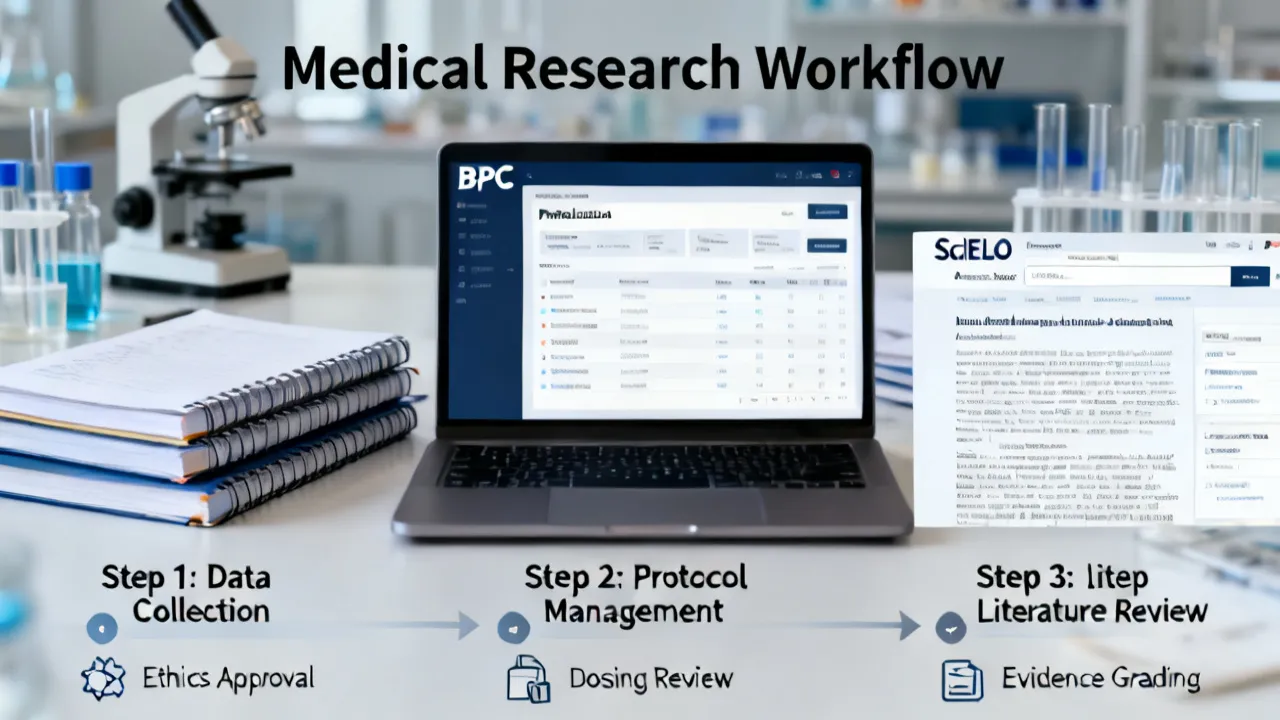
BPC and SciELO are central to building evidence-driven decisions in healthcare and research. This guide explains how to interpret BPC-related study designs and how SciELO supports transparent access to scientific literature. It then provides a structured comparison, a step-by-step workflow, and practical requirements for researchers and practitioners seeking replicable, objective outcomes.

This guide explains how to interpret supplier quotation reference 44539991272 and integrate related identifiers (e.g., 44539991272) into procurement decisions. It offers objective background on how such reference numbers function in sourcing workflows, then provides expert evaluation criteria, practical checks, and requirements commonly used in vendor negotiations and order confirmations.

This guide explains how to interpret and responsibly use the procurement reference code “44539991272” in purchasing workflows, including supplier identification and pricing context. Objectively, procurement codes support traceability across orders, invoices, and audits. You’ll find a structured comparison of handling conditions, a step-by-step workflow, and practical FAQs focused on governance, accuracy, and documentation.