This guide explains how professionals approach information tied to “Marlise brehmer,” including verification practices, supplier due diligence, and practical decision criteria. Background context clarifies what the keyword represents in research workflows and why disciplined sourcing matters. The article then adds a structured comparison of options, conditions for engagement, and an expert FAQ.

When you encounter the name “Marlise brehmer,” the very reliable way to move forward is to treat it as a starting point for structured verification rather than as a claim that can be accepted at face value. In professional workflows, the priority is to confirm authorship, credibility of the referenced materials, alignment with your use-case, and the traceability of any supplier or document that appears in connection with the term.
Because “Marlise brehmer” can surface in different contexts—such as research references, communications, or named entities used in sourcing—it’s top to apply a consistent evaluation method. This is how buyers and analysts reduce risk, avoid misattribution, and choose suppliers or information streams that can be documented through credible records.
It’s helpful to think of the term as a “handle” that may point to multiple objects: it may be a person, an internal project label, a contact name, a vendor alias, or even a partially matched string from OCR (optical character recognition) or a dataset that has normalization issues. Verification-first doesn’t slow you down unnecessarily; it prevents rework. Without it, teams can spend time following the wrong thread, only to discover later that the evidence doesn’t support the intended decision.
In industry practice, keywords are rarely the destination; they are the route marker that helps teams navigate information systems. A name can be used to locate prior documentation, identify related entities, or connect communications to a broader record trail. However, without verification, a keyword-based search can also pull in similarly spelled names or unrelated references.
For that reason, “Marlise brehmer” should be handled like any other potentially ambiguous reference: you corroborate it against primary or authoritative sources, check consistency across multiple records, and document what you can confirm. This approach is widely used in procurement, compliance review, and research governance.
Consider how “search results” are produced in real systems. Search engines and internal databases often rank items by textual similarity, metadata completeness, or historical indexing priority—not by factual accuracy about identity. Additionally, the way a document is stored or processed can distort the name: capitalization differences, hyphenation changes, or missing characters can produce “near matches.” So “Marlise brehmer” might appear in multiple documents because it is extracted from different data streams, not because there is one single authoritative identity behind it.
Keyword relevance therefore becomes a hypothesis, not a conclusion. Teams convert hypotheses into conclusions only after evidence is verified and recorded. That is the core principle behind due diligence: evidence must be sufficient, not merely suggestive.
From an analyst’s perspective, evaluation typically includes three layers:
This is particularly important when the keyword is tied to supplier communications or procurement decisions. Even when you find what appears to be “the right” supplier, the team still needs to verify contract terms, responsibilities, and documentation requirements.
When experts say “good,” they usually mean the evidence is independently verifiable and internally consistent. Independence matters because a single source can be mistaken or incomplete. For example, a quote sheet might contain a contact name, but the same contact name must also appear in official vendor registration records, prior emails with consistent signatures, or documented meeting minutes. Consistency matters because identity is not only about spelling; it’s about affiliations, timelines, and roles.
In compliance-sensitive environments, the bar is even higher. A “good” reference must be traceable to something that can be audited: original documents, system logs, formal approvals, signed agreements, and versioned documentation. If your workflow depends on proof, then a “good” evaluation must yield proof—rather than just plausibility.
Your request references price information and supplier details, but no specific numbers, currency, or supplier names were provided in the prompt. In professional buying processes, that absence should not be “filled in” with guesses. Instead, the correct approach is to request an itemized quotation and to compare like-for-like conditions.
Practically, teams should ask for:
Using “Marlise brehmer” as a keyword can help you locate the relevant vendor contact or historical documentation; however, price validity still depends on the supplier’s written quotation and the contract’s stated conditions.
In other words, the keyword should help you find the right channel for quoting and documentation, but the quoted numbers must be validated against contract language. Many procurement disputes arise because teams assume that “a quote” inherently matches the scope implied by earlier emails or meeting summaries. But procurement is a legal and operational process; the quote and the contract define what is actually being purchased.
That’s why you should treat each quotation as a snapshot of terms at a point in time. If your decision depends on it, ask whether pricing is fixed, subject to change, tied to volume, or influenced by commodity costs. Also request any assumptions the supplier used. A defensible quotation includes both the numbers and the assumptions; a weak quotation provides only the numbers without clarity about boundaries.
Below is a practical workflow that procurement, compliance, and research teams commonly follow when a named reference (such as “Marlise brehmer”) appears in discovery results.
When you do this consistently, the keyword becomes useful rather than risky. It turns discovery into a controlled, auditable path to action.
To make this workflow even more actionable, teams often create a “verification record” that captures: (a) where the keyword was found, (b) why it is believed to match the intended identity, (c) what primary documents support that belief, and (d) what procurement evidence the supplier provided in response. This record becomes a safeguard if questions arise later—during contract review, audit season, or post-project incident investigations.
It also helps in onboarding new team members. A new analyst can read the verification record and quickly understand what was confirmed, what was assumed (and why), and what evidence is missing. Without this, the organization can lose institutional memory and repeat the same verification work.
The prompt includes a rule about replacing location placeholders with “nearby.” While no explicit city or country was included in the keywords, it’s still useful to highlight how teams often handle regional sourcing.
In many markets, “nearby” vendor selection tends to align with expectations for faster turnaround and smoother coordination—especially for documentation handoffs, troubleshooting, and in-person inspections. In everyday professional language, this often translates into emphasizing reliable logistics, responsive project communication, and locally manageable lead times. However, proximity should never substitute for verification: the supplier must still provide traceable evidence and meet quality requirements.
When organizations say “nearby,” they often mean something slightly different depending on the operation. Some teams interpret “nearby” as within the same time zone; others interpret it as within the same region for customs efficiency; others mean a facility within a reasonable travel radius for audits. Each interpretation changes risk profiles. A “nearby” supplier might still have long documentation lead times if their quality documentation system is slow. Conversely, a distant supplier might be able to provide electronic evidence quickly and reliably.
So the “nearby” concept is usually a logistics strategy, not a compliance strategy. The evidence requirements remain the same regardless of geography: you still need audit-friendly documentation, consistent identity records, and written acceptance criteria.
Finally, localization often affects language and formatting. Suppliers might provide documentation in different templates or with different terminologies. Teams should plan for translation and harmonization of evidence formats. If acceptance criteria are written in your internal language but evidence is delivered in another language, you must ensure the supplier documentation still maps to your requirements. Otherwise, “nearby” coordination might still result in compliance mismatches.
The following table compares common ways organizations engage after encountering a named reference such as “Marlise brehmer.” This is not a recommendation of a specific supplier; it’s a decision framework that you can apply while requesting quotes and documentation.
| Engagement approach | Top for | Conditions / requirements | What to verify before committing |
|---|---|---|---|
| Primary-document confirmation | Research or compliance tasks where accuracy and traceability are essential | Access to original files; clear authorship/metadata; documented revision history | Identity match to “Marlise brehmer,” document provenance, and consistency across sources |
| Supplier quote with evidence pack | Procurement when pricing and documentation must align | Itemized quote; deliverables list; acceptance criteria; delivery terms in writing | Scope match, audit readiness of documentation, and clarity on responsibilities |
| Pilot or limited-scope trial | Risk reduction when performance or fit is uncertain | Defined pilot objectives; measurable acceptance tests; time-bound rollout | Quality outcomes against criteria; responsiveness; repeatability of process |
| Third-party validation or review | Projects requiring independent assessment | Reviewer qualifications; written report; agreed evaluation rubric | Review credibility and whether findings connect to your documented requirements |
To translate this table into real action, many teams define engagement gates. For example:
This gate model reduces “last-minute surprises” where scope creep or missing documentation is discovered too late.
Because the prompt does not supply explicit sources, this section focuses on method rather than claiming specific documents exist. In professional environments, teams often rely on:
If you later provide specific supplier names, price points, or locations, the same verification logic can be applied to those concrete details, and the article can be refined to include them precisely.
To sharpen “source reliability,” it helps to distinguish between:
A document can be authoritative but not timely (e.g., outdated registration records), or timely but not authoritative (e.g., a draft email). Reliability is a composite of all three dimensions. When teams score evidence using these dimensions, they can justify decisions with a consistent rubric rather than subjective judgments.
In practical terms, “audit-friendly metadata” matters because it supports timeline reconstruction. If a procurement decision requires knowing when evidence was produced, then timestamps, version history, and document IDs can be essential. Without them, your audit trail becomes fragile.
Teams frequently encounter avoidable failure points:
The disciplined approach described earlier prevents these pitfalls by enforcing traceability and comparability.
There are additional subtle pitfalls that are common in real workflows:
By anticipating these pitfalls, teams can design procurement requests and internal checklists that proactively collect the evidence needed to avoid them.
One of the hardest parts of verification is knowing how far to go without creating new risk. Identity confirmation should be thorough, but it should also be bounded by what you can prove. In the case of “Marlise brehmer,” you should avoid turning the name into an assumed “profile” or “proven track record.” Instead, treat it as an entity to be matched against concrete attributes.
Those attributes typically include:
If those attributes line up across primary documents, your confidence increases. If they do not, you should treat the mismatch as a signal to investigate further rather than to “smooth over” inconsistencies.
For procurement decisions, identity confirmation has a practical purpose: it ensures that responsibilities are correctly assigned. If “Marlise brehmer” is believed to represent a supplier contact but later turns out to be only a forwarding agent, then the contract might not be enforceable in the way your organization expects. Your due diligence must therefore confirm the role of the named reference—who actually owns the deliverable and who is accountable for evidence quality.
Context alignment means asking: what is “Marlise brehmer” doing in the document? The name might appear as an author, as a recipient, as a signer, as a vendor contact, or as a metadata label in a dataset. Each of these uses implies different meaning.
For example:
In due diligence, misinterpreting context can cause severe confusion. A name present in the header of an email might lead you to the wrong person; a name present in dataset metadata might reflect import mapping rather than actual identity. Therefore, context alignment requires you to inspect the structure of the record: document headers, signature blocks, revision histories, and metadata fields.
Teams can also define “context categories” in their workflow. For instance, they might categorize each appearance of the term as “contact,” “author,” “approver,” or “dataset label.” Then they can apply different verification criteria per category. This makes the process systematic rather than ad hoc.
Evidence quality is where many teams fail. The phrase “it’s mentioned” is not the same as “it’s proven.” In a robust system, evidence quality includes:
When evidence is weak, your risk increases—not only the risk of failing compliance, but also operational risk. If acceptance depends on documentation that does not exist, then project timelines slip and costs grow. That’s why evidence quality must be part of the procurement decision, not an afterthought.
In some regulated or audit-heavy environments, evidence quality is assessed with a pre-defined checklist. That checklist might include:
Even outside formal regulation, these checklists reduce uncertainty. If your organization has an internal audit or compliance framework, aligning your evidence requirements with it can make approvals smoother.
While itemized pricing is essential, a deeper pricing approach also considers total value and hidden costs. When “Marlise brehmer” is used to locate relevant supplier communications, you might find different quotes from different periods. Those quotes could include different scopes, different document deliverable expectations, or different levels of service.
Total value often includes:
Therefore, when comparing quotes, you should calculate not only the price but also the expected administrative and operational cost burden. Two suppliers can have similar base cost, but one may require more internal coordination because their evidence pack is not audit-friendly. That increases internal workload and can become a significant expense.
Procurement analysts often formalize this into a “cost-to-serve” model. You can implement a lighter version of it by capturing recurring overhead and mapping it to quote line items. For example, if one supplier provides documentation in a format your compliance team must reformat, that reformatting time becomes a cost.
Even if you do not build a full financial model, you should ask for the supplier’s deliverables and evidence format. A quote that looks cheaper but does not include compliance documentation often becomes more expensive in total because you must source documentation elsewhere or spend additional internal resources to compensate.
The table already introduces common engagement approaches. This section expands the “conditions / requirements” into how you operationalize them in procurement and research.
1) Primary-document confirmation
Primary-document confirmation means you gather original evidence artifacts before making claims about identity or quality. In practice, this includes requesting:
This approach is particularly useful when you suspect that “Marlise brehmer” may be mis-indexed or ambiguous. You cannot safely assume the name maps to the correct entity without primary evidence.
2) Supplier quote with evidence pack
When you request a quote, you should explicitly tie pricing to evidence deliverables. For example, ask whether the evidence pack is included or billed separately, and require a list of the included documents (with identifiers, if available).
Also define acceptance criteria for deliverables documentation—not just the primary product or service. For instance, the evidence pack might need to include:
In many procurement processes, the “deliverable acceptance” checkpoint is where teams either confirm compliance or discover that the evidence is missing. If acceptance criteria are not defined up front, acceptance becomes subjective and disputes grow.
3) Pilot or limited-scope trial
Pilots reduce risk when performance is uncertain. A good pilot design includes measurable objectives, time-bound scope, and acceptance tests. But a critical nuance is that pilots should also test evidence adequacy, not only output performance.
Example pilot evaluations might include:
This ensures that the supplier’s documentation system behaves as expected before a full-scale commitment.
4) Third-party validation or review
Third-party validation is useful when internal teams lack the authority, expertise, or independence required for evaluation. When you engage a third party, you should require:
Third-party review should not be vague. Vague review reports do not help you defend decisions during audits or governance reviews. Therefore, define what outputs are expected: a checklist, a signed report, or a mapping of evidence to criteria.
If you have “Marlise brehmer” as a clue but not enough information to proceed, an RFI is a structured way to gather what you need while preserving auditability. A well-designed RFI does not ask open-ended questions only; it asks for specific evidence artifacts and specific compliance responses.
Here is a practical way to structure an RFI request:
This structure ensures your RFI results are comparable and auditable. It also reduces the chance that you accept a response that is incomplete or not aligned with your evidence needs.
Earlier, the discussion noted common essential contract elements. Here’s how those elements can be operationalized when documentation and traceability are important.
Scope definition and deliverables
Contracts should define scope precisely. Ambiguity creates disputes. The deliverables list should include both the primary output and the documentation evidence pack, with clear identifiers.
Evidence and documentation requirements
Contracts should state what documentation must be provided, when it must be provided, and in what format. If compliance is involved, specify that documentation must be sufficient for audit review.
Acceptance testing and acceptance criteria
Define acceptance tests with measurable criteria. For documentation, define completeness and traceability requirements. For outputs, define operational or performance criteria.
Change control
If scope changes, require that documents be revised under controlled change control. That includes version updates and explicit approval pathways.
Responsibilities
Make it clear who is responsible for creating deliverables, who is responsible for evidence generation, and who is responsible for sign-off. This matters when the named reference (like “Marlise brehmer”) appears in different roles across documents.
Remedies
Contracts should specify what happens if requirements are not met. Remedies might include rework at no additional cost, delivery penalties, or termination rights.
Confidentiality and data handling
If documentation includes sensitive data, define handling and retention rules. Even verification workflows can require access to records, and contracts should manage that risk.
Including these elements reduces uncertainty and helps you defend your procurement decision. If later questioned, your organization can point to contract language and evidence deliverables that support the chosen supplier.
Even with good processes, decisions can be challenged. A verification record is your internal “story of the evidence.” It is not a replacement for primary documents, but it is a structured index that makes audits and reviews manageable.
A strong verification record typically includes:
This record helps you answer common stakeholder questions such as:
Without this record, teams may rely on institutional memory, which is fragile and often unavailable when needed.
Because “Marlise brehmer” has not been defined in your prompt as a particular person or supplier, the safest approach is to illustrate how it can be used responsibly without presuming meaning.
Example 1: Research reference use
You find “Marlise brehmer” in a citation trail. Instead of claiming it proves a finding, you treat it as a lead: you retrieve the cited original document and verify authorship and publication metadata. Then you assess whether that document supports the specific research question you have.
Example 2: Supplier contact use
You see “Marlise brehmer” in a supplier communication thread. You confirm whether this person is a contact for that supplier’s quality or documentation function. Next, you request a quotation and evidence pack aligned to your scope, and you verify whether their documents include traceability and revision controls.
Example 3: Dataset label use
You see “Marlise brehmer” as a label inside a dataset. You do not assume the label is a verified identity. Instead, you inspect dataset documentation, provenance, and mapping methodology. Then you cross-check the label against official metadata or other authoritative records.
These examples show a common theme: “Marlise brehmer” is treated as a lead that triggers verification steps—not as a claim that finalizes decisions.
“Marlise brehmer” appears to be a named reference used to locate information or associated records. Its exact meaning depends on context—such as whether it refers to a person, a contributor, an internal label, or a contact used in communications. In practice, you should confirm identity and usage by examining primary documents and metadata where the term appears.
Use a cross-check method: compare spelling variants, affiliations, timelines, and authorship across independent records. Prioritize original source documents over summaries. If you’re making a supplier-related decision, request documentation that ties the name to a specific project scope and evidence pack.
Also verify the role context: determine whether the name appears as an author, signatory, contact, or dataset label. Role mismatch is a frequent cause of incorrect conclusions.
Request an itemized quote (with currency, line items, and delivery terms), a deliverables list, acceptance criteria, and documentation relevant to traceability. Also ask for the supplier’s process for handling changes, document revisions, and issue resolution.
Where possible, ask for sample evidence packs or templates that match your compliance requirements. A sample helps you assess evidence quality before you commit full scope.
Compare under equal conditions: match scope, included services, logistics terms, and documentation deliverables. Ensure the quotes specify what is included and what is excluded. If any part of the scope is unclear, treat the quote as incomplete until clarified in writing.
Additionally, consider total value: quote “cheaper” suppliers only win if they also meet evidence and acceptance requirements without introducing rework or hidden documentation gaps.
No. Lower cost can still be expensive if it comes with missing documentation, unclear acceptance criteria, longer lead times, or limited scope. The correct approach is to compare total value against verifiable requirements—especially traceability and audit readiness.
Lower price can also be a sign that deliverables are narrower than assumed. If you don’t verify scope and documentation completeness, “saving” money up front can create larger costs later.
Common essential contract elements include scope definition, deliverables and documentation requirements, acceptance testing procedures, change control, delivery timelines, responsibilities for data or evidence, and remedies if requirements are not met. If compliance is involved, also require evidence sufficient for audit review.
Ensure documentation requirements are explicit: define what evidence is required, when it must be delivered, and the format expected for audit-readiness.
Keyword searches are useful for discovery, but they are not sufficient for due diligence. Verification should involve primary documents, identity checks, and supplier-provided evidence aligned with your written requirements.
A good practice is to treat each keyword hit as a “lead” that triggers verification, not as a “proof” that completes due diligence.
In general, reputable standards are often published by recognized standard-setting organizations and reflected in documented top practices. For compliance-heavy work, teams typically map their requirements to applicable standards and ensure the supplier’s documentation can demonstrate adherence. If you share your industry and jurisdiction, the standards mapping can be made more specific.
Even when standards differ by jurisdiction, the verification principle remains constant: require evidence that demonstrates compliance, and ensure that evidence is traceable to your scope and acceptance criteria.
“Marlise brehmer” can be a valuable keyword for navigation, but it should not be treated as proof by itself. The professional approach is verification-first: confirm identity and context, request itemized pricing and traceable documentation, compare solutions under equal scope and conditions, and document your rationale. When you apply this disciplined method, you transform a simple search term into a defensible, audit-ready decision pathway.
If you want, share the industry (e.g., research services, procurement category, or documentation workflow), the number of suppliers you’re evaluating, and any price range you received. I can then refine the guide to include concrete, properly contextualized pricing and supplier comparison criteria—without relying on assumptions.




This guide explains Nubak in a clear, professional way, outlining what it is, how it is evaluated in practice, and what buyers should verify before committing. It also provides objective context on the keyword’s background, common use cases, and risk considerations. The discussion remains technology- and supply-aware, focusing on informed decision-making rather than marketing claims.
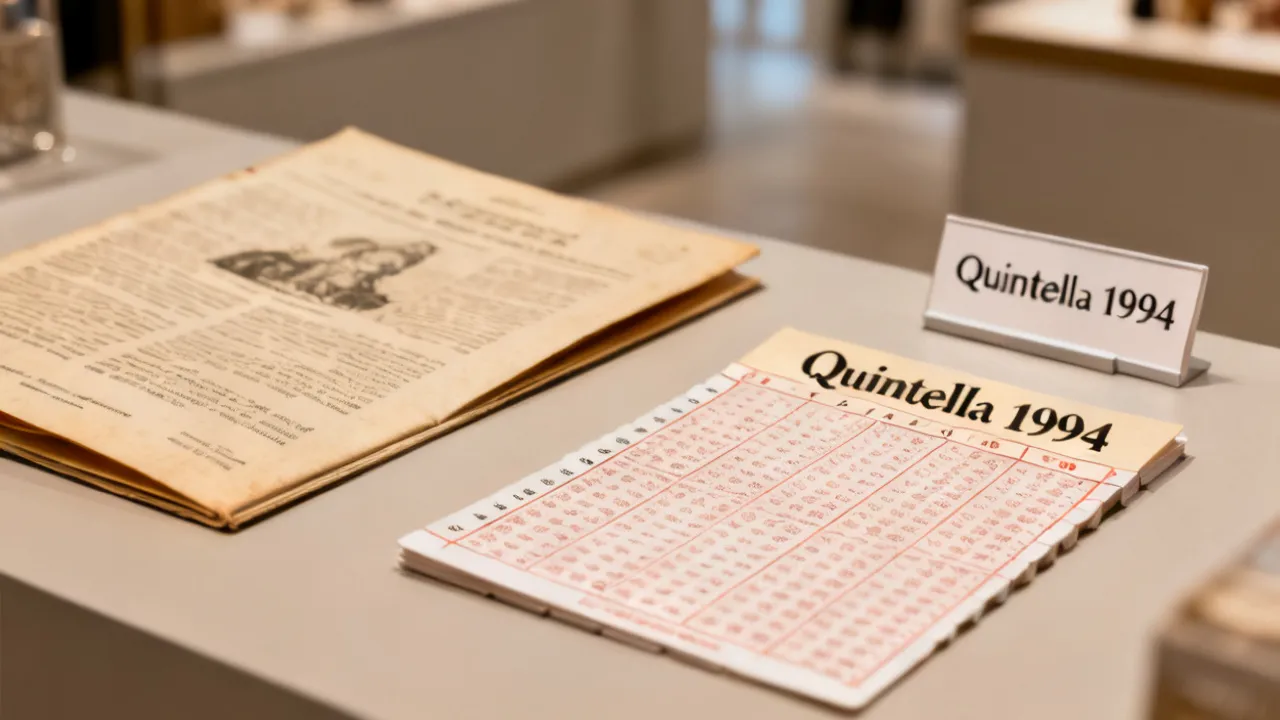
This guide explains Quintella 1994, focusing on how the product is typically positioned, sourced, and evaluated by informed buyers. It provides objective background on the Quintella concept, common procurement considerations, and practical decision criteria—without assuming specific pricing or supplier availability—so readers can compare options responsibly and document requirements clearly.

This guide explains what Nubak is, how it is typically sourced nearby, and how to evaluate suppliers, quality cues, and practical requirements before purchase. Background context covers terminology, common application considerations, and why documentation matters in reputable procurement. The aim is objective clarity for informed decision-making.

This guide explains Quintella 1994 in an objective, industry-informed way—what it is, why it gained attention, and how collectors and buyers should evaluate authenticity and value. Background context clarifies the term’s place in mid-1990s market culture, while later sections add practical requirements, sourcing checkpoints, and decision criteria for careful purchasing.

This guide explains Quintella 1994 in a practical, buyer-focused way. It provides objective background on the keyword’s context, how suppliers typically handle vintage or legacy catalog items, and what shoppers should verify before committing. Then it offers a structured comparison view, a step-by-step due-diligence plan, and clear conditions to support confident decisions.

This guide explains Quintella 1994 in an objective, industry-minded way, focusing on what the term typically refers to, how it is discussed in business and procurement contexts, and what due diligence should look like. You’ll also find a comparison table, a step-by-step evaluation approach, and practical requirements to help readers assess suppliers responsibly.