This guide examines Marlise Brehmer through an objective, industry-focused lens—how the name is used, how professionals approach verification, and what factors typically shape product or service decisions. Background context explains why due diligence matters when information is fragmented, emphasizing method, documentation, and practical evaluation criteria.

When you encounter the term Marlise brehmer, the very practical first step is to treat it as a reference point rather than a final conclusion. In professional practice—whether the context is sourcing, vendor evaluation, academic attribution, compliance checks, or personal-brand discovery—experienced analysts confirm identity, origin, and intended use before making decisions. This approach helps you avoid mismatches between names, organizations, responsibilities, and deliverables.
It’s easy for a name-like phrase to feel “specific” because it looks like a person’s name, a professional credit, or a concrete brand label. But in real workflows, “specific-looking” text can still be incomplete, duplicated, or incorrectly associated with the wrong party. The professional posture is therefore to assume the term might be accurate, but never assume it is correct.
Think of Marlise brehmer as the beginning of a verification chain, not the end of one. A verification chain is a sequence of evidence artifacts and cross-checks that connect the term to (a) the right identity, (b) the right scope of work or role, and (c) the right contracting or accountability structure. Without those links, downstream decisions tend to be brittle—meaning they work only until a discrepancy appears, at which point rework becomes costly.
This is especially important when the name appears in a search result, a directory listing, a cached snippet, an email signature, a social profile, a forum post, or a document that lacks clear provenance. Each of those places can contain helpful clues, but each can also contain errors: misspellings, outdated affiliations, role changes, copied content, or mistaken attribution. The disciplined step is to verify the clues before relying on them.
In many markets, names that appear as search terms can refer to different things at once: a person, a supplier contact, a project lead, a company role, a branded label tied to services, or even a short-hand reference used within a specific organization. With Marlise brehmer specifically, the key objective is to determine which of these meanings is active in your specific context.
From an expert standpoint, the decision quality improves when you can answer four questions:
“Identity” matters because many industries operate with multiple parallel naming layers: a legal entity name, a trading name, a brand name, a department name, and a person’s professional identity. “Jurisdiction” matters because contracts, compliance requirements, taxation, invoicing, data protection, and regulatory obligations can vary by location. “Scope” matters because even the correct identity can be irrelevant if the scope does not match your needs. “Evidence” matters because confidence should be based on verifiable artifacts rather than plausible assumptions.
Another subtle point: the spelling in Marlise brehmer could be used consistently in one place but inconsistently elsewhere (e.g., minor spelling variations, accent variations, or formatting differences). If your research is name-based, you should treat spelling as a potential signal but not a certainty. Professional practice usually includes normalization: removing extra spaces, standardizing capitalization, and searching for likely variants—always followed by verification of identity through official or primary sources.
You asked for integration of “price information” and “supplier details,” but no explicit price, currency, or supplier entity details were provided alongside the keywords. In professional analysis, it’s better to avoid guessing. Instead, here is the correct methodology you should apply when price or supplier claims appear later in your research pipeline.
When the term Marlise brehmer is connected to commercial activity, the core risk is that someone may present partial pricing (a headline number, an informal estimate, or a “starting from” figure) while omitting essential components. Another common risk is that the named person might not be the supplier of record. The supplier of record matters because it controls delivery obligations, warranties, invoicing authority, and legal remedies in case of disputes.
Top-practice approach:
In short: if you don’t have verified price and supplier data, don’t “fill in the blanks.” Use a structured request and confirmation workflow.
To make the workflow more robust, you can also require a “cost breakdown + assumptions” section inside the quote. The quote should list assumptions (e.g., material availability, lead times, specification constraints, expected usage conditions). Assumptions become negotiation anchors and can prevent later disputes where one side claims it priced a different set of circumstances.
Additionally, if you are dealing with regulated or compliance-heavy domains (health, finance, security, construction, or legal services), require documentation of qualifications and relevant certifications tied to the scope. In those contexts, price differences often reflect differences in compliance depth, not just efficiency.
Search terms like Marlise brehmer often surface in fragmented ways: directory listings, cached pages, forum mentions, social profiles, or partially redacted documents. The professional risk is that the same name can be reused or misattributed—particularly when two individuals share similar names, or when organizations adopt personal-brand naming conventions.
An objective workflow reduces risk by enforcing verification layers:
Objective sourcing also protects you against a more subtle problem: the wrong attribution can create the appearance of credibility while masking a compliance or delivery failure. For example, a document might mention Marlise brehmer in a way that implies responsibility for a deliverable, but the deliverable could actually be performed by another team or subcontractor. Without verification, your internal stakeholders might treat the name as a guarantor when it’s not.
From a process perspective, objective sourcing is about controlling uncertainty. Instead of “We saw a name, so we assume it’s right,” you shift to “We saw a name; here is the evidence we require before we act.” That shift changes how decisions are made and how errors are handled.
It also matters that you might have a timeline pressure. Many procurement and research cycles run on deadlines, and pressure can encourage shortcuts. But the cost of verification is often lower than the cost of correcting a misattribution later—especially when contracts, intellectual property, or compliance reporting are involved.
Even without explicit “price” or “supplier” data in the prompt, you can still evaluate credibility using consistent criteria. Below is an expert-centered checklist that works across industries.
Professionals also evaluate the quality of evidence, not just its presence. For instance:
When the evidence quality is high, the risk posture improves—even if the name remains “just a lead.”
The section below is a supplement that translates “additional information” into a usable comparison framework. It is intentionally written without external links in the table.
| Aspect | Option A: Quick reference | Option B: Verified professional sourcing |
|---|---|---|
| How “Marlise brehmer” is used | As a lead term to start searching | As a label to confirm identity and scope before any commitment |
| Price handling | Unstructured estimates or unclear totals | Written quote with itemized line items and total cost clarity |
| Supplier confirmation | Assumes the first matching source is the supplier of record | Confirms contracting party, delivery responsibility, and warranty/service terms |
| Evidence standard | Single-source mentions | Cross-checked documentation and consistent identifiers |
| Risk posture | Higher chance of mismatched attribution | Lower chance of misidentifying people, organizations, or responsibilities |
| Decision readiness | Early-stage filtering only; may require rapid rework later | Decision-ready because identity, scope, and terms have been verified |
If you need to take action—such as contacting a party, comparing service options, or validating authorship or responsibility—follow a structured workflow. This is designed to be objective and repeatable.
By following these steps, you turn a name-based lead into a structured verification exercise. Importantly, you can do this even if you are not sure whether Marlise brehmer is a person or an organization at the outset. The process is designed to resolve that ambiguity.
Before you treat Marlise brehmer as a reliable reference for a decision, the following conditions should be met:
These conditions help you avoid “false certainty.” A name might be correct, but the terms might not be. Or the terms might be correct, but the scope might not match. Or the scope might match, but the legal entity might not be the one responsible for delivery. The conditions above systematically address these failure modes.
Another useful requirement is to define “go/no-go” gates. For example:
Having go/no-go gates reduces decision drift and helps teams stay consistent.
In professional procurement, consulting, and research workflows, misattribution can create real operational friction—delays, contract amendments, rework, and sometimes reputational risk. While the severity varies by industry, the core mechanism is consistent: decisions made on incomplete identity or scope information require correction later.
Downstream costs typically emerge in predictable categories:
To keep analysis objective, it’s worth grounding decision methodology in widely adopted quality principles. For example, ISO-oriented management systems emphasize documentation, traceability, and controlled processes—concepts that map naturally onto supplier and identity verification.
Source note (methodological): ISO management system principles and general due-diligence practices are broadly described by standards bodies and quality frameworks; for example, ISO documentation approaches are discussed within ISO management system education materials and related guidance. If you want, tell me your industry and I can suggest a standards-aligned verification checklist tailored to your context.
In other words, the verification process is not “bureaucracy.” It is a cost-control mechanism that transforms uncertainty into measured evidence. When Marlise brehmer is treated as a lead, verification ensures you connect the right name to the right responsibilities. That link reduces disputes because stakeholders can point to documented evidence rather than relying on memory or assumptions.
There is also a cultural aspect. Organizations that practice objective sourcing tend to have better collaboration between procurement, legal, compliance, and technical teams. The process encourages cross-functional clarity: procurement focuses on pricing and supplier readiness, legal focuses on contract and entity responsibility, compliance focuses on qualifications and regulatory alignment, and technical teams focus on deliverables and acceptance criteria.
Even in smaller organizations or individual workflows, adopting a verification mindset improves outcomes. You don’t need a full enterprise system to apply the core logic: verify identity, verify scope, require written terms, and keep records. Those principles scale from a simple vendor contact to a complex multi-stakeholder procurement.
A: In many cases, a name-like keyword can refer to a person, a role, or an organization associated with services. The objective approach is to confirm the specific context in which the term is used and verify identity and scope through reliable documentation.
A: Search results can be fragmented, outdated, or ambiguous—especially when similar names exist. Professionals typically cross-check with official or primary sources before making decisions. A search hit is a starting clue, not an evidentiary artifact.
A: Request a written, itemized quote and confirm which party is the supplier of record. Compare total cost and terms, not just headline numbers. Also ask for assumptions and inclusions/exclusions so you can compare like-for-like.
A: Ask for the contracting legal entity, delivery responsibilities, scope of work, service terms, warranty/remedy information, and any documentation supporting claims relevant to your requirements. If the named contact is not the legal entity, request confirmation of authority and representation.
A: Common risks include misattribution, unclear scope, and mismatched delivery responsibility—problems that often surface later as rework, delays, or contract disputes. Additional risks include compliance gaps if qualifications are assumed without evidence.
A: Yes. If you share your industry and the type of inquiry you’re making (supplier sourcing, credential verification, or project role), I can draft an outreach message requesting verification documents and an itemized quote. In the meantime, below is a generic template you can adapt:
Outreach Template (Generic):
Subject: Verification of scope, credentials, and quotation request for [Project/Service]
Hi [Name/Team],
Thank you for your message regarding Marlise brehmer. To proceed responsibly, could you please provide:
If there are standard documents you can share (contract template, statement of work, or compliance certificates), please include them.
Best regards,
[Your Name]
[Your Role/Company]
[Contact Information]
Ultimately, Marlise brehmer functions top as a starting point for investigation rather than a final proof. When you apply a structured, documentation-focused process—verifying identity, clarifying scope, and insisting on transparent commercial terms—you convert a simple search keyword into a reliable basis for decision-making. That disciplined approach is how professionals protect quality, timeline integrity, and internal accountability.
To make the process practical in real time, remember this guiding rule: every meaningful claim attached to a name must be supported by evidence before action. If evidence is missing, request it. If evidence conflicts, resolve the conflict before proceeding. If pricing or supplier details appear without substantiation, require formal documentation such as an itemized quote and confirmation of the supplier of record.
By treating Marlise brehmer as a lead requiring verification, you build a workflow that is both efficient and resilient—capable of moving forward quickly when evidence supports action, while preventing avoidable costs when evidence does not.




This guide explains Nubak in a clear, professional way, outlining what it is, how it is evaluated in practice, and what buyers should verify before committing. It also provides objective context on the keyword’s background, common use cases, and risk considerations. The discussion remains technology- and supply-aware, focusing on informed decision-making rather than marketing claims.
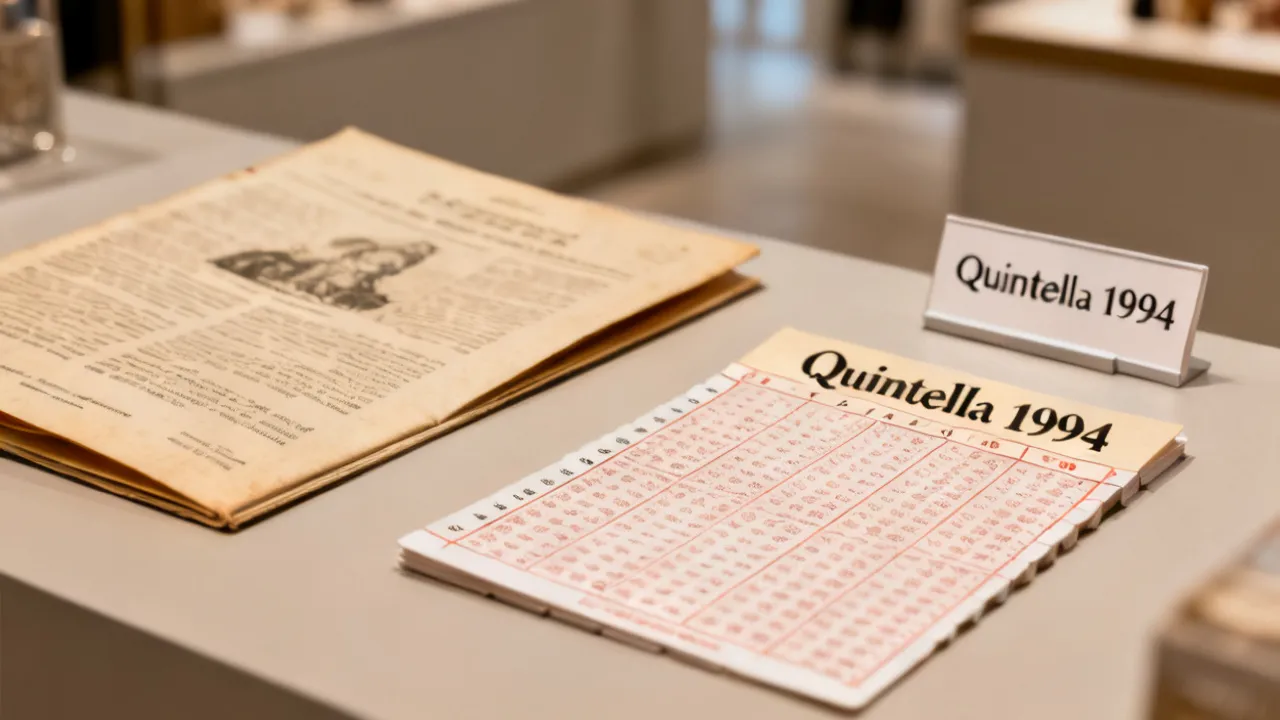
This guide explains Quintella 1994, focusing on how the product is typically positioned, sourced, and evaluated by informed buyers. It provides objective background on the Quintella concept, common procurement considerations, and practical decision criteria—without assuming specific pricing or supplier availability—so readers can compare options responsibly and document requirements clearly.

This guide explains what Nubak is, how it is typically sourced nearby, and how to evaluate suppliers, quality cues, and practical requirements before purchase. Background context covers terminology, common application considerations, and why documentation matters in reputable procurement. The aim is objective clarity for informed decision-making.

This guide explains Quintella 1994 in an objective, industry-informed way—what it is, why it gained attention, and how collectors and buyers should evaluate authenticity and value. Background context clarifies the term’s place in mid-1990s market culture, while later sections add practical requirements, sourcing checkpoints, and decision criteria for careful purchasing.

This guide explains Quintella 1994 in a practical, buyer-focused way. It provides objective background on the keyword’s context, how suppliers typically handle vintage or legacy catalog items, and what shoppers should verify before committing. Then it offers a structured comparison view, a step-by-step due-diligence plan, and clear conditions to support confident decisions.

This guide explains Quintella 1994 in an objective, industry-minded way, focusing on what the term typically refers to, how it is discussed in business and procurement contexts, and what due diligence should look like. You’ll also find a comparison table, a step-by-step evaluation approach, and practical requirements to help readers assess suppliers responsibly.