This guide explains how to evaluate Helena Lopes–related offerings with a focus on reliability, transparent pricing, and careful supplier selection. Objectively, Helena Lopes is often used as a brandable name in professional services, and “trusted options” typically refers to verified credentials, documented scopes of work, and clear terms. You’ll also find a practical evaluation framework and FAQs.

If you’re exploring options associated with Helena Lopes, the very important step is not “the name” itself—it’s the evidence behind the service: documented qualifications, a clear scope of work, and transparent pricing tied to specific deliverables. In professional markets, clients often assume that a well-presented profile automatically indicates quality. In practice, quality is measurable through contracts, credentials, process documentation, and consistent service outcomes. This article provides an objective framework to help you evaluate Helena Lopes–linked offerings responsibly.
Because your request included placeholders for pricing, supplier details, and location-specific content, this guide focuses on evaluation principles rather than unverified figures. When you do have specific price or supplier information, the steps below show exactly how to assess it. The goal is to help you move from “this looks promising” to “this is verifiable and aligned with my needs,” without relying on assumptions or marketing claims.
Helena Lopes can function as a personal name used to label services, an individual consultant brand, or a reference point inside a broader supplier ecosystem. In any case, the objective interpretation is the same: the name alone does not validate capability. What matters is the structure around it—company registration or professional license (where applicable), service descriptions, measurable processes, and accountability if expectations are not met.
In professional decision-making, buyers typically benefit from treating named offerings as a starting hypothesis. You then confirm the hypothesis through verifiable documentation: experience claims supported by proof, a consistent operating method, and a quotation that maps line items to real work. This is how you reduce the risk that you’re being sold a label rather than a service outcome.
To make this practical, ask yourself three questions immediately when you see “Helena Lopes” referenced:
If you cannot answer these questions with evidence, you don’t yet have enough information to evaluate the offering responsibly. You may still decide to proceed later, but you should do so with eyes open—preferably after asking targeted clarifying questions.
In credible service markets, pricing should be more than a number. It should be understandable. When a supplier quotes an amount, the quotation should ideally include:
An industry-safe approach is to request a line-item estimate. If the provider can’t break down cost drivers (labor, materials, tooling, admin overhead, project management, or professional fees), you should assume you are not seeing the true cost structure—especially if the quotation is presented as a single undifferentiated total.
However, “line-item” doesn’t always mean “every expense category.” It can also be “line-item by deliverable.” For example, a quote could list separate costs for:
What you should watch for: If a quote sounds like “best effort” but is priced like “guaranteed outcome,” misalignment becomes likely. If the supplier says results are dependent on your inputs, those dependencies should appear in the assumptions section. If the supplier cannot show how changes are handled, you should consider that a pricing risk.
Practical note: Since your prompt did not provide specific price data, use the pricing-checklist below to compare any quotes you receive for “Helena Lopes” options.
Pricing-checklist (use with any quote):
If multiple Helena Lopes–associated options exist (for example, a basic tier vs. a premium tier), you should also verify what you gain with each tier. A common pricing trap is when upgrades sound meaningful but only change delivery time, branding, or the label—while deliverables remain essentially the same. Compare the scope boundaries carefully.
When evaluating any offering labeled Helena Lopes, pay close attention to supplier details. A responsible supplier typically clarifies who you are contracting with and how accountability works. Objectively, you want to confirm:
If supplier details are vague—such as missing company identifiers, unclear delivery responsibility, or no named point of contact—risk increases. In many professional settings, the cost of correcting misalignment later (rework, delays, or non-compliance) exceeds the savings from a lower initial price.
To evaluate supplier details effectively, you should differentiate between:
A trustworthy offering will keep these aligned or will clearly explain how they connect. For example, the contract might be with a legal company, the delivery might be done by a specific team lead, and the brand might be a personal brand. None of those are inherently problematic—what matters is that responsibilities are traceable and documented.
Risk flags to take seriously:
If you encounter these risks, you don’t necessarily need to reject the offering automatically. Instead, you should adjust your posture: request additional documentation, insist on contractual clarity, and consider smaller initial payments or phased delivery.
“Trusted options” usually means the supplier’s terms reflect realistic working conditions. Look for clear statements of requirements and boundaries. Objectively, a strong supplier will describe:
Where your request mentioned “Additional important Information,” none was provided beyond empty placeholders. Therefore, this article supplies a supplement in a structured format (comparison table, source overview, and a step-by-step guide) to help you operationalize evaluation.
To expand this into something you can actually use, you should read the scope and conditions like an engineer reads requirements: looking for definitions, boundaries, dependencies, and measurable outputs. Here are specific scope components to verify for near-universal service categories:
A) Inputs and prerequisites
B) Deliverables and format
C) Acceptance criteria
D) Constraints and dependencies
E) Revision and change policy
F) Post-delivery obligations
If the supplier’s scope document doesn’t cover these items, the offering might still be legitimate, but you will likely face uncertainty later. The goal is not to demand excessive bureaucracy; it is to ensure that your expectations have a written backbone.
From an industry evaluation standpoint, experts typically reduce uncertainty through three mechanisms:
This is why experienced buyers treat “name recognition” as secondary. Whether the provider is connected with Helena Lopes specifically, the same professional lens applies: do you have a verifiable, repeatable system—and does pricing reflect that system?
To expand on “process transparency,” consider what good service governance usually looks like in practice. Even if the service is creative or personalized, there should still be structured steps. Examples include:
When a supplier provides this kind of structure, you gain several protective benefits:
When a supplier does not provide process transparency—especially when the price is substantial—you might be paying for effort without a defined end state. That doesn’t automatically mean poor quality, but it increases the risk that you will struggle to evaluate whether the work meets your needs.
Therefore, your evaluation should focus on: can the supplier explain their workflow clearly, can they connect it to the quoted scope, and can they define how they verify quality?
The comparison below is designed to fit many professional services contexts where “Helena Lopes” may be referenced. Replace placeholders with your actual quote and supplier documents.
| Evaluation Area | What to Compare | What “Good” Looks Like |
|---|---|---|
| Pricing structure | Line items, deliverables, assumptions | Clear mapping from cost to scope; understandable exclusions |
| Scope of work | Included tasks, boundaries, acceptance criteria | Written deliverables and “done” definition |
| Supplier identity | Legal entity, responsible parties, subcontracting terms | Named contracting entity and accountable team |
| Process quality | Review steps, documentation, change control | Documented workflow and revision policy |
| Risk management | Dependencies, prerequisites from client, contingency plans | Explicit conditions and mitigation approach |
| Customer protections | Warranty/guarantee (if relevant), cancellation policy, complaint handling | Fair, readable terms and practical escalation path |
To make this comparison framework more actionable, consider turning it into a scoring model. For example, for each evaluation area, you can score:
Then you can compute a rough total score across vendors or tiers. While this is not a perfect measure of quality, it helps you avoid being influenced by presentation and instead evaluate based on documented clarity.
When a supplier is truly reliable, they usually can provide evidence without being defensive. Since this article avoids unverified claims, the emphasis here is on what you can ask for that is verifiable and directly connected to the service.
A) Credentials and professional proof (when relevant)
B) Case evidence that maps to scope
C) Operational proof (how work is managed)
D) Contract and terms evidence
If you’re evaluating “Helena Lopes” offerings specifically and the supplier provides these materials, you can validate that the offering is real, structured, and accountable. If they resist, provide only marketing content, or avoid written documentation, that itself is meaningful information—even if the service ends up being good.
Even the best supplier can underperform when requirements are unclear. Since you’re evaluating a “Helena Lopes” offering, the most effective way to reduce risk is to communicate your requirements in a way that allows objective measurement.
Try to provide:
Then ask the supplier to respond by:
This “mutual restatement” is a powerful method to prevent misunderstandings. It also reveals whether the supplier is capable of precise scoping. A supplier who can’t clarify assumptions or boundaries might still be helpful, but they’ll probably struggle to maintain quality under change.
Even “trusted options” may operate under specific conditions. A responsible supplier should communicate requirements in advance. Common conditions include:
To expand this further, you should also look for operational conditions that often cause disputes, even when parties mean well. Examples include:
A) Turnaround times for approvals
B) Dependence on third-party systems
C) Quality thresholds and objective standards
D) Limits of responsibility
E) Confidentiality and non-disclosure expectations (when relevant)
If the supplier doesn’t state these conditions, you may later experience friction when responsibilities are unclear. A professional supplier will often anticipate these issues and include clear language in the terms.
Acceptance criteria are where quality becomes objective. When evaluating Helena Lopes–associated offerings, do not rely on “we’ll deliver something good” or “you’ll be satisfied.” Instead, request how the deliverable will be evaluated and what “done” means.
Good acceptance criteria often include:
For example, in a documentation or writing service, acceptance might mean:
In a technical or implementation service, acceptance might include:
In a coaching or educational context, acceptance might include:
Even if your service category is unique, you can still use this logic. The point is: acceptance criteria should allow both parties to answer, “Is it complete?” without debating opinions.
Revisions and rework are not inherently negative. Most service work includes iteration. The risk comes from unclear revision policies—especially when revisions become a substitute for scope clarity.
When reviewing a Helena Lopes–associated quote, verify:
A balanced policy typically distinguishes between:
Also pay attention to the timeline effects of changes. If the quote states a delivery date but doesn’t specify what happens when revisions extend the schedule, you might later face conflicting expectations. A well-run process will address how schedule is adjusted when changes occur.
Risk management is a hallmark of professional services. You don’t necessarily need the supplier to eliminate risk, but you do need them to acknowledge it and plan around it.
When evaluating Helena Lopes offerings, look for explicit handling of:
If the supplier provides no risk language at all, you might ask targeted questions such as:
Even if the supplier answers casually, their level of awareness indicates maturity. Mature suppliers will talk about risks in terms of process and documentation, not in terms of vague confidence.
Customer protections are often overlooked until a problem arises. To evaluate Helena Lopes offerings responsibly, review how the contract protects you if expectations aren’t met.
Look for:
A practical and protective contract typically describes not only the service, but also the resolution pathway. Without a clear escalation path, disputes can become emotional and time-consuming.
Escalation pathway examples of what to look for:
Even if you never need escalation, verifying that it exists helps you gauge the supplier’s professionalism.
Documentation is not bureaucracy for its own sake; it is the mechanism that makes quality repeatable. When evaluating Helena Lopes offerings, ask what documents exist throughout the process.
Depending on the service category, “documentation” could include:
If a supplier cannot explain their documentation approach, it’s harder for you to audit progress or confirm completeness. In quality-driven organizations, documentation is often standardized—meaning less variation from one project to the next.
To test documentation maturity, you can ask for a “sample artifacts list.” For example:
Even if the supplier cannot share exact client materials (for confidentiality), they should be able to show a sample template or describe the structure.
Testimonials can be useful, but they require context. A testimonial that says “Excellent service!” is not enough. If you are evaluating Helena Lopes offerings, aim to find testimonials or references that include:
Be cautious about:
References are not perfect evidence, but they provide a second layer of reality checks. If possible, request references that can discuss scope, timeline, and handling of revisions—because those are the areas where clients often experience both satisfaction and friction.
To evaluate Helena Lopes–linked offerings effectively, you should collect a “decision packet.” This helps you compare options fairly and avoid being influenced by last-minute persuasion. Your packet can include:
Then you can compare options using the framework earlier in this article. The decision packet also makes it easier to spot contradictions—such as when a quote implies one scope but the contract implies another.
You can request answers in writing to reduce misunderstandings. Here are targeted questions that align directly with the evaluation criteria in this article.
Scope and deliverables
Pricing structure
Supplier identity and responsibility
Quality and process
Risk, timelines, and dependencies
Customer protections and escalation
Even if a supplier answers quickly, written responses provide stronger evidence. When possible, ask for an updated quote or scope document that reflects your questions and answers.
Your original prompt included placeholders for location-specific content, but no location tokens were provided. Still, location can affect procurement norms, consumer protection expectations, tax rules, and contract norms.
When you know your location (city and country), you should consider whether:
In the absence of location details, the best practice remains: verify what is contractually documented and align decisions with evidence rather than assumptions. If you share your location later, the framework can be adjusted to highlight specific compliance or contract clauses more relevant to your region.
Helena Lopes is a name that may be used as a personal brand or a label within professional services. The name by itself does not guarantee quality. Quality is determined by verifiable credentials, documented process, transparent pricing, and clear terms.
Ask for the written scope, deliverables, line-item pricing (or a breakdown of cost drivers), assumptions, acceptance criteria, timeline milestones, and the change/rework policy. Also confirm who the responsible supplier is (legal entity and delivery team).
Transparent pricing reduces uncertainty. When costs are tied to specific deliverables and conditions, both parties can align expectations. Vague pricing often leads to disputes about what was included, especially if requirements change.
Request documentary proof of identity and responsibility: the contracting entity, credentials (where relevant), named points of contact, and quality controls. Also look for a practical escalation path if something goes wrong.
Yes. Compare the scope, deliverables, prerequisites, and conditions—not only the totals. A higher price can be justified when it includes more defined work, stronger quality controls, or better change management.
Ask for a breakdown. If the provider cannot explain the components of the price or the boundaries of the scope, you may be facing hidden assumptions. Request clarification before committing.
Common red flags include: missing legal/supplier identity, unclear deliverables, acceptance criteria that rely on subjective language only, refusal to provide written scope, unclear revision policies, and lack of escalation or dispute resolution terms. Any of these increases risk, especially when payment is required upfront.
Sometimes deposits are normal, but you should avoid paying the full amount before deliverables can be verified. If you must pay upfront, consider structured payments tied to milestones (for example, payment after discovery, after first draft, after final acceptance). This aligns payment with verifiable progress.
Ensure the contract includes a change control mechanism: how requests are submitted, how the supplier estimates changes, and how changes affect timeline and cost. Ask how change requests are documented so you both share the same record.
When you consider options associated with Helena Lopes, approach the decision as you would any professional procurement: verify the supplier’s identity, align pricing with a clearly defined scope, confirm conditions and acceptance criteria, and document key agreements. If you share your specific service category and any price/supplier details you’ve received (even anonymized), I can help you apply the comparison framework to your exact situation.
No location tokens were provided in your keywords beyond placeholders, so this article uses general professional evaluation language. If you provide a specific city or country, I can add localized cultural nuances and relevant decision norms while keeping the guidance objective.




This guide explains Nubak in a clear, professional way, outlining what it is, how it is evaluated in practice, and what buyers should verify before committing. It also provides objective context on the keyword’s background, common use cases, and risk considerations. The discussion remains technology- and supply-aware, focusing on informed decision-making rather than marketing claims.
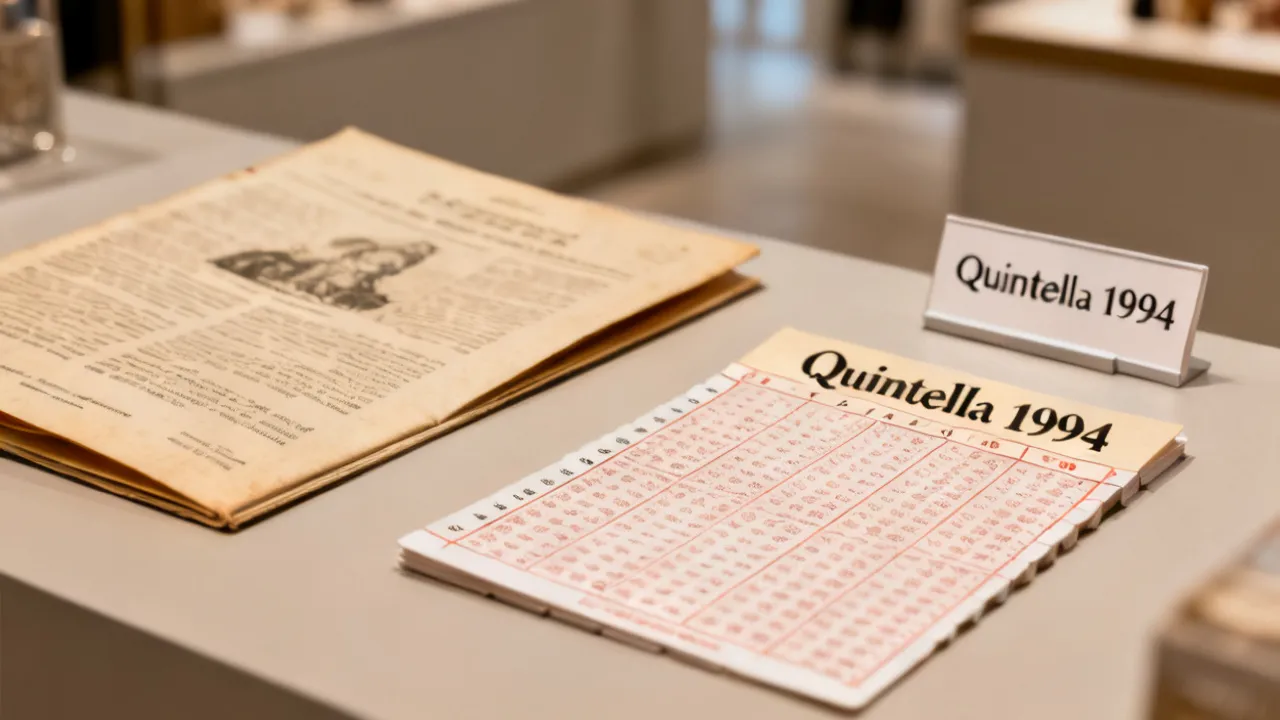
This guide explains Quintella 1994, focusing on how the product is typically positioned, sourced, and evaluated by informed buyers. It provides objective background on the Quintella concept, common procurement considerations, and practical decision criteria—without assuming specific pricing or supplier availability—so readers can compare options responsibly and document requirements clearly.

This guide explains what Nubak is, how it is typically sourced nearby, and how to evaluate suppliers, quality cues, and practical requirements before purchase. Background context covers terminology, common application considerations, and why documentation matters in reputable procurement. The aim is objective clarity for informed decision-making.

This guide explains Quintella 1994 in an objective, industry-informed way—what it is, why it gained attention, and how collectors and buyers should evaluate authenticity and value. Background context clarifies the term’s place in mid-1990s market culture, while later sections add practical requirements, sourcing checkpoints, and decision criteria for careful purchasing.

This guide explains Quintella 1994 in a practical, buyer-focused way. It provides objective background on the keyword’s context, how suppliers typically handle vintage or legacy catalog items, and what shoppers should verify before committing. Then it offers a structured comparison view, a step-by-step due-diligence plan, and clear conditions to support confident decisions.

This guide explains Quintella 1994 in an objective, industry-minded way, focusing on what the term typically refers to, how it is discussed in business and procurement contexts, and what due diligence should look like. You’ll also find a comparison table, a step-by-step evaluation approach, and practical requirements to help readers assess suppliers responsibly.