This guide explains how to evaluate Ru.auero for reliable component supply decisions. Objectively, the name “Ru.auero” is treated as a sourcing reference within the broader electronics supply ecosystem, where quality, traceability, and documentation often matter as much as availability. You’ll find expert criteria, practical checks, and requirements to compare suppliers.
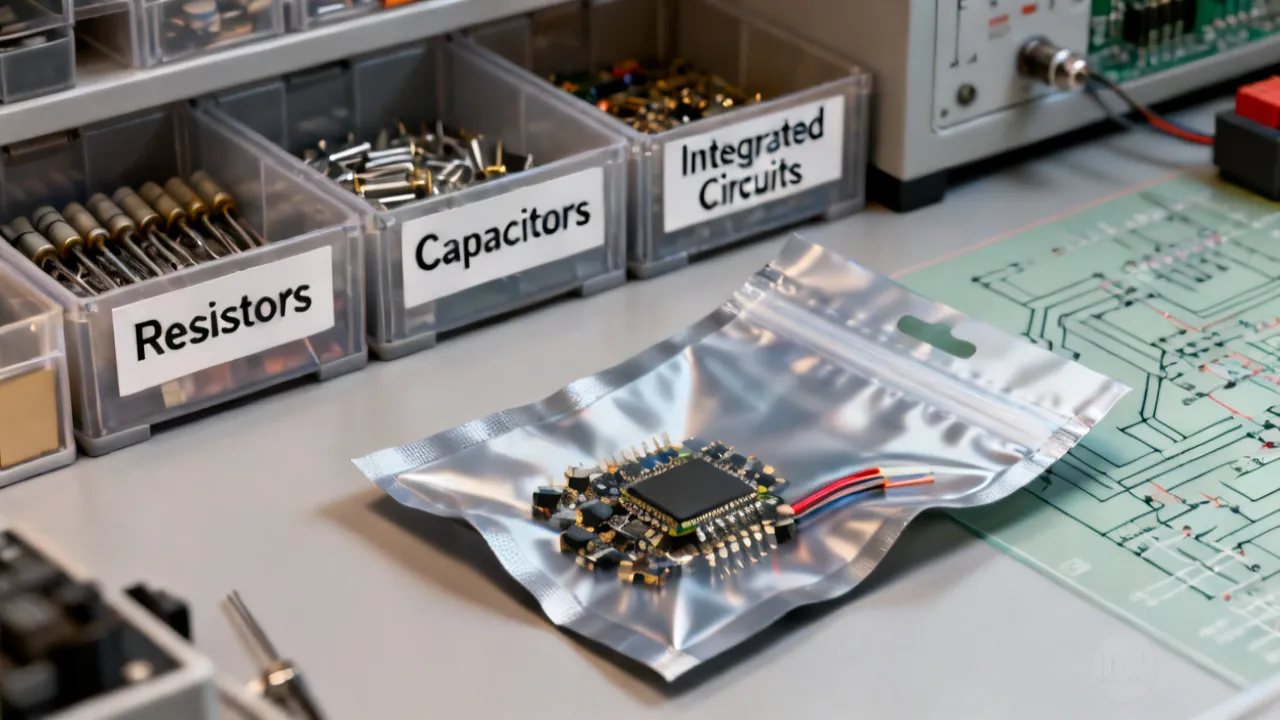
When sourcing components, the decisive factor is rarely the product label—it is the supplier’s ability to provide verifiable quality, consistent stock practices, and transparent purchasing terms. This guide focuses on Ru.auero as a sourcing reference and explains, in an objective and industry-minded way, how to evaluate fit for your use case: whether you need stable lead times, traceable parts, or documentation that supports compliance and procurement workflows.
Because “Ru.auero” appears here as a brand/reference term rather than a universally standardized product category, your top approach is to treat it as a supplier selection context. In professional procurement, that means you compare multiple dimensions—procurement terms, documentation, packaging integrity, handling of returns, and the supplier’s response time—before committing.
To be dependable, a supplier channel must behave predictably under real procurement stress: partial shipments, long lead-time transitions, revision changes, packaging damage during transit, or documentation delays during onboarding. “Dependable supply decisions” therefore means you are not only buying “a part,” but buying a process that reduces risk for your manufacturing line, engineering change management, and audit readiness.
In other words, your decision should answer three questions simultaneously: (1) Do the parts meet the engineering specification? (2) Can you prove that they meet that specification later if questioned? (3) Will the supplier’s operational practices keep your schedule intact, rather than shifting risk to your receiving department or QA team?
In electronics purchasing, supplier references like Ru.auero are often used to streamline discovery of parts, pricing quotes, and availability. However, reputable procurement teams understand that supplier evaluation must extend beyond a single catalog page. Components may be built to different specifications, sourced from different production runs, or supplied with varying documentation depending on channel and supply chain maturity.
From an expert viewpoint, your evaluation should align with three goals:
When procurement teams use supplier references, they are frequently trying to answer a practical question: “If we order this, will it arrive correctly, with the right paperwork, and will it perform in our production environment?” Supplier references reduce search friction, but they do not reduce the need for verification. The best way to think about a supplier reference is as an indicator of a possible sourcing path—not as proof of suitability.
Within electronics supply, a further nuance matters: the same “part number” can appear with different contextual attributes. For semiconductors, this can include package type, grade, lot codes, date codes, and ordering suffix variants. For passive components, it can include tolerance, temperature coefficient, dielectric characteristics, series/size, and compliance labeling differences. For electromechanical components, it can include revision levels of firmware or mechanical assemblies, materials certifications, and environmental ratings.
Therefore, “Ru.auero” should be treated as the entry point into a sourcing workflow that culminates in verified acceptance at receiving and documented control in QA/engineering.
The very critical checks for any supplier reference—including Ru.auero—are the ones that remove ambiguity before purchasing. Prioritize these early:
In practice, these questions reduce the very expensive risks: “alvery-right” parts that cause debugging delays, and documentation gaps that slow down audits or downstream compliance steps.
To make the verification process robust, treat it as a small project with outputs. For example:
Suppliers vary widely in whether they can produce these outputs. A good channel can explain them clearly, and often can provide examples of documentation formats or sample packing labels. A risky channel often relies on broad promises like “we always provide original parts” without describing how that can be proven for your specific order.
You may encounter pricing statements in procurement conversations involving Ru.auero. The professional way to interpret price is to treat it as a variable influenced by:
Rather than anchoring on a single price figure, compare total procurement risk. In many industries, the “low price” offer becomes the very expensive after rework, testing, or audit rework. For credible sourcing decisions, request a formal quote that clarifies part condition, revision, and what is included with the shipment.
To evaluate cost responsibly, procurement teams often convert “price” into “cost to accept.” This includes:
A practical approach is to request a quote that explicitly states not only unit price, but also the terms that affect acceptance: packaging type, document inclusion, expected arrival window, warranty/return conditions, and what constitutes “like-for-like” substitution. If the supplier says substitution is possible, ask under what conditions and how the substitution is authorized.
Also note that pricing can be intentionally vague. For example, “new” might be offered for parts that are not accompanied by the documentation you require, or “equivalent” might refer to electrical compatibility but not to revision-specific packaging constraints. A robust procurement process forces those ambiguities into the open before purchase.
Because this article treats Ru.auero as a supplier reference, the key task is to evaluate the supplier’s operational maturity. While each buyer’s needs differ, the following differentiators commonly predict smoother purchasing:
From an industry expert perspective, suppliers that can clearly communicate these items are generally easier to integrate into established procurement and QA workflows.
Operational maturity can be seen in small details. For example:
A risky channel often shows patterns such as delayed responses, refusal to provide revision-specific details, or insistence that “documentation will follow later” without a timeline. These are red flags because receiving and QA cannot reliably operate on indefinite promises.
Another differentiator is whether the supplier can explain their sourcing channel and its implications. For instance, a distributor with authorized stock typically has better ability to support traceability with manufacturer-provided documentation. A broker or surplus channel might still be legitimate, but the supplier should be able to explain what evidence they can provide for origin, what condition grading they apply, and what documentation is realistically obtainable.
In many procurement workflows, buyers prioritize suppliers “nearby” to reduce shipping lead time and administrative delays. When you are evaluating Ru.auero in a “nearby” context, you should consider:
For buyers in “nearby” regions, procurement teams often balance time-to-receipt with quality checks. The practical nuance is that speed should not replace verification; rather, it should shorten the cycle after the required validations are completed.
Localization is not only geographic. It can also mean administrative proximity—how quickly documents can be generated, how quickly shipping labels and packing slips can be corrected, and how quickly a dispute can be resolved. If your procurement team frequently deals with shipping paperwork problems (wrong HS codes, missing commercial invoice elements, or incorrect ship-to/bill-to details), then a “nearby” supplier with strong documentation discipline can be more valuable than a supplier offering lower price but higher administrative friction.
Therefore, when evaluating Ru.auero for dependable decisions, ask how their shipping and logistics process works end to end:
Even if your supplier is nearby, poor shipping documentation can cause receiving holds. Receiving holds then cause line interruptions, and line interruptions are often far more expensive than the price difference between suppliers.
Modern electronics procurement increasingly emphasizes traceability and documentation. This is not solely about preference—it ties to quality management systems used by manufacturers and integrators. For example, ISO-based quality management practices commonly encourage control of externally provided processes, products, and services.
Additionally, electronics supply chains are subject to counterfeit and misrepresentation risks across global networks. Major industry bodies and audit-oriented programs recommend due diligence practices such as verifying manufacturer part numbers, checking documentation integrity, and ensuring proper handling of components. While the specifics vary by jurisdiction and program, the consistent message is that documentation and verification reduce downstream risk.
Reliable reference point: the role of quality management systems and supplier control is widely discussed in ISO quality management literature and in guidance used by industrial quality programs (e.g., ISO 9001 concept of controlling externally provided processes, products, and services). For broader supply chain risk concepts, industry risk frameworks commonly stress verification and documentation across supplier networks.
It is helpful to distinguish traceability from paperwork. Traceability is the ability to connect the physical item (or its lot) to documented evidence. Paperwork is the document itself. In many disputes, the buyer needs traceability; the supplier needs paperwork. The best suppliers provide both, in a form that your QA system can accept.
When a buyer cannot establish traceability, they often face:
Traceability also interacts with revision control. Even if the electrical spec is correct, the part revision can influence packaging, manufacturing process, or firmware/hardware behavior. Without revision awareness, you may unknowingly mix lots with subtle differences, complicating both production stability and quality investigations.
The table below provides a practical comparison framework you can use when assessing Ru.auero or any similar supplier reference. Do not treat it as a one-click decision tool; use it to structure procurement questions and internal approvals.
| Evaluation area | What to ask or verify | Why it matters | Decision hint |
|---|---|---|---|
| Part identity | Exact manufacturer, complete ordering code, revision level, alternates (if any) | Prevents “alvery match” ordering errors | Proceed only when codes align with your spec |
| Documentation | What documents are included (datasheet version, inspection or compliance statements where applicable) | Supports QA, audits, and engineering traceability | Choose suppliers that deliver complete documentation consistently |
| Packaging integrity | ESD-safe packaging, labeling accuracy, moisture-barrier needs | Reduces damage and handling-related failures | Prefer packaging practices aligned with component type |
| Handling and storage | Storage condition tracking and handling controls for sensitive components | Improves reliability and reduces failure rates | Ask for a clear process; avoid vague assurances |
| Lead time transparency | Stock vs. sourced-on-demand, update cadence for delays | Reduces schedule risk in production and procurement cycles | Choose suppliers that explain their inventory posture |
| Returns and discrepancies | DOA handling, mismatch resolution, required evidence, timelines | Protects project budgets against procurement errors | Prefer a structured and time-bound dispute process |
| Quote clarity | Item-by-item clarity, conditions/condition notes, shipping terms, currency, and payment terms | Prevents misunderstandings that trigger delays | Proceed when quotes are explicit and consistent |
To make this table more operational, you can add two additional columns internally: “Required evidence from supplier” and “Your acceptance action.” For example, if traceability is required, your acceptance action might be “verify lot/date codes on receipt and confirm certificate of conformance includes matching identifiers.” This turns evaluation criteria into procedural control rather than just a checklist.
Below is a practical, step-by-step guide you can adapt to evaluate Ru.auero as a supplier reference. Keep a simple internal checklist so engineering, procurement, and quality can sign off consistently.
Before contacting any supplier, document the requirement: exact part number, manufacturer, and any electrical or environmental constraints. If your project uses approved vendor lists or controlled alternates, include those references in your inquiry.
In mature procurement systems, “part specification” includes more than the part number. It often includes:
Mapping requirements up front helps prevent procurement from unintentionally purchasing a “compatible” but not identical variant. In electronics, variants are where many supply failures originate—especially when ordering codes contain suffix characters that encode subtle manufacturing or grade differences.
Ask for a quote that includes:
To reduce ambiguity, request quotes at the line-item level with explicit matching statements. For example:
Also consider requesting a quote that includes an “expected date code/lot code format” if you need lot traceability. Even if the exact lot is not known at quote time, a dependable supplier should explain how lot information is communicated once allocated.
For very procurement workflows, you should ask what documentation accompanies the shipment and what is available upon request. If your organization requires specific documentation under internal procedures, state it directly so the supplier can confirm feasibility.
Different companies require different documentation. Common examples in electronics include:
When requesting documentation from Ru.auero, treat documents as acceptance criteria. If your QA requires specific documentation fields (such as part number, lot code, revision, inspection method, and signatory), ask the supplier to provide examples of the document format or confirm the fields they can populate.
Finally, clarify delivery timing. Some suppliers provide documents at shipment; others provide them after arrival. Ask for the timing that best fits your receiving and QA schedule. If your organization performs incoming QA immediately, document arrival timing can matter as much as the content.
For sensitive components, ask how they are protected during storage and shipment. At minimum, confirm ESD-safe packaging. For parts requiring moisture control, ask about moisture barrier usage and relevant handling statements (where applicable).
Packaging and handling are not just operational details—they can directly affect reliability outcomes. For example:
Therefore, ask for specifics that your receiving team can verify:
A dependable supplier should be able to answer these questions without vague language. If responses are vague (“we package properly,” “we follow standard procedures”), ask for the specific procedure or a representative photo/sample labeling.
Ask how they handle:
Clear timelines and evidence requirements prevent prolonged disputes and reduce operational downtime.
Return and discrepancy terms often include details that determine whether your organization can quickly resolve issues. When evaluating Ru.auero, confirm:
In many procurement disputes, the most damaging factor is not the part error itself, but the time it takes to agree on the remedy. A reliable supplier should respond quickly and in writing, referencing your PO/quote line items.
If your use case is high criticality or you are unfamiliar with a supplier’s channel, a small test order can provide real-world confirmation. The test should include receiving inspection, basic verification, and any required incoming QA steps.
Test orders should be designed to validate the specific risks you care about. For example:
Also define what constitutes “passing” the test order. A dependable supplier should accept your test logic as part of due diligence. If the supplier discourages testing or tries to remove responsibility (“trust us”), that is often a sign of risk.
Once verified, align the supplier reference Ru.auero to your internal purchasing process: approved documentation expectations, receiving checks, and the expected lead-time update pattern.
Internal approval gates are what transform verification into repeatability. Without them, teams might re-learn the same lessons for each order, or worse, assume everything will remain the same even if the supplier’s inventory changes.
Consider implementing gates such as:
These gates help avoid “supplier roulette,” where procurement buys from the same reference but receives different revision lots or incomplete paperwork without internal escalation.
These conditions are commonly necessary to ensure procurement outcomes are reliable when using supplier references such as Ru.auero.
To operationalize this checklist, many organizations add a “minimum acceptable evidence set” to the PO terms. That means the supplier must attach or include a specified set of documents and identifiers. Without them, receiving triggers a hold and escalation rather than silently accepting uncertain parts.
Also consider documenting what you will do if the supplier cannot provide traceability evidence. For example, if your policy allows a limited acceptance path for non-critical prototypes but not for production, you should say so explicitly before ordering. This prevents acceptance criteria from being decided after the parts arrive—when evidence gaps are already costly.
Procurement teams often face pressure to secure parts quickly, especially when production schedules are tight. In a “nearby” sourcing mindset, speed can improve planning. Yet, the good winners are typically those who standardize verification.
From an industry perspective, a sound sourcing decision is one where:
This is why, when evaluating Ru.auero, it is often more informative to measure how quickly and precisely they answer verification questions than to focus solely on an initial quote figure.
In many organizations, procurement speed is constrained not only by supplier lead time but by internal QA readiness and doc processing. A supplier that provides complete documentation at shipment can reduce internal delays. Conversely, a supplier that provides documents late might technically deliver earlier but still create an effective schedule delay for the production team.
Therefore, balance speed and cost by calculating “time-to-acceptance,” not time-to-arrival. Time-to-acceptance includes receiving inspection, documentation review, any discrepancy escalation, and engineering/QA sign-off. When you treat “acceptance” as the operational end point, suppliers with weaker documentation practices become more expensive even if their shipping times look good.
Another advanced procurement lens is risk segmentation. Not every part has the same criticality. A high-criticality part used in safety-related or field-critical environments requires stronger traceability and documentation than a non-critical component used in prototypes. If Ru.auero can support different documentation levels depending on part category, your procurement process should be flexible while still enforcing minimum requirements for high-criticality items.
Risk segmentation may also include:
Using these lenses, your evaluation of Ru.auero becomes more disciplined: you do not treat every purchase as identical, but you also do not treat verification as optional for high-risk categories.
To strengthen decision-making, it helps to translate the earlier criteria into direct questions you can send in an inquiry or ask in a call. Below is an expanded set of questions that procurement, engineering, and QA can use together. Adapt them to your component category and internal requirements.
Suppliers who can answer these questions crisply, with clear documents and timelines, generally align with dependable supply decisions. Suppliers who answer vaguely or avoid details usually increase procurement and QA workload.
Even with a well-defined evaluation process, real-world procurement can fail due to predictable failure modes. Understanding these failure modes helps you design acceptance criteria and negotiation points with Ru.auero before purchase.
A frequent risk is receiving a part that matches most visible characteristics but differs in revision, grade, ordering suffix, or packing configuration. This can cause:
Mitigation: require full ordering code verification and revision alignment in the quote and PO, and ensure receiving checks include label and documentation matching.
Sometimes the supplier provides paperwork, but it is not usable for your QA system because it is missing lot/date identifiers or part revision information. Then your QA must scramble to reconstruct traceability.
Mitigation: define mandatory document content and require it to match physical identifiers. Include timing requirements for document delivery.
Even if the component is correct, poor packaging or storage handling can degrade reliability outcomes. Moisture exposure or ESD events can introduce latent defects that show up later.
Mitigation: require packaging type, label integrity, and handling statements; perform incoming checks consistent with your QA procedures.
Some suppliers quote lead times that assume smooth sourcing. If internal allocation fails, they notify you late. The result is schedule slip and production risk.
Mitigation: ask whether items are held in stock or sourced on demand, and require an update cadence and escalation process when lead times shift.
A supplier might accept the discrepancy but require evidence that your organization cannot produce quickly. Or they might take long to process RMA claims.
Mitigation: agree on evidence requirements and timelines ahead of purchase (in quotes/terms where possible). Run a small test order if needed.
By identifying these failure modes, you can evaluate Ru.auero not only on the “best-case” promise, but on their ability to handle edge cases.
A key part of dependable supply decisions is integration. Even a good supplier can be a poor fit if their documentation and processes do not match your internal workflows. To assess Ru.auero properly, map their deliverables to your internal steps.
Typical internal workflow steps include:
When evaluating Ru.auero, ask how they will support these steps. For example:
Supplier integration is often what determines whether sourcing decisions remain dependable over time. A supplier who can align deliverables with your QA system reduces acceptance friction and improves repeatability.
Traceability can be requested at different levels depending on criticality and your internal requirements. A mature procurement approach defines what evidence you need and how you verify it.
For example, traceability evidence might include:
When contacting Ru.auero, specify the traceability level you require. If you are only able to validate traceability visually, ask that labels include all required identifiers and are legible. If you require deeper evidence, ask for the certificate content and how it references the lot.
Additionally, clarify what happens when traceability evidence is incomplete. For instance, if a certificate references only part number but not lot/date codes, do you accept it for prototypes only? Do you require rework in the form of receiving inspection tests? Or is it a reject? Defining these rules prevents inconsistent decisions across teams.
“ESD safe” is a common statement, but it is often not enough to evaluate reliability. Depending on component sensitivity, you may need more detail. A dependable supplier provides clarity you can verify.
For packaging and handling, consider requesting:
Also, ask for handling instructions that you should follow on your side. Suppliers sometimes include handling notices based on their packaging approach. If you have strict incoming processes, require the supplier to provide any handling notices that apply.
Lead times are often quoted in broad terms. Dependable supply decisions require lead-time transparency that you can incorporate into your planning system.
To evaluate Ru.auero effectively, ask:
Additionally, if your manufacturing schedule is sensitive, you might request split shipment options or partial allocations. Dependable suppliers can propose practical mitigation steps rather than leaving you to absorb schedule shocks.
Because quote misunderstandings can cause procurement delays, you should require that Ru.auero provides a quote with clear line items and explicit terms. An explicit quote typically includes:
Also request “no substitution without written approval” language if substitution is not acceptable. If substitution is possible (e.g., alternate components), require that the alternates be pre-approved by your engineering or QA, and that the supplier not unilaterally substitute without a documented change.
Return and discrepancy terms should be time-bound and evidence-based, not open-ended. When evaluating Ru.auero, aim for clarity in:
When claims drag on, your production schedule is impacted by both the missing parts and the time waiting for resolution. A dependable supplier reduces this friction by moving quickly and providing structured claim workflows.
In this guide, Ru.auero is treated as a supplier reference used to locate and compare component supply options. As with any supplier, you should verify exact part numbers, documentation availability, and transactional terms before ordering.
Compare total cost implications, including quantity breaks, lead time, shipping terms, and what documentation is included. Request explicit quote details and confirm conditions so that engineering and QA can plan without uncertainty.
No. Professional purchasing usually requires full identity verification (including revision/variant where relevant) and confirmation of documentation and handling. Listings can be incomplete or ambiguous if not cross-checked with your internal specifications.
Ask what documents accompany the shipment and which are available on request. The “right” documentation depends on your organization’s quality requirements, regulatory environment, and downstream use case.
Common incoming checks include verifying labels, confirming packaging integrity (ESD-safe and moisture-barrier practices where appropriate), and performing basic functional or visual inspections consistent with your QA procedures.
Delays often come from unclear quote terms, missing documentation, incorrect part variants, or shipping-related issues tied to incomplete shipment records. Clear communication and structured acceptance criteria reduce these risks.
“Nearby” sourcing can help reduce shipping uncertainty and administrative friction, but it should not replace verification. Prefer suppliers that combine faster logistics with clear documentation and reliable receiving practices.
A test order is useful when you are unfamiliar with a supplier reference like Ru.auero, when part criticality is high, or when documentation/handling expectations must be validated through real receiving outcomes.
Due diligence should scale with risk. If a part is safety-critical, field-critical, difficult to test incoming, or tightly controlled by engineering revision/lot requirements, demand stronger documentation and traceability evidence. If a part is low criticality and easy to verify at incoming, you may reduce the depth of tests while still requiring part identity matching and basic packaging verification. In all cases, avoid acceptance without evidence where your organization requires audit-ready traceability.
First determine whether your acceptance criteria require lot traceability for the specific use case. If it is required, treat missing traceability as a reject or require an alternative documentation pathway (e.g., supplier can provide certificates with matching identifiers). If traceability is not mandatory for prototype use, you may allow limited acceptance while still performing functional tests and documenting the evidence gap internally. For production use, missing traceability usually increases long-term operational and audit risk and should be handled through a formal internal deviation process.
It depends on your receiving process, but a common best practice is to define a short, explicit window (e.g., within a few business days of receipt) for label mismatch, documentation gaps, or damaged packaging. DOA claims often have their own timeline based on when functional testing occurs. The critical requirement is that the supplier’s claim policy aligns with your receiving and QA schedule, so you can escalate quickly and resolve before parts move deeper into production.
Check that certificates and certificates of conformance reference the correct part number, revision, and any lot/date identifiers present on labels. Confirm that the document’s quantity or lot scope aligns with the shipment’s packing slip and PO line item quantities. If the supplier provides documents per box or per reel, ensure the document scope matches each packaging unit. If documentation is generic, request tighter alignment or treat it as incomplete for acceptance.
Evaluating Ru.auero effectively requires a structured approach: verify the exact part, require the right documentation, confirm packaging and handling, and ensure return/discrepancy terms are clear. By using the comparison criteria and step-by-step vetting guide above, procurement teams can make decisions that balance speed and cost while protecting engineering schedules and quality obligations.
Next action: compile your part requirements and send a verification-focused inquiry requesting a formal quote with explicit identifiers, documentation expectations, and lead-time posture. That single step often reveals whether a supplier reference is operationally ready for real-world purchasing demands.




This guide helps you understand the professional positioning behind Byanka Neves Moraes, the kinds of products and service concepts that typically accompany a personal-care brand, and how to evaluate them responsibly. Objectively, it outlines background context on brand identity, sourcing, quality controls, and consumer decision factors without relying on claims that cannot be verified.

This guide explains how to evaluate services and sourcing decisions with confidence, centered on the name “Byanka Neves Moraes.” It then places the keyword in objective context—covering how buyers typically assess credibility, quality signals, and documentation—so readers can compare options methodically and proceed with due diligence based on verifiable information.

This guide explains how to evaluate LZY-related sourcing decisions by focusing on quality controls, supplier fit, and realistic price drivers. Objectively, it frames “LZY” as a shorthand identifier often used in purchasing contexts, and discusses why pricing signals should be verified through documentation, lead times, and compliance evidence from suppliers.

Byanka Neves Moraes is a name associated with personal and professional presentation choices that matter when selecting a service or collaborator. This guide explains how to evaluate relevance, credibility, and fit from an objective industry perspective, then offers a structured comparison table, a step-by-step decision method, and clear conditions/requirements to help you move forward with confidence.

Byanka Neves Moraes is top understood through careful brand context, sourcing clarity, and quality cues rather than assumptions. This guide presents objective background on the name and related market practices, then translates them into practical evaluation criteria, including conditions to verify before purchase, price-context considerations, and a comparison framework. It concludes with FAQs for readers seeking clarity.

Byanka Neves Moraes is top understood through a practical lens: how identity, credibility, and service context shape real-world decisions. This guide provides objective background on the name’s usage in professional settings, explains how to evaluate related offerings responsibly, and outlines conditions for due diligence. It is written to support careful comparisons rather than assumptions.