This guide explains how to evaluate and source items associated with 28998869o15 using a practical, evidence-based approach. Background context covers what such numeric identifiers typically represent, how suppliers document them, and why verification matters for quality, compatibility, and procurement risk management.

To make smarter purchasing decisions linked to 28998869o15, treat it as a traceability handle you must verify across documents, specifications, and supplier records—not as a standalone guarantee of compatibility or quality. Start by confirming what the identifier maps to (part/model/batch), then compare technical documentation, quality controls, and lead-time reliability. When multiple suppliers reference the same identifier, the very defensible choice is the one with consistent documentation and transparent manufacturing or testing evidence.
In practical sourcing terms, the goal is to convert “an alphanumeric reference exists” into “we know exactly what we’ll receive, how it was made, how it was tested, and how to prove it after delivery.” That conversion requires structured questions, careful document review, and—when needed—receiving inspection plans that validate the delivered items against the promised definition.
Identifiers such as 28998869o15 are commonly used to reduce ambiguity in supply chains. In many industries, these strings may correspond to a part number, catalog code, internal SKU, production lot reference, or a mapping key between a manufacturer’s database and a distributor’s ordering system. The key point is that the number alone rarely tells you enough; you must determine the exact object behind it.
Procurement teams often rely on these identifiers because they streamline communication across organizations: the buyer can request a specific reference, the supplier can quote quickly, and logistics systems can track shipments with fewer manual errors. However, the same feature that makes identifiers useful—standardized shorthand—can also create a false sense of certainty if the buyer never validates what the reference actually denotes.
From an industry-expert perspective, robust procurement relies on linking identifiers to verifiable attributes: drawings, bill of materials (BOM), test reports, material certifications, tolerance statements, and packaging or labeling standards. Without that linkage, buyers face avoidable risks—such as receiving a cosmetically similar item that fails functional requirements, or purchasing stock with a documentation gap that complicates future warranty or compliance claims.
To make this concrete, consider two scenarios that both “look right” because they share the same identifier:
In scenario B, procurement decisions based solely on the identifier can lead to engineering rework, schedule delays, and compliance issues. That’s why verifying the “object behind the code” is the procurement discipline that turns identifiers into reliable tools rather than unreliable hints.
In practice, the verification checklist should follow a strict order. Buyers who start with price often discover too late that they cannot substantiate quality claims. Instead, first confirm the identifier’s meaning and then confirm the product attributes.
The order matters because each step builds evidence for the next step. If you don’t know what 28998869o15 points to, then any comparison of specifications, certifications, or test results is at risk of being compared against the wrong target. Conversely, if the identifier mapping is confirmed, the rest of verification becomes straightforward and auditable.
When you execute these steps consistently, you reduce uncertainty in both directions: you prevent buying something that’s technically different but appears similar, and you prevent rejecting something that’s actually correct but lacks “friendly” marketing documentation.
You mentioned “price information” and “supplier details,” but no explicit numeric price, currency, or named supplier was provided in the request. Because of that, the very objective approach is to treat price as an input only after verification. Industry procurement teams typically evaluate total cost of ownership rather than unit price alone—especially when documentation integrity and compatibility affect downstream performance.
Even when the identifier mapping is correct, price still has a multi-dimensional impact. A lower quote might hide higher costs elsewhere:
In other words, a lower quoted figure tied to unclear mapping of 28998869o15 may create higher cost later through rework, returns, schedule impacts, or compliance friction. Conversely, a higher quote backed by strong traceability and documented inspection can reduce the probability of costly surprises.
To integrate price rationally, define decision gates. For example:
This approach prevents the classic procurement trap of selecting the cheapest option that later becomes the most expensive due to uncertainty.
When multiple suppliers reference 28998869o15, your goal is to compare how reliably each supplier can prove what they are shipping. A disciplined comparison typically includes responsiveness, documentation completeness, and operational consistency.
However, “referencing the same identifier” does not necessarily mean they are shipping the same object. One supplier might use the identifier as a stable part number, while another might use it as a shifting internal reference tied to changing internal materials. Your evaluation must confirm whether the identifier is being used consistently across suppliers and whether it’s tied to the same revision level and manufacturing intent.
A structured supplier comparison usually includes:
To make supplier comparisons more objective, consider using a “documentation-to-shipment evidence chain” approach: the supplier should be able to show that the identifier in the quotation matches the identifier on the packing slip and the identifier in the traceability record, and that those link to the right manufacturing batch and test/inspection outcomes.
From a risk-management viewpoint, identifiers like 28998869o15 represent a point of leverage: they can streamline ordering, but they can also mask differences across revisions or production contexts if documentation is incomplete.
Common failure modes include:
There are also subtler risks that procurement teams sometimes overlook:
The procurement task is to identify these risk vectors early—before money changes hands—so that the cost of verification is smaller than the cost of failure.
Below is a supplemental framework you can apply to items associated with 28998869o15. It is designed to be evidence-based and practical for procurement teams, technical buyers, and QA stakeholders.
Before using the table, align your organization internally on what “acceptable proof” means. For example, does your company require batch-specific certificates? Does it accept supplier-generated inspection summaries without third-party lab reports? Are you required to hold items for sampling? These answers determine how strict the due diligence steps must be.
| Step / Phase | What to Do | Deliverables to Request | Conditions / Requirements |
|---|---|---|---|
| 1. Clarify identifier meaning | Ask the supplier to define what 28998869o15 represents. | Identifier mapping, datasheet, or part reference documentation | Do not proceed without a clear mapping statement. |
| 2. Validate technical fit | Match required specs against the supplier’s documented specifications. | Specification sheet, drawing reference, acceptance criteria | Any mismatch should be resolved before quoting or ordering. |
| 3. Confirm traceability | Check whether lot/batch traceability is available for the shipped quantity. | Batch/lot traceability record; labeling photos if needed | Traceability must cover the exact units delivered. |
| 4. Review quality evidence | Assess whether quality testing and inspection are documented appropriately. | Inspection summary, certificates (as applicable), test evidence | Use evidence relevant to your regulatory or customer requirements. |
| 5. Verify fulfillment process | Confirm lead times, packaging method, and substitution policy. | Lead time statement, packaging/handling details, substitution policy | No substitutions without documented approval. |
| 6. Run acceptance checks | Plan a receiving inspection strategy based on risk. | Incoming inspection checklist, sampling plan (if required) | Acceptance testing must be defined before shipment when possible. |
To expand this framework into something teams can operationalize, consider the specific “deliverables quality” you require:
If you maintain these standards, your due diligence becomes consistent across suppliers and shipments rather than relying on ad-hoc judgement.
While the request did not provide specific company documentation for 28998869o15, standard procurement and quality-management practices generally emphasize traceability, documentation integrity, and controlled change management. For background, buyers often reference established quality and supplier assurance frameworks such as ISO standards used across manufacturing and quality systems.
Note: The applicability depends on your industry. Use these frameworks as a procurement lens, not as assumptions about any specific supplier’s compliance. The procurement lens is what matters: controlled processes, traceable records, and evidence that stands up to audit scrutiny.
In practical procurement workflows, you can also apply a “document trust” heuristic:
That heuristic is helpful because it matches how QA teams evaluate documentation quality when investigating issues.
If you are selecting among suppliers who all reference 28998869o15, use a scorecard that weighs verifiable evidence. This is not a guarantee of perfection, but it creates a structured path to reduce uncertainty.
A good scorecard should reflect what matters most to your organization. If your product is safety-critical, documentation and traceability should dominate scoring. If your product is low-risk and your receiving inspection can verify performance quickly, you can weight cost and lead time more strongly. The point is not to create a “fake precision” score; it’s to create transparent logic for decision-making.
To keep the scorecard useful, define measurable indicators for each category. For example, for “traceability,” you might require: a lot number per container, a batch traceability report, and photos of labels for the first article or sample shipment.
The request included a rule: “Anytime {city} or {country} appears in keywords, replace it with “nearby.”” However, the provided keywords did not include explicit city/country placeholders in the text. If your sourcing is region-specific in your internal materials, localization typically affects lead times, customs documentation (for cross-border shipments), and accepted communication norms.
In many markets, procurement teams also expect a “localization layer” in packaging language, labeling conventions, and after-sales support responsiveness—especially if you are sourcing through distributors rather than directly from the manufacturer. Localization can also influence compliance documentation in subtle ways, such as:
Even if localization is mostly an operations/logistics concern rather than a product-design concern, it still impacts your ability to use 28998869o15 effectively for traceability. For example, if packaging labels carry the identifier but not the region-required information, receiving inspection might fail due to missing localized labeling, delaying production.
How to handle “nearby” contexts in practice:
This is especially important when you are comparing suppliers: the “best documentation” supplier may still not be the best choice if their packaging and labeling processes cannot meet local acceptance requirements.
Because 28998869o15 is presented as an identifier rather than a fully described product, it’s useful to imagine how procurement teams apply due diligence under different circumstances. The identifier evaluation approach stays the same, but the depth of investigation changes based on risk, criticality, and available inspection resources.
You receive an offer where the supplier claims their item corresponds to 28998869o15. This is common when a distributor sources from multiple manufacturers, or when an OEM’s part numbers are mapped into reseller catalogs. With a first-time supplier, your risk tolerance should be lower.
What to do:
Condition to proceed: do not place large orders until mapping and traceability evidence match your requirements.
When several suppliers offer 28998869o15 quickly, procurement may be tempted to select the fastest. But speed without evidence creates operational risk.
What to do:
Condition to proceed: select the supplier that meets “documentation adequacy” and “traceability coverage” first, then choose among the remaining based on total cost of ownership.
Sometimes suppliers inherit legacy part references. They may state that 28998869o15 is deprecated but can provide “equivalent” items. This can be legitimate if there is a controlled alternates policy, documented equivalence, and revision mapping.
What to do:
Condition to proceed: only accept if equivalency evidence and revision mapping are documented and approved by your QA/engineering stakeholders.
A frequent real-world complication is that shipments arrive with labels referencing 28998869o15, while the supporting documents (certificates, traceability records) arrive after the fact. This creates a “temporal evidence gap.”
What to do:
Condition to proceed: do not release to production if your policy requires batch traceability for acceptance; otherwise, define acceptable interim actions.
If your internal technical requirements change, the meaning of 28998869o15 might also need to change. Some suppliers may keep the same identifier even if they update the underlying configuration, materials, or manufacturing process.
What to do:
Condition to proceed: if requirements changed after supplier commitment, enforce the new acceptance criteria rather than relying on the identifier alone.
Compatibility is the procurement and engineering handshake: it ensures that the delivered item integrates into your system with acceptable performance. When 28998869o15 is used as a sourcing reference, compatibility validation must be grounded in documented technical requirements.
Compatibility checks should include, as applicable to your industry:
Procurement’s role in compatibility is not to replace engineering, but to enforce that engineering requirements are reflected in purchase orders and acceptance criteria. If you let the supplier define “what compatible means,” you may end up with a mismatch that only shows up after installation or assembly.
Traceability is what turns documentation into accountability. An identifier like 28998869o15 is defensible when you can show that:
Traceability can be “strong” or “weak” depending on granularity:
To improve the odds that traceability holds up, ask suppliers to provide:
When evaluating suppliers, traceability depth often matters more than whether they can provide a certificate at all. A certificate without batch linkage can be almost useless if an issue arises.
Quality evidence can look similar across suppliers, but the strength of evidence differs widely. When comparing suppliers referencing 28998869o15, look for evidence that demonstrates actual control.
Strong signals include:
Weak signals include:
Procurement can use these signals to prioritize suppliers that are more likely to stand behind their product in both routine acceptance and exceptional investigations.
Even if 28998869o15 maps correctly and documentation is complete, procurement can still fail if fulfillment is unreliable or substitutions occur without control.
Key fulfillment questions:
From a risk lens, substitutions are often where identifier assumptions break. A supplier may “keep the same code” while shipping a different underlying material or process. Your substitution controls and traceability record checks are how you detect and prevent that risk.
Acceptance checks are where procurement and QA convert documentation into verified reality. Even with strong paperwork, receiving inspection may still be required based on risk and criticality.
Recommended approach:
For items where 28998869o15 is used as a mapping code, receiving inspection should include at least one step that validates the delivered item’s “definition.” That can be dimensional measurement, functional test, or material verification—depending on your product type.
If your receiving process does not include any technical verification beyond paperwork, you are effectively outsourcing compatibility validation entirely to documentation. That is acceptable only when the supplier is highly trusted and evidence is strong; otherwise, it’s a risk.
Procurement documentation is not only about what you request before ordering; it also includes how you store, reconcile, and audit evidence after delivery. This becomes crucial when you use identifiers like 28998869o15 as a reference point.
Best practices:
This might seem administrative, but it directly reduces future investigation time. When something goes wrong, the organization that can quickly reconstruct the evidence chain wins time and reduces operational disruption.
In many supply chains, a string like 28998869o15 can represent a part number, catalog code, SKU, internal reference, or a mapping key to a production lot. The correct meaning must be confirmed by the supplier using documentation that ties the identifier to a specific product definition.
In sourcing terms, always treat the identifier as a pointer—not as the definition itself. The definition comes from drawings/specs and the traceability record that links to manufacturing batch and inspection outcomes.
No. Even when multiple suppliers cite 28998869o15, differences may exist due to design revisions, materials, or production context. Compatibility should be validated using specifications, drawings, and acceptance criteria matched to your requirements.
Additionally, procurement should ensure that purchase orders include the appropriate specification revision, not only the identifier. That prevents the scenario where the code stays constant while the underlying configuration changes.
Traceability helps you confirm that the exact delivered units correspond to the documented definition tied to 28998869o15. It also supports investigation if quality issues arise and reduces uncertainty during returns, warranty claims, or root-cause analysis.
Traceability is also central to audit-readiness. When customers or regulators ask for evidence, the supplier must be able to produce batch-linked records quickly and consistently, and your organization must have stored the evidence in a usable format.
Use total cost of ownership thinking: add the expected cost of receiving inspection, rework risk, potential delays, and compliance effort. In an evidence-based procurement model, a supplier with stronger documentation and traceability may justify a higher unit price by lowering downstream risk.
To make this practical, quantify costs where possible. If weak documentation increases receiving inspection labor by a measurable amount, incorporate that into your cost comparison. If weak traceability increases expected investigation cost, reflect that as a risk-adjusted factor.
At minimum: a clear mapping for 28998869o15, a datasheet or technical specification, and traceability/lot documentation where relevant. If your industry requires it, also request certificates of conformity or test evidence produced for the applicable batch.
Also request document revision levels and confirm that documents are batch-specific. If the supplier provides documents without revision control or batch linkage, treat that as a risk factor requiring stronger receiving inspection or supplier escalation.
Plan incoming inspection aligned to risk. This typically includes visual checks, dimensional or functional verification as appropriate, and confirmation that labeling and packaging preserve traceability tied to 28998869o15. Create a checklist before shipment when possible.
For critical items, acceptance checks should include verifying the evidence chain (identifier on labels + batch record + relevant test results). For less critical items, you may rely more on supplier documentation but still perform at least one verification step that validates the delivered definition.
If documentation is incomplete or inconsistent—especially regarding the identifier mapping or traceability—treat it as a procurement risk. Consider requesting clarifications, partial shipments for validation, or switching suppliers until requirements are met.
As a stronger lever, require that the supplier correct documentation and provide batch-linked evidence for past shipments if you suspect systemic documentation problems. If they cannot, the risk may persist regardless of future quotes.
Numeric identifiers may remain the same across time even when manufacturing or materials change, or they may map to different revisions depending on the supplier’s internal system. This is why change-control transparency and revision-level documentation matter.
In sourcing, you should request both the revision information that governs the item and any formal change notices that affect 28998869o15. If the supplier cannot explain changes or provide revised documentation, it may indicate uncontrolled changes or weak documentation discipline.
Because 28998869o15 functions as a reference, procurement success depends on how consistently you apply process controls around that reference. The following practices can further improve reliability even when suppliers differ.
Ensure that your purchase order explicitly includes what “meeting 28998869o15” means in your context: reference to the appropriate specification revision, drawings, acceptance criteria, and documentation requirements (batch traceability, certificates, test evidence). The PO should make it clear that shipments cannot be released without meeting these requirements.
If your PO only lists 28998869o15 and nothing else, you may be unable to enforce revision-level requirements, leaving you dependent on supplier interpretation.
If you purchase this type of item repeatedly, standardize evidence checks so the QA/procurement team uses consistent criteria every time. For example, create a standard “evidence checklist” that specifies required documents and minimum content (document revision, batch linkage, test method references).
When documents are consistent, it becomes easier to detect deviations in future shipments and faster to compare suppliers.
Even after a supplier proves themselves, periodic checks are important. Suppliers can change manufacturing locations, materials, test methods, or process controls. Since identifiers like 28998869o15 may not change even when underlying processes do, periodic re-validation maintains confidence.
Re-validation can include sampling audits, traceability checks, and documentation review. The goal is to ensure that what you validated previously remains true.
Identifier evaluation is cross-functional by nature. Engineering defines what “compatibility” means; QA defines what evidence is acceptable; procurement defines the commercial and process requirements; receiving verifies the shipment matches the documented definition.
If these stakeholders operate separately, you may request documents that QA doesn’t need or perform inspections that don’t validate the critical characteristics engineering cares about. A unified checklist improves decision quality.
28998869o15 can be a helpful reference point, but only when you treat it as a starting cue for verification. The very defensible sourcing decisions come from linking the identifier to clear specifications, traceability evidence, and documented quality processes. When you apply a structured due-diligence workflow and compare suppliers based on verifiable readiness—not just quoted cost—you reduce procurement risk while improving the likelihood that delivered goods match intended use.
Because no explicit price figures, named supplier identities, or specific product category were provided in the prompt, this article focuses on a general, objective sourcing methodology applicable to items associated with 28998869o15. If you share the product category and any stated supplier/price context, the evaluation framework can be adapted to your exact scenario and acceptance requirements.




822478979788877878878897979797 procurement decisions depend on careful supplier selection, documented pricing logic, and verifiable quality requirements. This guide explains what the keyword string very often represents in procurement workflows—data identifiers, internal SKUs, or reference codes—then outlines selection conditions, risk checks, and practical steps for sourcing governance and compliance.

This guide explains how to interpret 28998869o15 when comparing nearby sourcing options and pricing structures. It then provides objective background on how suppliers, catalogs, and part-number-style codes are used in procurement workflows. The focus stays practical: what the identifier likely represents, how to validate it, and what trade-offs typically appear across quotes.
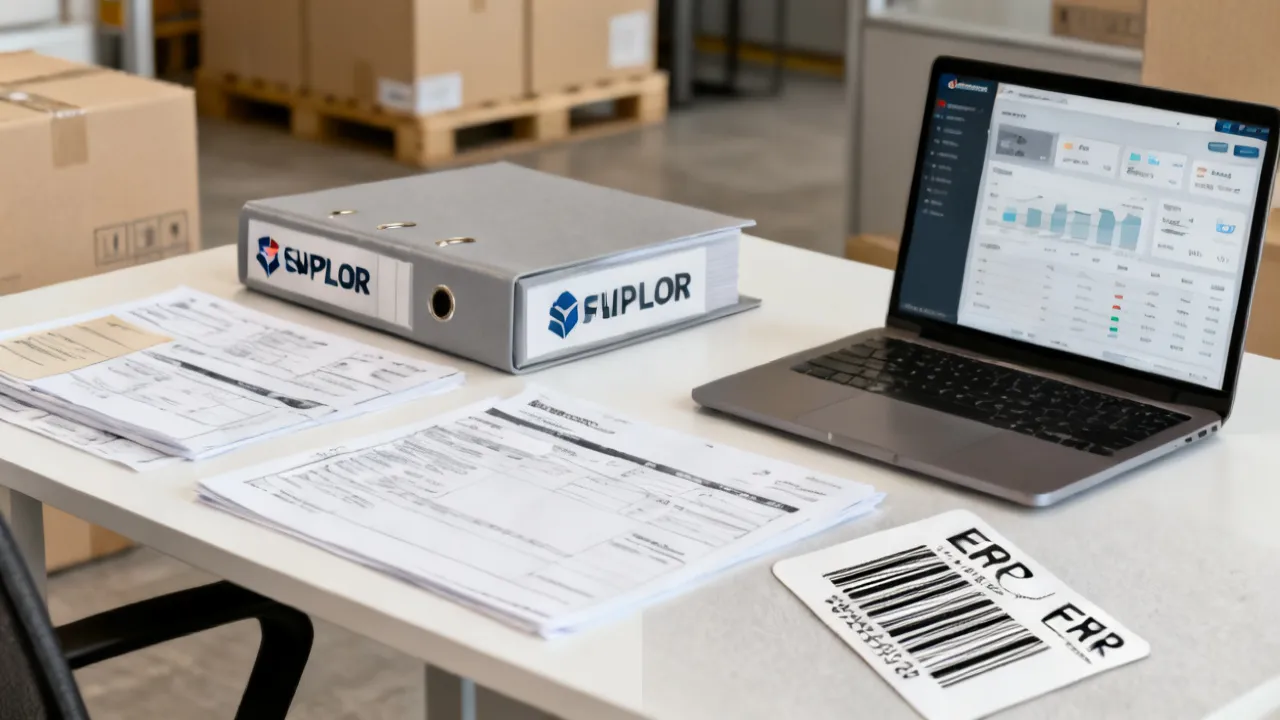
This guide explains how the supplier identifier “28998869o15” and the surrounding reference keywords are used in procurement, sourcing, and compliance workflows. Background information is provided objectively about why such identifiers matter, how they support traceability, and what responsible teams typically verify before integrating supplier records into purchasing systems.
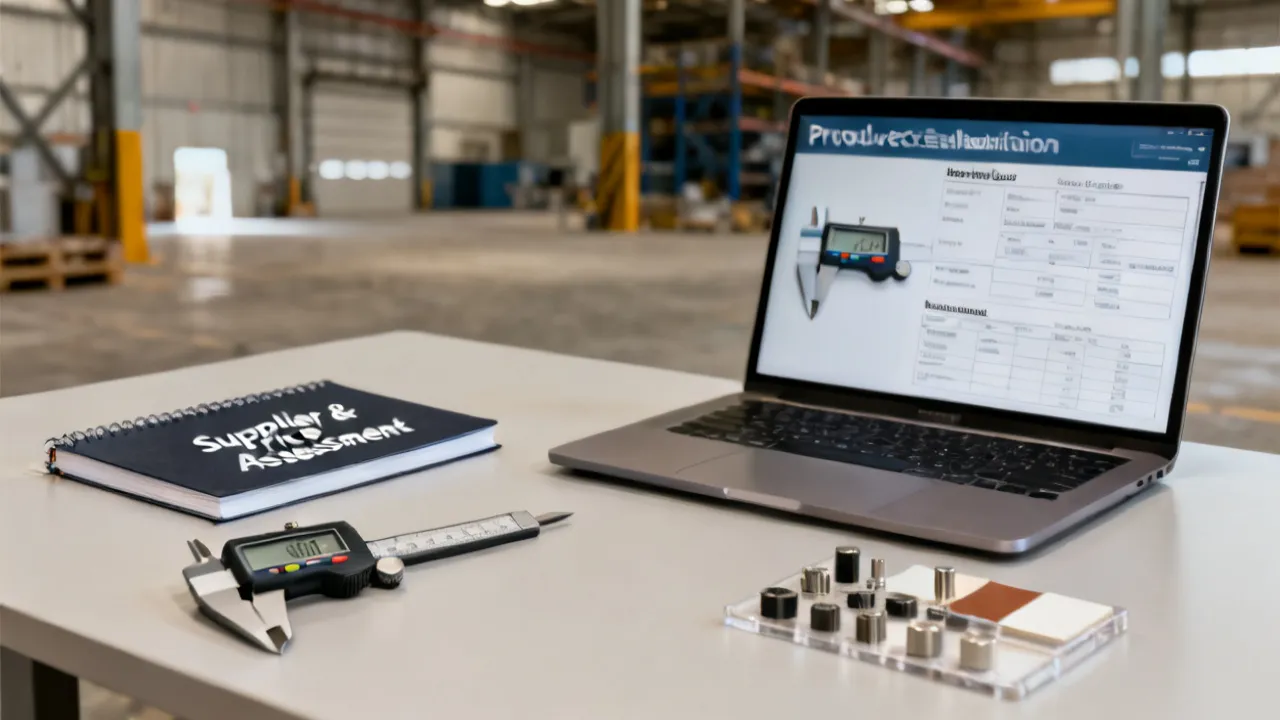
This guide explains how to evaluate 28998869o15 by comparing supplier details, assessing practical pricing, and verifying product fit through objective criteria. Background context is provided on what the keyword sequence generally represents in procurement workflows and why buyers should validate specifications, lead times, and documentation before committing.
This guide explains how to evaluate and source items associated with 28998869o15 using a practical, evidence-based approach. Background context covers what such numeric identifiers typically represent, how suppliers document them, and why verification matters for quality, compatibility, and procurement risk management.

This guide explains how to evaluate the identifier “28998869o15” alongside supplier and pricing considerations for reliable product selection. Objectively, “28998869o15” functions like an internal or reference code that helps connect records across catalogs, purchase orders, and logistics. The article reviews how to verify suppliers, compare total costs, and document requirements before purchase.